Uber and Zipline Partner to Scale Drone Deliveries Across the United States
San Francisco, Tuesday, 18 August 2026.
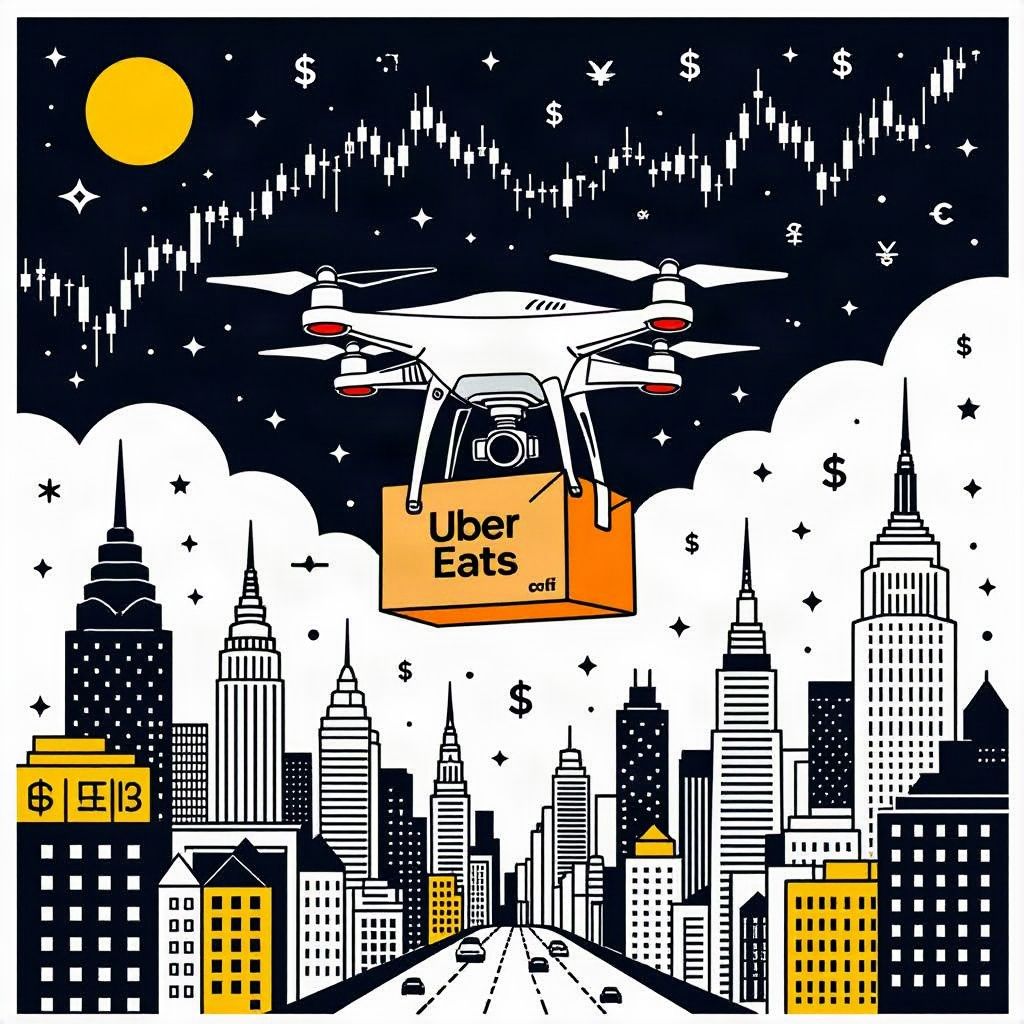
Uber has partnered with Zipline to integrate autonomous drone delivery into Uber Eats, targeting one million daily deliveries by 2029 to meet rising consumer demand for fast, automated commerce.
Strategic Partnership and Investment Goals
Uber Technologies, Inc. (NYSE: UBER) has officially announced a strategic partnership with autonomous logistics leader Zipline, marking a significant expansion into aerial delivery services [1]. The collaboration involves a strategic investment by Uber in Zipline, reinforcing a long-term commitment to scaling drone delivery infrastructure across the United States [1]. Announced on 17 August 2026, the deal aims to integrate Zipline’s autonomous drone technology directly into the Uber Eats platform [3]. The companies have set an ambitious target of reaching one million drone deliveries per day by the end of 2029 [1][3]. This initiative represents a major shift toward last-mile automation in urban commerce, seeking to meet what Uber CEO Dara Khosrowshahi describes as an “insatiable” consumer demand for rapid delivery [2].
Operational Rollout and Timeline
Initial deployments for the drone delivery service are scheduled to begin later in 2026, starting in existing Zipline markets [1]. Specific launch cities identified for the initial phase include Dallas and Houston, where restaurants and retail partners are already utilizing the platform [5][6]. The service promises delivery times ranging from 5 to 10 minutes for eligible orders [4]. While the initial rollout is pending final regulatory and operational checks, the companies plan to expand into dozens of U.S. cities following the successful launch in Texas [1][3]. This timeline places the first commercial deliveries within the current calendar year, aligning with the broader goal of making autonomous delivery part of everyday life by the end of the decade [1].
Market Context and Competitive Landscape
Zipline brings extensive experience to the partnership, having operated for 10 years and completed over 2.7 million deliveries globally [1][4]. The logistics network currently serves over 5,000 hospitals and reports saving more than 12,000 lives annually through medical supply deliveries [1][4]. In the commercial sector, competitors such as Google-owned Wing operate in nearly 20 U.S. markets, while Amazon Prime Air aims to serve 30 million customers by the end of 2026 [6][8]. Uber’s strategy involves platform aggregation, having previously invested over $10 billion in dozens of autonomous vehicle providers [3]. This partnership distinguishes itself by targeting a scale of one million daily deliveries, a figure that significantly exceeds current industry benchmarks for autonomous aerial logistics [3][4].