US Threatens to Cut Off Nations Trading With Iran From Dollar Banking
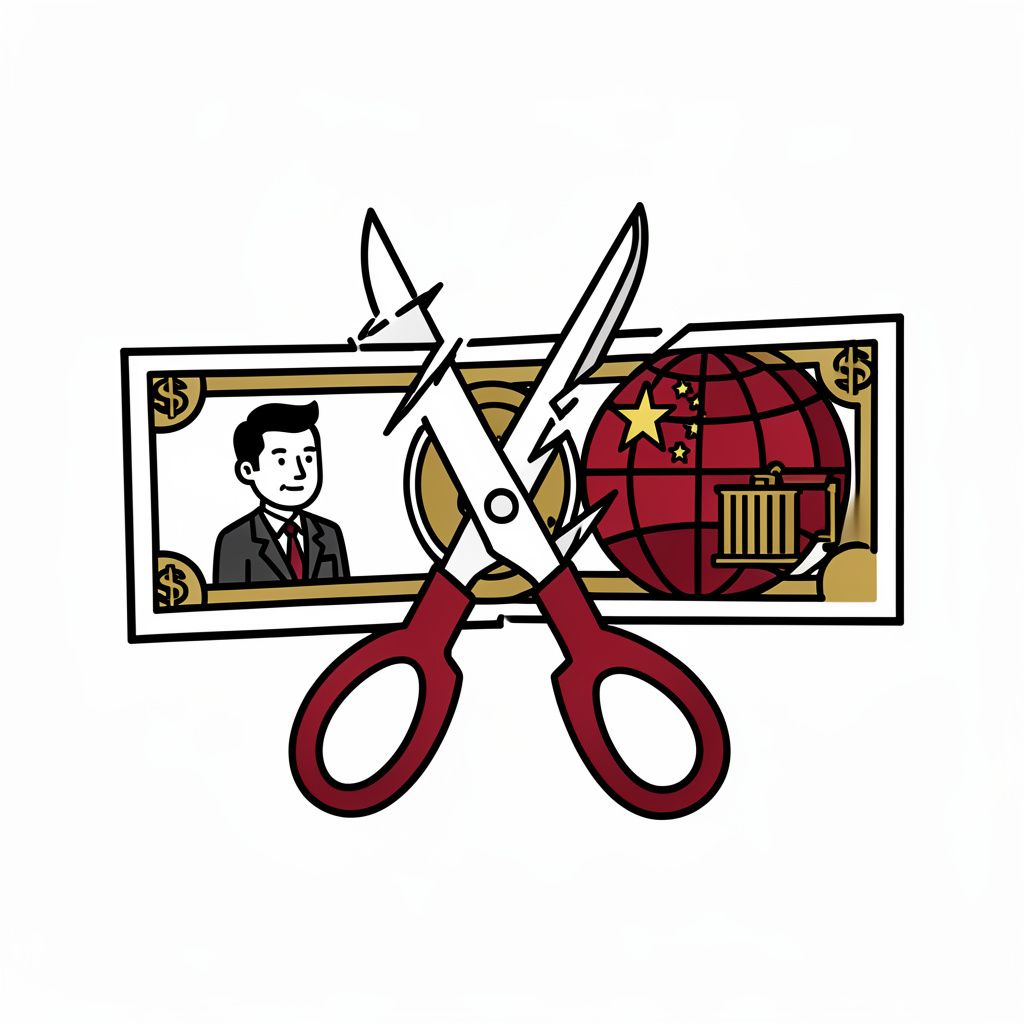
Washington, Wednesday, 26 August 2026.
Washington’s new sanctions threaten to disconnect global institutions from the US dollar system if they maintain Iranian ties, prompting strong pushback from China, which purchases 90 percent of Iran’s exported oil.
Escalation of Financial Sanctions
The United States Treasury Department unveiled a sweeping sanctions package designated as “Operation Economic Outcast” on Monday, 24 August 2026, targeting entities linked to Iran’s economic network [3][7]. Treasury Secretary Scott Bessent announced the measures, which blacklist over 60 entities, individuals, and vessels globally, including specific targets in mainland China and Hong Kong [1][3]. The administration framed the initiative as an “economic D-Day,” intending to sever every economic lifeline sustaining the Iranian regime until Tehran stands alone [6]. Financial institutions and multinational corporations were warned that maintaining ties with Tehran could result in removal from the global US dollar banking system [1]. Secretary Bessent stated clearly that any entity facilitating money laundering on behalf of Iran would be removed from the dollar system, noting that the clock had just started ticking [1].
Beijing’s Strategic Countermove
In Beijing, the Chinese foreign ministry condemned the fresh sanctions, pledging all necessary measures to protect its interests against what it termed illegal unilateral actions [1][2]. Ministry spokesman Lin Jian asserted that China’s cooperation with Tehran was conducted within the framework of international law and should not be disrupted [1]. Despite the pressure, China remains a critical economic lifeline for the regime, accounting for approximately 90% of Iran’s total exported oil as of July 2026 [3]. Data from the International Trade Centre indicates China was the largest buyer of Iranian goods in 2025, accounting for 26.9% of Iranian exports, though economists suggest actual oil sales figures were likely underreported [2]. The geopolitical tension coincides with a scheduled visit by Chinese President Xi Jinping to the White House on 24 September 2026, a meeting that may influence U.S. strategy regarding secondary sanctions enforcement [3][5].
Regional Ripple Effects
Iranian leadership maintains that the intensified sanctions regime is a self-defeating mechanism, with Foreign Minister Abbas Araghchi labeling the policy a diversion from America’s own debt crises [4]. The Strait of Hormuz, a critical waterway for 20% of global daily oil transport, has been effectively closed to commercial traffic by Iran, complicating global energy logistics [4]. While the United Arab Emirates suspended all trade with Iran on 21 August 2026, citing alleged ballistic missile attacks, other neighbors face dilemmas [5]. Turkey faces economic pressure to sever trade but risks damaging its own economy, which is currently struggling with 31.8% inflation [2]. Pakistan, sharing a 900 km border with Iran, faces significant risk from US sanctions because its primary export partner is the United States, leaving it with more to lose than neighboring Turkey [2].
Market Stability and Enforcement Risks
Global markets showed a muted response to the US sanctions announcement, with major indexes in the US, Europe, and Asia showing little movement despite the escalation [2]. Experts warn that the strategy faces a credibility test regarding the willingness of the administration to impose threatened costs on key economic facilitators, specifically China and Dubai [3]. Roger Diwan of S&P Global Energy noted that while the incremental gain of sanctions is very small, the risk to regional energy infrastructure remains very high [6]. Treasury Secretary Bessent emphasized that the US would not blow up the global financial system, yet the threat of exclusion remains a potent tool for coercion [7]. As the conflict enters its sixth month, the administration aims to avoid oil price shocks while pressuring Tehran, though experts suggest Iran may use military action to ensure political costs are paid [6][7].