Taiwan Pledges $44 Billion for US Energy in Strategic Trade Deal
Taipei, Saturday, 14 February 2026.
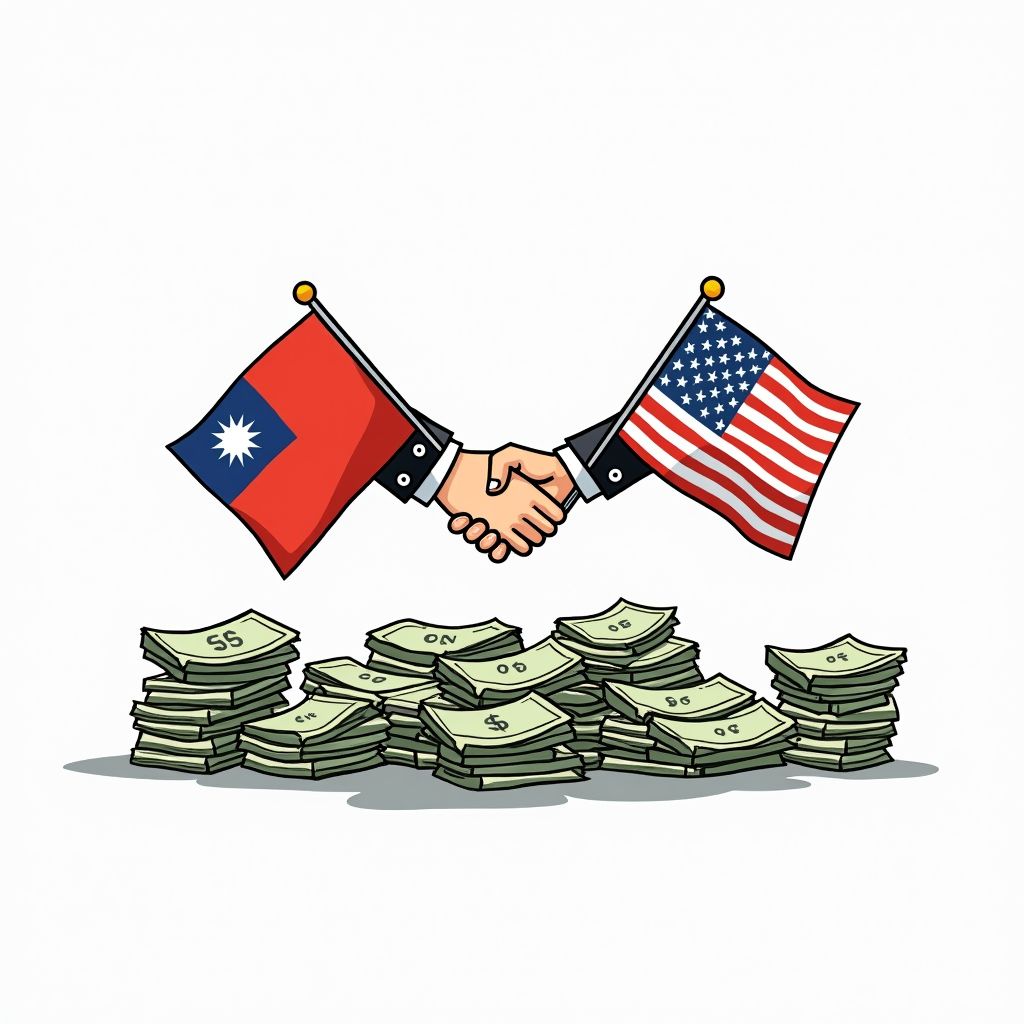
Taipei secures a 15% tariff cap by committing $44.4 billion to US energy imports, solidifying economic ties with Washington while facing calls to increase defense spending.
A Strategic Pivot in US-Taiwan Relations
In a decisive move to fortify its economic and security standing, Taiwan has finalized a reciprocal trade agreement with the United States that fundamentally reshapes the financial dynamic between the two nations. Signed on Thursday, February 12, 2026, and detailed by Taiwanese President Lai Ching-te on Friday, the deal caps US tariffs on Taiwanese imports at 15% [2][4]. This agreement acts as a critical counterweight to the United States’ recent aggressive trade posturing, ensuring that Taiwanese goods remain competitive in the American market. In return, Taipei has committed to a massive procurement strategy, pledging to purchase $44.4 billion in US liquefied natural gas (LNG) and crude oil through 2029 [2][4]. This energy acquisition is not merely a commercial transaction; it represents a strategic alignment of Taiwan’s supply chains with American interests amidst rising geopolitical tensions.
Energy and Infrastructure Commitments
The scope of Taiwan’s purchasing commitments extends well beyond fossil fuels, painting a picture of a comprehensive infrastructure overhaul dependent on American industry. Alongside the $44.4 billion energy allocation, Taiwan has earmarked $15.2 billion for civil aircraft and engines, as well as $25.2 billion for power grid equipment, generators, and marine and steelmaking machinery [2]. The Taiwanese Cabinet estimates the total value of these procurement projects at approximately $84.8 billion by 2029 [4]. While environmental groups like Greenpeace have raised concerns regarding the ecological impact of such vast fossil fuel purchases, noting that the deal locks Taiwan into carbon-heavy energy for years to come [6], the economic signaling is clear: Taipei is actively reducing the US trade deficit, which had ballooned to $126.9 billion in the first 11 months of 2025 alone [2].
The Silicon Shield and Investment
Beyond commodities, the agreement heavily leverages Taiwan’s dominance in the semiconductor sector—often referred to as its “silicon shield.” To secure the 15% tariff cap, the Taiwanese government has guaranteed $250 billion in investments into US industries, specifically targeting semiconductors, energy, and artificial intelligence [2]. This massive capital injection comes in addition to the $100 billion already committed by Taiwan Semiconductor Manufacturing Corp (TSMC) [2]. The deal is designed to integrate Taiwan’s information and communications technology sectors more closely with the US artificial intelligence market, a move President Lai describes as a “pivotal moment” for transforming Taiwan’s economy [2]. However, this integration comes with caveats; the US Commerce Department views this as a historic driver for reshoring America’s own semiconductor sector, potentially altering the long-term balance of manufacturing power [5].
Defense Pressure and Geopolitics
The economic concessions offered by Taipei cannot be decoupled from the intense pressure Washington is exerting regarding defense capabilities. A bipartisan group of 37 US lawmakers recently wrote to Taiwan’s parliament, warning that the threat from China “has never been greater” and urging the passage of a stalled defense spending package [1]. President Lai had previously proposed a $40 billion additional defense budget, but it has faced significant hurdles in the opposition-led parliament [1]. While the new trade deal secures economic preferential treatment—such as lowering US tariffs on Taiwanese goods from 20% to 15%—it operates in parallel with American demands for Taiwan to shoulder a larger burden of its own security costs against Beijing’s intensifying military pressure [1][3].
Consumer Impact and Market Access
For the average consumer and business owner, the agreement promises immediate changes to the cost of goods. Taiwan has agreed to eliminate or lower tariffs on nearly all US goods, removing non-tariff barriers on motor vehicles and accepting US auto safety standards [2]. In the agricultural sector, tariffs on US pork belly will plummet from 40% to 10%, and ham tariffs will drop from 32% to 10% [2]. Conversely, 2,072 Taiwanese items, including pineapples and leaf tea, will now be exempt from reciprocal tariffs, improving their competitiveness abroad [4]. By slashing these barriers, the deal aims to foster a more fluid exchange of goods, though the long-term geopolitical costs of such deep economic integration remain to be seen.
Sources
- www.dw.com
- www.reuters.com
- www.youtube.com
- www3.nhk.or.jp
- www.theglobeandmail.com
- www.greenpeace.org