Georgia Municipality Halts Utilities for Planned Federal Detention Center Over Infrastructure Limits
Social Circle, Tuesday, 17 March 2026.
Facing a maxed-out sewer system, a Georgia municipality padlocked the water meter at a planned 10,000-person federal detention center, demanding infrastructure solutions before allowing development.
A Clash Over Capacity and Utilities
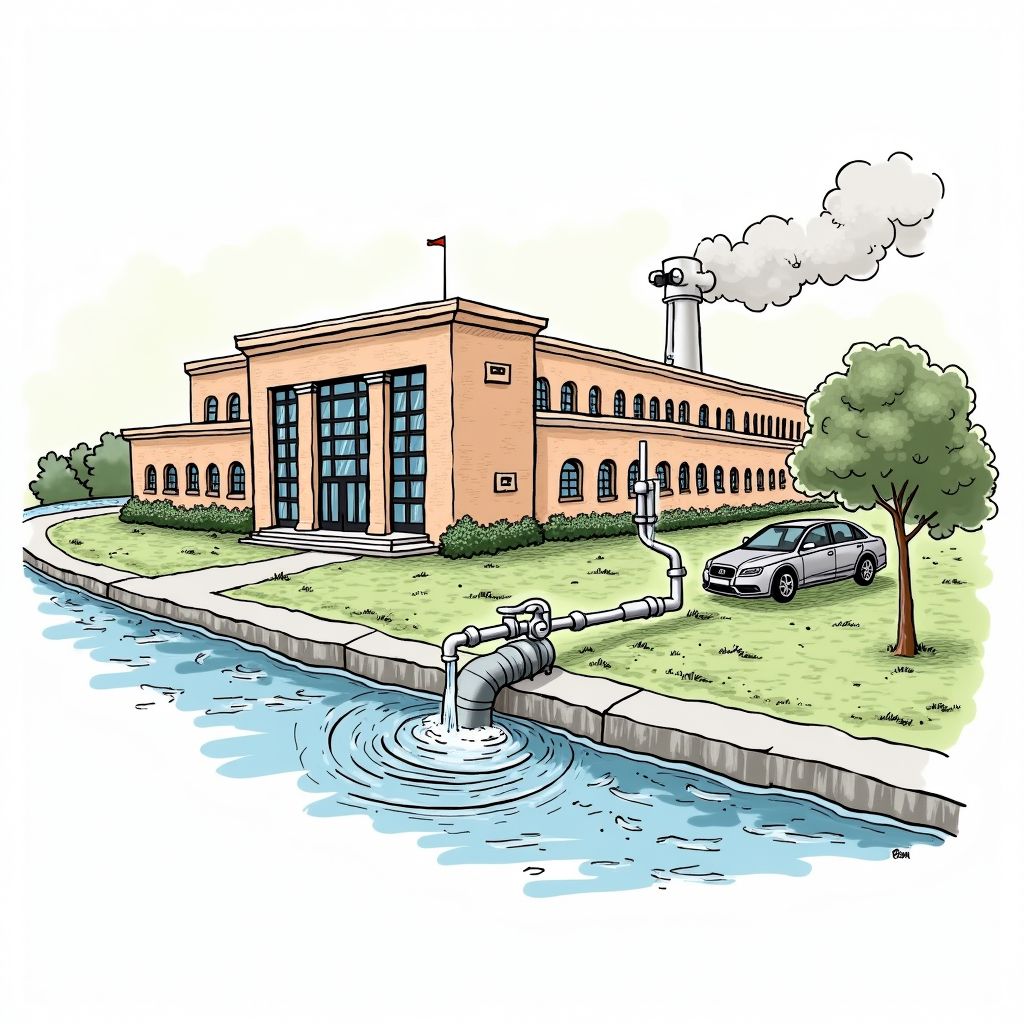
On Monday, March 16, 2026, Social Circle City Manager Eric Taylor authorized placing a padlock on the water meter at 1365 E. Hightower Trail, a commercial warehouse recently purchased by U.S. Immigration and Customs Enforcement (ICE) [1][2][4]. The physical block was applied shortly after an ICE representative contacted the municipality to inquire about establishing a utility account following the property’s sale [1][2]. Local officials have drawn a hard line, stating the lock will remain in place until the federal agency can demonstrate how it will operate the planned facility without overwhelming the municipality’s infrastructure [1][2][6]. Social Circle is currently permitted to draw up to 3,785 cubic meters of water per day from the local river, but its sewer plant is already operating at its maximum daily processing capacity of 2,491 cubic meters [1].
The Federal Expansion Strategy
The standoff in Social Circle is part of a broader, actively implemented policy shift by the Republican Trump administration to drastically expand federal immigration detention capabilities [5]. Backed by funding from the recently passed “Big Beautiful Bill,” the administration is seeking $38 billion to increase ICE’s total detention capacity to 92,600 individuals [5]. This represents an intended capacity increase of approximately 26.849 percent over the 73,000 people currently held in ICE custody [5]. As part of this nationwide strategy, DHS Secretary Kristi Noem has pushed forward with multimillion-dollar contracts to retrofit existing industrial warehouses across multiple states, including Georgia, Texas, Maryland, and Arizona [3][5].
Political Fractures and Economic Realities
The aggressive rollout of these facilities has created unusual political friction, pitting local communities against federal initiatives even in conservative strongholds. Hall County, for example, voted 71.4 percent for President Trump in the 2024 election, yet the Oakwood City Council recently voted to request that the federal government halt construction on its planned 1,500-inmate facility [3]. Similarly, citizens in Social Circle packed town hall meetings in February 2026 to vehemently oppose the project [4][6]. Social Circle Mayor David Keener emphasized that the sudden influx of up to 10,000 detainees would require massive secondary support, forcing the city to heavily expand its police force and rely on the county sheriff’s department [4].
Looming Deadlines and Uncertainty
As the political and logistical battles continue, the timeline for when these facilities will actually become operational remains highly contested. Rep. Mike Collins and his staff have indicated that housing at the Social Circle facility could begin as early as April 2026 [4][6]. However, ICE’s own estimates suggest the agency would begin accepting detainees sometime between mid-May and June 2026 [1]. Further complicating the schedule, the city noted on February 18 that ICE had not yet awarded a contract to retrofit the interior of the warehouse, though the agency maintains the facility will open by the end of Fiscal Year 2026 [2]. Until ICE can resolve the fundamental issue of water and sewage processing with Social Circle, federal contractors remain effectively locked out of the local utility grid, leaving the mega-center’s immediate future in doubt [1][2].