How the Boom in Artificial Intelligence Threatens Global Climate Goals
Paris, Thursday, 19 November 2026.
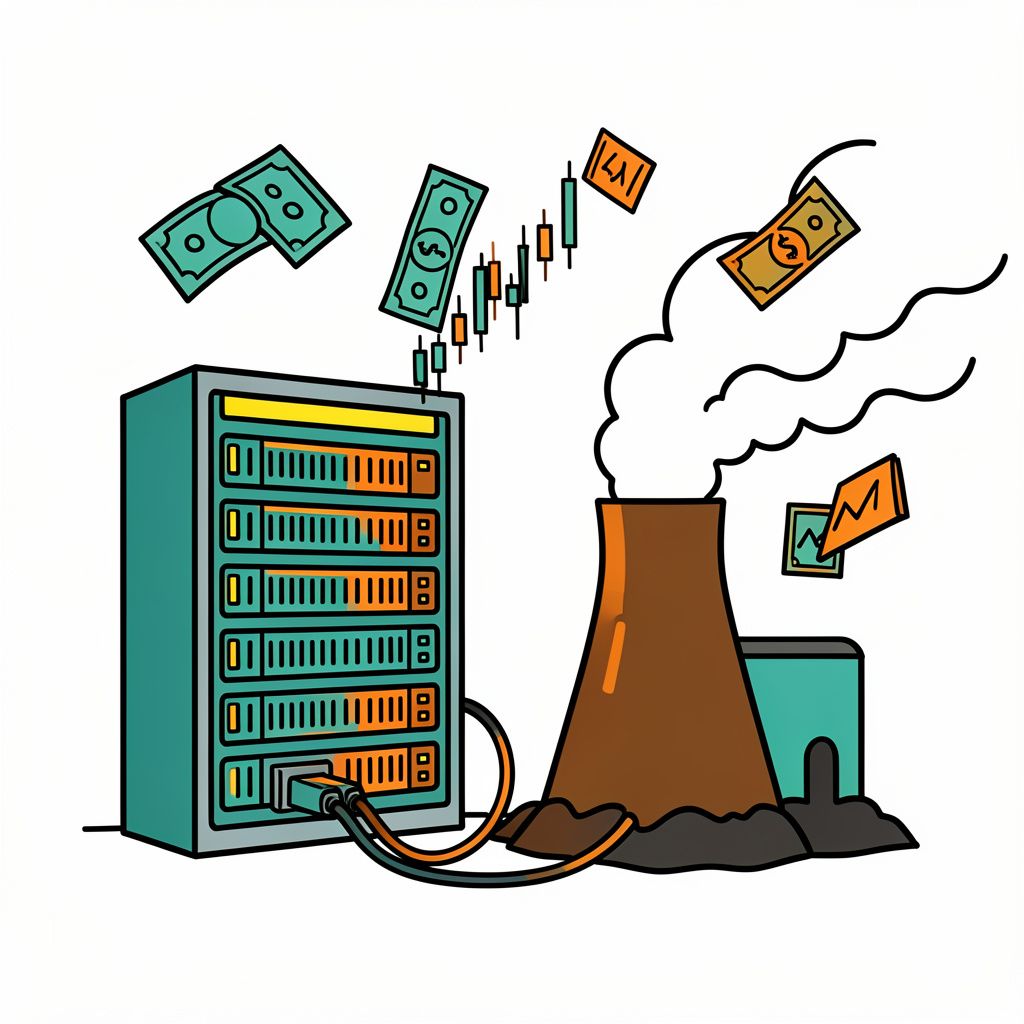
Surging electricity demand will double data center power use by 2030, driving a 70 percent jump in carbon emissions as tech giants rely on coal and gas to feed artificial intelligence.
The AI Power Surge: A Climate Reckoning for Data Centers
The International Energy Agency (IEA) has issued a stark warning: global data center carbon dioxide emissions are projected to surge by 70% through 2030, driven by the explosive growth of artificial intelligence infrastructure [1][3][5][7][9]. This forecast arrives as the world’s largest economies—particularly the United States and China—accelerate their AI ambitions, outpacing renewable energy additions and forcing reliance on legacy fossil fuel power grids. The implications are profound: corporate net-zero timelines are at risk, utility costs are poised to escalate, and regulatory scrutiny is intensifying as the tech sector’s computational demands collide with global climate commitments. Fatih Birol, IEA Executive Director, underscored the gravity of the situation, stating, ‘I don’t see any credible pathway for the energy world to return to the way it was before’ [1][3][5].
Electricity Demand: The Hidden Cost of AI’s Growth
Data centers—particularly those dedicated to AI—are now among the fastest-growing sources of electricity demand globally. Between 2024 and 2026, global data center capacity climbed tenfold to 17 GW, with an additional 120 GW expected to come online by 2030 [1][3][5]. The IEA’s satellite-based tracking of 93 major AI data centers revealed a 10-fold increase in capacity over just two years, a pace that outstrips even the most optimistic projections for renewable energy deployment [2][7]. Annual electricity consumption by data centers is projected to double from 485 terawatt-hours (TWh) in 2025 to 950 TWh by 2030, with AI-driven facilities accounting for three-quarters of this growth [4]. To contextualize this scale, the additional 350 TWh required annually by 2030 would surpass the entire annual electricity consumption of Great Britain [1][2][3][5].
Fossil Fuels Take the Reins: The US and China’s Energy Dilemma
The IEA’s projections reveal a troubling divergence in the energy sources powering AI data centers across major economies. In the United States, natural gas is expected to supply roughly 60% of data center electricity by 2030, a shift underscored by plans for 180 GW of new gas-fired power plants linked to data centers—nearly 11 GW of which are slated for Canada [1][3][5]. Meanwhile, China’s reliance on coal for AI infrastructure is even more pronounced, with approximately half of its data center electricity expected to come from coal by 2030 [4]. This divergence reflects broader regional challenges: while the European Union aims to source ~70% of data center electricity from renewables by 2030, its reliance on nuclear, gas, and minimal coal highlights the uneven global transition [1][2][3][5]. The IEA notes that investors will pour an estimated $4 trillion into data centers globally by 2030—following $565 billion in 2025—to meet AI demand, with three-quarters of this growth dedicated to AI-specific facilities [2].
Economic and Regulatory Ripples: A Sector Under Pressure
The data center boom is not merely an environmental concern but an economic one, with utilities and policymakers scrambling to keep pace. The IEA warns that planned data center developments in key growth markets could exceed current peak power demand if fully realized, stretching power grids to their limits [2]. This pressure is already manifesting in rising electricity costs and community backlash, particularly in regions where data centers are concentrated. For corporate executives, the stakes are high: AI-driven data centers are projected to drive nearly half of the total electricity demand increase in the US through 2030, while the EU anticipates a 2% annual growth in demand [1][7]. Regulatory scrutiny is intensifying, with governments under pressure to balance AI innovation with climate goals. The IEA’s forecast underscores a harsh reality: the tech sector’s pursuit of AI supremacy is colliding with the urgent need to decarbonize, leaving few viable pathways to reconcile the two [1][2][3][5][7].
Sources
- www.theguardian.com
- www.energyconnects.com
- superpowerdaily.com
- www.instagram.com
- www.iea.org
- www.facebook.com
- ground.news
- www.iea.org