Most Americans Lose Faith in the Dollar as Interest in Bitcoin Surges
New York, Friday, 16 October 2026.
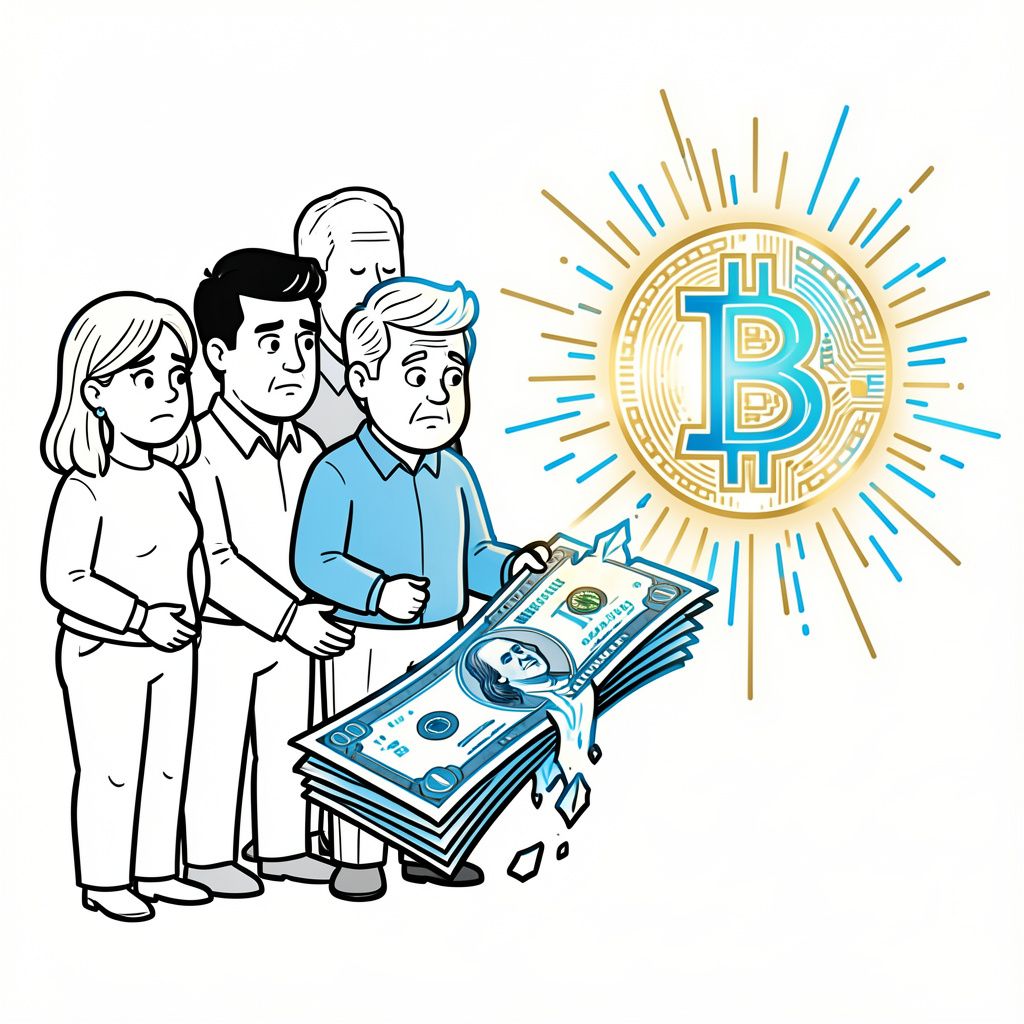
A new survey reveals 74% of Americans distrust traditional money systems, driving 61% to seek knowledge about Bitcoin as an alternative, signaling major shifts for banks and policymakers.
Survey Data Reveals Eroding Confidence in Fiat
A comprehensive study released in October 2026 by the Bitcoin Policy Institute, in partnership with polling firm Cygnal and Neighborhood Bitcoin, indicates a significant shift in public sentiment regarding the U.S. dollar [1]. The research, titled “Identifying the Bitcoin Messages that Resonate with Everyday Americans,” surveyed 1,516 registered voters and found that 74 percent of Americans possess little to no trust in the U.S. dollar retaining its value in the coming years [1]. Consequently, only 26 percent of respondents express confidence in the currency’s future stability, highlighting a potential vulnerability in the traditional monetary framework [1]. Alongside this distrust, 61 percent of Americans expressed a desire to learn more about owning Bitcoin as an alternative financial vehicle, signaling a growing appetite for digital assets among the general population [1]. This sentiment is compounded by widespread public perception that purchasing power is declining regarding 401(k) contributions, utility bills, and property tax assessments during this economic climate [1].
Investor Motivations and Behavioral Shifts
Parallel data from the Schwab 2025 Modern Wealth Survey, published on January 1, 2025, outlines the specific drivers behind cryptocurrency adoption among investors [2]. According to the survey, 53 percent of consumers purchase cryptocurrency for long-term growth, while 48 percent cite portfolio diversification as a primary motivation [2]. Protection against economic uncertainty motivates 35 percent of crypto purchasers, reflecting a hedge-seeking behavior similar to traditional safe-haven assets [2]. Joe Vietri, head of digital assets at Schwab, noted that for a new generation of investors, digital assets may serve as the starting point for their investing journey, eventually leading to broader questions about risk and financial goals [2]. Over time, investor behavior often shifts from exploratory, short-term positions toward more intentional, long-term strategies integrated into broader portfolio frameworks [2]. This evolution suggests that current curiosity could solidify into sustained market participation, influencing liquidity and asset valuation over the coming years [2].
Market Volatility and Expert Skepticism
Despite growing interest, market veterans remain divided on the sustainability of current valuations. Following an announcement by U.S. Treasury Secretary Scott Bessent regarding plans to double Treasury bond buyback operations, Bitcoin prices surged from approximately $60,000 to $85,000 [3]. However, investor Peter Schiff expressed shock at the asset’s performance, stating he expected Bitcoin to decline and reach new lows [3]. Schiff noted that Bitcoin’s failure to break out decisively suggests resistance issues, highlighting increased politicization of crypto amidst changing bipartisan donation strategies [3]. He remarked, “I don’t really know what’s holding it up,” indicating a disconnect between traditional financial expectations and current market dynamics [3]. This skepticism persists even as Bitcoin maintains gains that traditional analysts anticipated would retreat, underscoring the unpredictable nature of the digital asset class in the current fiscal reality [3].
Institutional Targets and Monetary Theory
Institutional perspectives vary, with some analysts questioning high valuation targets while others see a structural turn. On October 14, 2026, Dr. Dana Love posted an analysis questioning whether demand and limited supply can realistically push Bitcoin to a $1 million price target referenced by BlackRock [6]. Conversely, Cathie Wood of ARK Invest stated on the same date, “We do think the turn is in here for Bitcoin,” suggesting a bullish outlook despite gold moving down [5]. Theoretical frameworks from the Bank for International Settlements (BIS) argue that money is an institutional achievement based on trust rather than technology [4]. BIS Papers No 175, published in October 2026, categorizes Bitcoin as an asset that rejects the social compact money embodies, contrasting it with stablecoins that attempt to join the existing monetary architecture [4]. This dichotomy suggests that while adoption grows, Bitcoin’s role may remain distinct from traditional sovereign money systems [4].
Sources
- inbitcoinwetrust.substack.com
- www.aboutschwab.com
- finance.yahoo.com
- www.bis.org
- www.instagram.com
- www.instagram.com