Michigan Declares Emergency as Extreme Snowmelt and Flooding Threaten Local Economies
Detroit, Saturday, 21 March 2026.
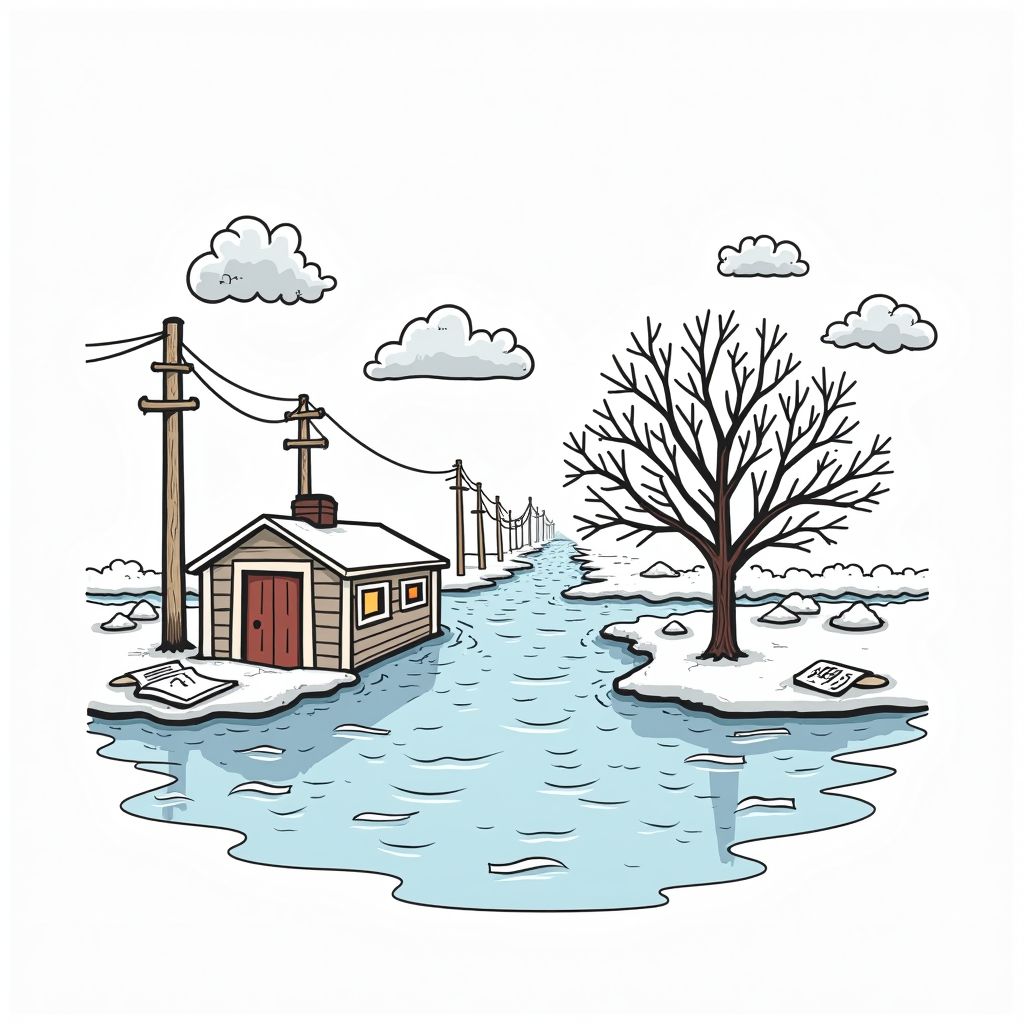
Following a historic blizzard dumping over 1.2 meters of snow, rapid snowmelt has forced a state of emergency in Michigan, exposing severe vulnerabilities in the state’s aging infrastructure.
Structural Vulnerabilities and the Cost of Inadequate Drainage
The current flooding crisis is severely compounded by Michigan’s challenging geological profile and outdated water management infrastructure [1][2]. In densely populated areas like Wayne, Oakland, and Macomb counties, the predominantly heavy clay soils retain massive volumes of water [1]. This retention creates immense hydrostatic pressure against building foundations, a condition exacerbated by high groundwater tables near the Great Lakes and seasonal freeze-thaw cycles [2][3]. The resulting water intrusion through porous concrete, cove joints, and foundation cracks represents a mounting liability for both homeowners and commercial property investors [2].
A Legacy of Underinvestment Amidst Changing Climate Patterns
Michigan’s aging sewer systems are increasingly ill-equipped to handle the volume of modern precipitation events [1]. The state’s historical reliance on combined sewer systems has previously led to catastrophic overflows; a notable infrastructure failure in 2014 resulted in the release of 37,854,117,684 liters of raw sewage [1]. Local advocacy groups have publicly emphasized that modern stormwater systems are essential not just for managing rain, but for safeguarding water quality, supporting agricultural outputs, and protecting commercial communities from systemic flooding [4].
Strategic Imperatives for Economic Resilience
The convergence of extreme weather, saturated clay soils, and antiquated infrastructure presents a clear mandate for strategic capital allocation [1][2]. As of late March 2026, local contractors are reporting surges in demand for heavy excavation, hydro jetting, and sewer backflow prevention services, highlighting a reactive micro-economy driven entirely by infrastructure failure [2][3]. While specialized firms offer long-term solutions and financing to mitigate immediate household impacts, the broader economic health of the region remains highly vulnerable to future precipitation events [3].
Sources
- www.einpresswire.com
- www.news-journalonline.com
- www.dispatch.com
- www.instagram.com
- www.aol.com
- www.abc12.com