UAE Economy Pivots to Massive Air Defense Spending Amid Relentless Iranian Strikes
Abu Dhabi, Wednesday, 8 April 2026.
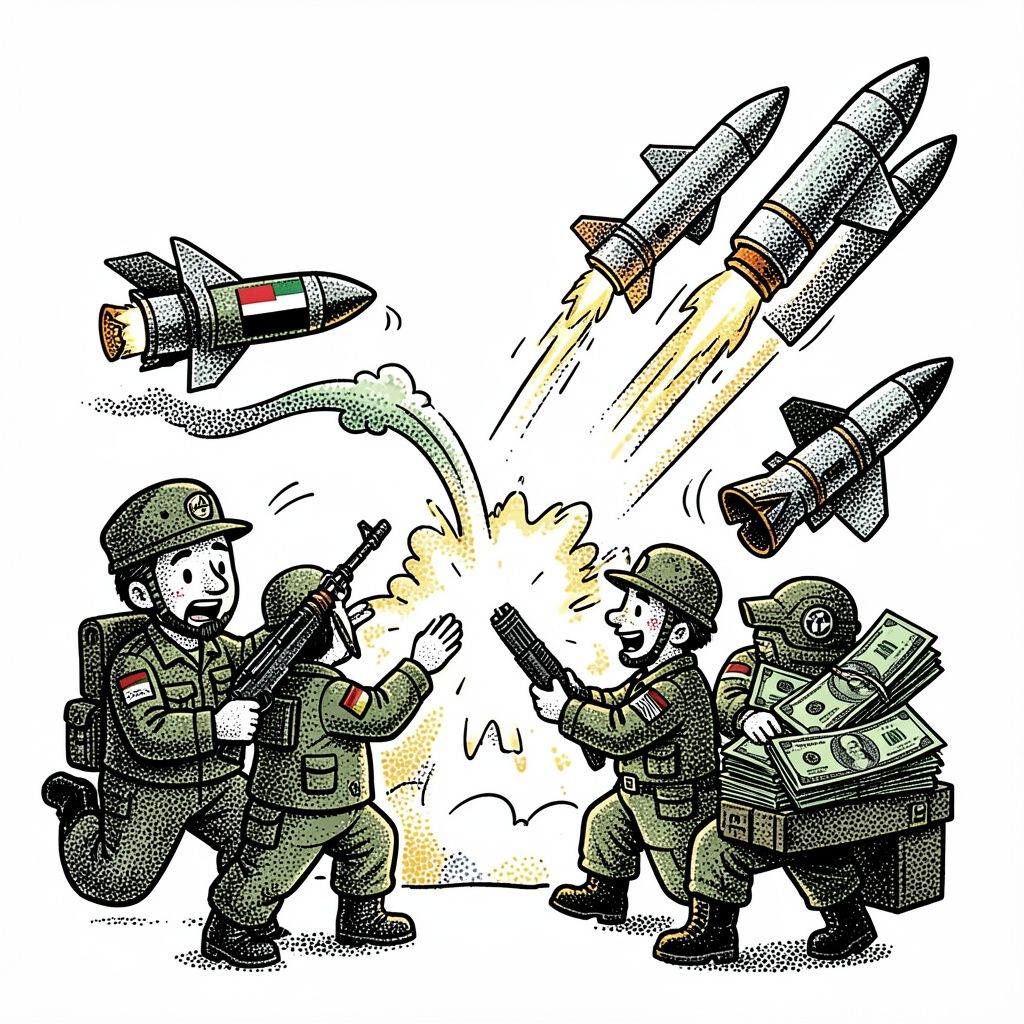
After intercepting over 2,700 Iranian projectiles, the UAE is drastically redirecting its commercial wealth into advanced air defense, fundamentally altering its trajectory as a global business hub.
The High Cost of Neutrality and Defense
The scale of the aerial bombardment facing the United Arab Emirates is staggering. Since the onset of the United States-Israeli war with Iran on February 28, 2026, the UAE has absorbed the heaviest volume of Iranian missile and drone attacks of any Arab nation [3]. As of April 7, 2026, Emirati air-defense systems have intercepted a total of 2767 projectiles, comprising 520 ballistic missiles, 26 cruise missiles, and 2,221 drones [5]. This relentless barrage has forced the Emirates to pivot its vast commercial wealth toward advanced air-defense systems and survival mechanisms, fundamentally altering an economic model previously defined by its promise of safety and unbounded business opportunity [1].
A Chilled Climate for Aviation and Commerce
The kinetic violence is actively degrading Dubai’s ability to remain interconnected with the global economy [3]. The aviation sector, a cornerstone of the UAE’s economic miracle, is facing severe headwinds. Gulf airlines are currently operating at roughly half of their normal passenger volumes [3]. Dubai International Airport, historically one of the world’s busiest hubs for international travel [GPT], is now sparsely populated, and the vaunted Emirati jumbo fleet has been largely grounded due to a collapse in commercial demand [3].
Geopolitical Ultimatum and Energy Market Jitters
The economic paralysis is inextricably linked to the broader regional security crisis. On April 6, 2026, Anwar Gargash, diplomatic adviser to the UAE President, emphasized that any future settlement between the U.S. and Iran must guarantee unrestricted access through the Strait of Hormuz, stating the waterway ‘cannot be held hostage by any country’ [4]. While the UAE refuses to act as an independent maritime force, leadership has signaled a clear readiness to join any American-led or international coalition to secure navigation in the strait [2][3].
Fortifying Domestic Supply Chains
Amidst this external chaos, the UAE is actively focused on building an integrated system to guarantee sustainable food supplies and market stability [6]. The Ministry of Economy and Tourism has intensified its oversight of strategic reserves. In a proactive move late last month, Minister Abdulla bin Touq Al Marri reviewed production operations at the Abu Dhabi Vegetable Oil Company, an entity which boasts annual production capabilities exceeding 200,000 metric tonnes and storage capacities over 40,000 metric tonnes [6].
Sources
- www.moneycontrol.com
- www.euronews.com
- www.theglobeandmail.com
- www.reuters.com
- gulfnews.com
- www.moet.gov.ae