Public Confidence in President’s Economic Management Drops to Record Low
Washington, Thursday, 11 December 2025.
While President Trump grades his economic performance an “A-plus,” new polling indicates public approval has plummeted to just 31 percent, signaling a critical vulnerability for the administration.
A Widening Gap Between Rhetoric and Reality
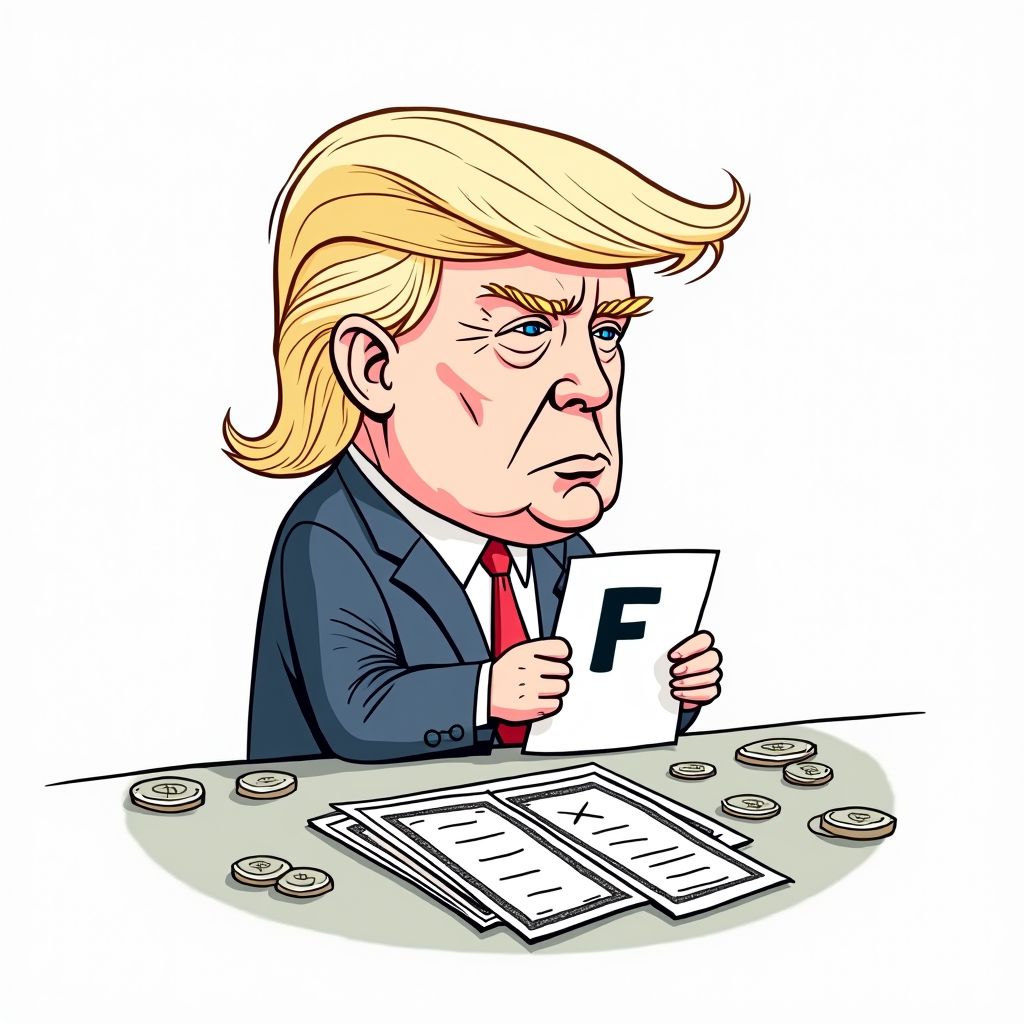
A new AP-NORC poll conducted between December 4 and December 8, 2025, reveals a stark deterioration in public sentiment regarding President Donald Trump’s economic stewardship [1]. Only 31 percent of U.S. adults currently approve of his handling of the economy, a figure that has fallen from 40 percent in March [1]. This represents a significant erosion of support, particularly among his own base; approval among Republicans has decreased by 9 percentage points, dropping from 78 percent in March to 69 percent in December [1]. While the President recently awarded himself an “A-plus-plus-plus-plus-plus” grade for his economic performance during a December 9 interview, the data suggests a widening gap between the administration’s self-assessment and the electorate’s reality [4][6].
Broader Indicators of Financial Strain
Broader polling data corroborates this downward trend. A recent Gallup poll found that 62 percent of Americans disapprove of Trump’s handling of the economy, while a Harvard CAPS–Harris Poll indicates that 57 percent of voters believe the President is losing the battle against inflation [7][8]. This sentiment is echoed at the state level; a Roanoke College poll of Virginians found that 39.3 percent of respondents feel worse off financially than they did a year ago, compared to only 22.9 percent who feel better off [3]. Furthermore, consumer confidence in the near future appears bleak, with the percentage of Virginians expecting the next year to be better dropping to 31.5 percent, down from 43.9 percent the previous year [3].
The Affordability Crisis and Policy Responses
The administration has attempted to counter these headwinds with specific policy interventions and rhetoric. On December 9, 2025, President Trump visited Pennsylvania to launch an economic agenda tour, asserting that his “no higher priority” is making America affordable again and blaming the previous administration for high inflation [7]. Addressing specific sector struggles, the President announced a $12 billion federal aid package for farmers funded by tariff revenue, which includes $11 billion in one-time direct payments [8]. However, skepticism remains high; a Politico poll conducted in November found that half of those surveyed find it difficult to pay for food, with 55 percent blaming the Trump administration for the high costs [4].
Looming Healthcare Deadlines
Compounding the economic anxiety is the impending expiration of enhanced Affordable Care Act (ACA) premium tax credits at the end of December 2025 [1][8]. With insurance premiums expected to rise next month, the Senate is currently debating an extension, though the measure faces resistance without Republican-backed reforms [8]. This legislative cliff comes at a time when healthcare costs rank as the third-highest cost concern for Americans, with nearly half of adults finding it difficult to afford care [4]. Public expectation for government intervention remains high; as of December 10, 66 percent of Americans believe the federal government is responsible for ensuring healthcare coverage for all citizens [5].
Sources
- apnews.com
- www.realclearpolling.com
- cardinalnews.org
- www.politico.com
- www.pewresearch.org
- www.politico.com
- abcnews.go.com
- cbn.com