Congress Urged to Block $2 Billion Transfer From NIH to Defense Department
Washington, Tuesday, 8 September 2026.
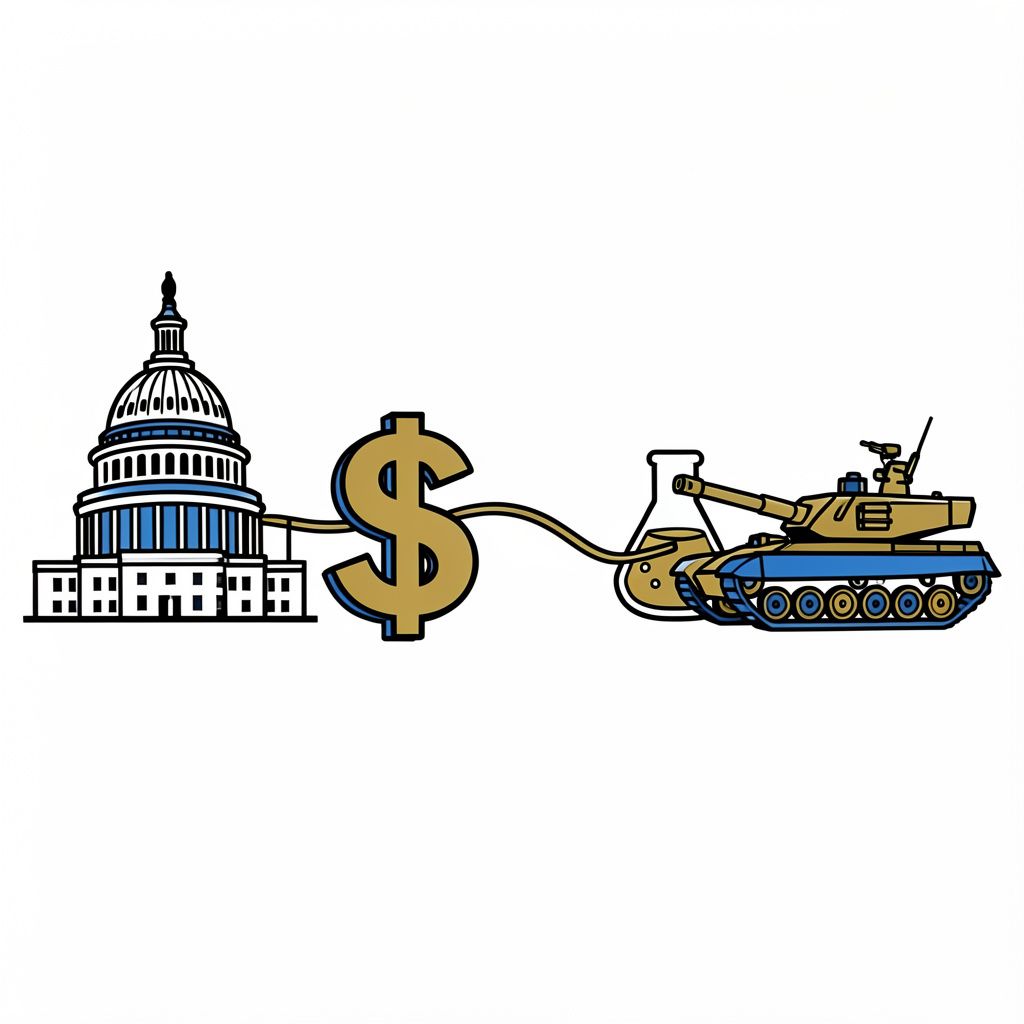
An advocacy group has petitioned Congress to halt an interagency agreement allowing the Pentagon to access up to $2 billion in NIH biomedical research funding.
Advocacy Group Demands Congressional Intervention
On Tuesday, 8 September 2026, the Washington D.C.-based non-profit organization Stand Up for Science launched a public petition urging Congress to terminate an interagency agreement that allows the transfer of National Institutes of Health (NIH) research funding to the Department of War [1]. The advocacy group claims the budget is being redirected to unspecified priorities, including what they describe as “the war in Iran” [1]. Dr. Colette Delawalla, Founder and CEO of Stand Up for Science, stated that siphoning Congressionally-mandated civilian research dollars to bankroll unspecified research at the Department of War is a stunning new low for the administration [1]. The petition demands Congress pass emergency legislation to stop the funding transfer, citing concerns among biotechnology firms and academic institutions that rely on NIH grants [1].
Interagency Agreement Details and Timeline
The controversy stems from an interagency agreement announced in early August 2026, specifically signed by DoD Assistant Secretary Robert Kadlec on 4 August 2026 and NIH Director Dr. Jay Bhattacharya on 5 August 2026 [2]. While some sources refer to the entity as the Department of Defense, the agreement text obtained by The New York Times and cited by advocacy groups references the Department of War [1][5]. The agreement could divert up to $2 billion from the National Institute of Allergy and Infectious Diseases over a 10-year period [1][3]. NIH Director Dr. Jay Bhattacharya stated on social media that no funds will be transferred to the Defense Department during the current fiscal year, which concludes on 30 September 2026 [3]. Bhattacharya further clarified that transfers will occur only on a project-by-project basis rather than as a blanket transfer of funds [3][5].
Political Backlash and Administrative Response
Congressional Democrats have publicly condemned the agreement, with Rep. Rosa DeLauro (D-Conn.) issuing a statement on 3 September 2026 criticizing the lack of congressional notification [2]. Sen. Patty Murray (D-Wash.), ranking member of the Senate Appropriations Committee, accused the Defense Department of trying to rob NIH of billions of dollars that Congress provided for medical research to pad the Pentagon’s budget [4][5]. In response to allegations of secrecy, the Pentagon stated on or before 7 September 2026 that the agreement was not secret and does not constitute a blanket transfer of funds [2]. White House spokesman Kush Desai stated on 3 September 2026 that no NIH funds are being transferred, describing the arrangement as a cooperation on projects of mutual interest [5].
Budgetary Context and Strategic Implications
The agreement comes amid significant budgetary pressure, with the Trump administration requesting a $1.5 trillion budget for the DoD for fiscal year 2027, approximately 36 times the requested NIH budget [2]. On 21 July 2026, Defense Secretary Pete Hegseth reported to the Senate Appropriations Committee that the ongoing war against Iran had reached a cost of roughly $37.5 billion [2]. The total National Institutes of Health (NIH) budget for fiscal year 2026 is $47.22 billion, meaning the potential $2 billion transfer represents approximately 4.235 of the agency’s budget [2]. Critics argue this move could defund and destroy the NIH altogether, while administration officials maintain the partnership focuses on research projects that will drive discoveries to improve the health of American citizens and members of the military [1][5].
Sources
- www.einpresswire.com
- www.forbes.com
- www.insidehighered.com
- www.magnoliabannernews.com
- www.theepochtimes.com
- www.threads.com