Kansas Advances $3 Billion Chiefs Stadium Bill Denying Local Mayors Voting Power
Kansas City, Friday, 13 March 2026.
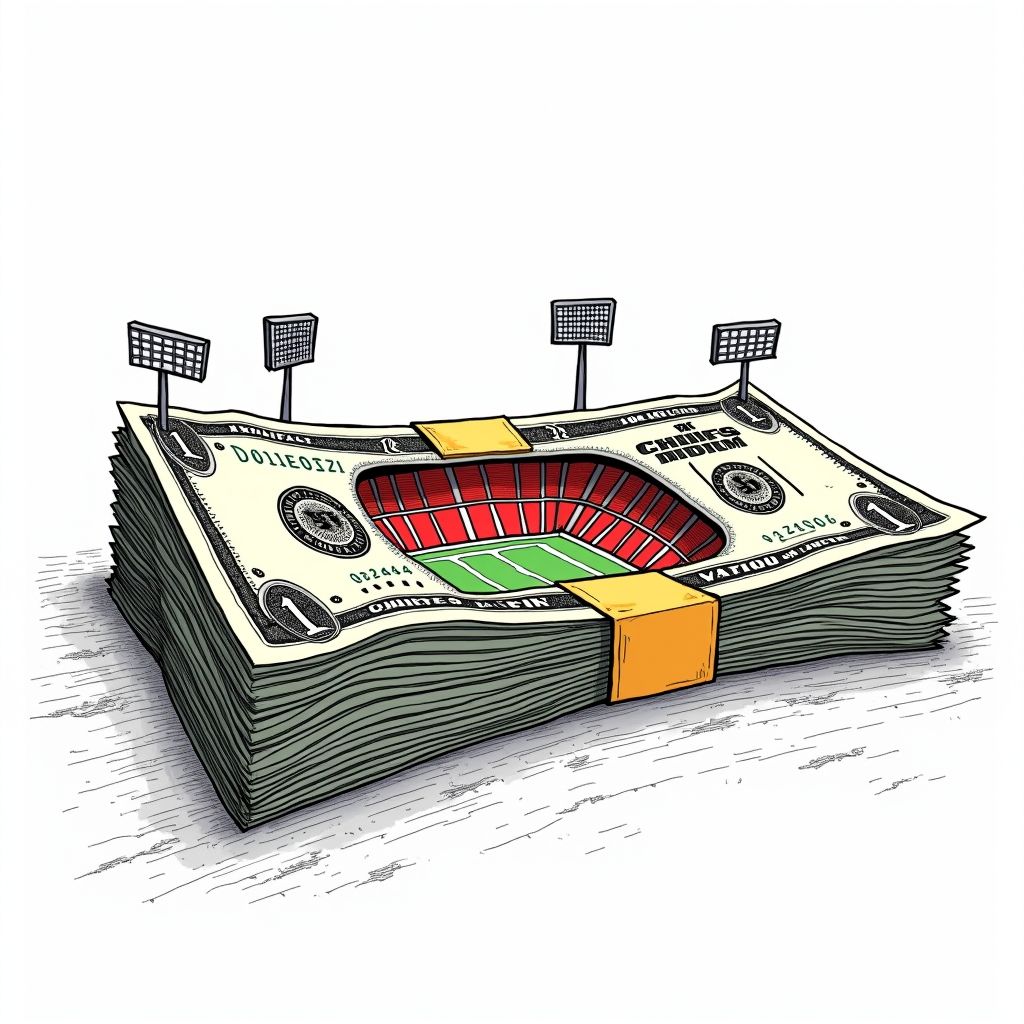
A controversial bill grants the NFL franchise voting power on a $3 billion taxpayer-funded stadium board, explicitly denying voting rights to local mayors investing millions in the project.
The Anatomy of the Kansas Sports Facilities Authority
On Thursday, March 12, 2026, the Kansas House Committee on Commerce advanced House Bill 2793, laying the legislative groundwork for the Kansas Sports Facilities Authority [1][2]. This newly proposed entity is designed to own and oversee a $3 billion domed stadium, alongside a new headquarters and practice facility, which would be leased to and managed by the Kansas City Chiefs, a professional American football franchise in the NFL [GPT][2]. The state has agreed to issue $1.8 billion in Sales Tax and Revenue (STAR) bonds to fund the project, covering exactly 60 percent of the total estimated cost [1][2]. According to Lieutenant Governor David Toland, internal economic impact studies project the development will generate $4.3 billion in regional economic benefits [2].
Taxation Without Representation?
Local leaders and some state lawmakers view the exclusion of municipal voting rights as a profound inequity [1][2]. On March 10, 2026, KCK Mayor Christal Watson formally requested voting rights for investing cities, explicitly stating that “representation is not valid if we don’t have a vote” [2]. Olathe Mayor John Bacon echoed these sentiments, advocating for an ex officio voting seat to recognize the financial commitments of participating communities [2]. In an attempt to rectify this, Democratic State House Representative Lynn Melton of Wyandotte County introduced an amendment during Thursday’s committee hearing to guarantee voting seats for both mayors, but the measure was rejected [1].
Legislative Momentum and Future Hurdles
With the annual legislative session scheduled to conclude in late March 2026, lawmakers are working on an accelerated timeline to finalize the agreement [2]. The full 125-member Kansas House of Representatives could vote on the bill as early as Monday, March 16, 2026 [alert! ‘The exact timing of the floor vote remains subject to standard legislative delays or procedural changes’], where it will require 63 votes to pass [1]. Project advocates, including legal representative Korb Maxwell, have emphasized the urgency of the legislation, stating that construction must commence promptly to meet the target opening date of 2031 [2].