Japan Faces U.S. Pressure Over Strait of Hormuz Security During White House Summit
Washington, Friday, 20 March 2026.
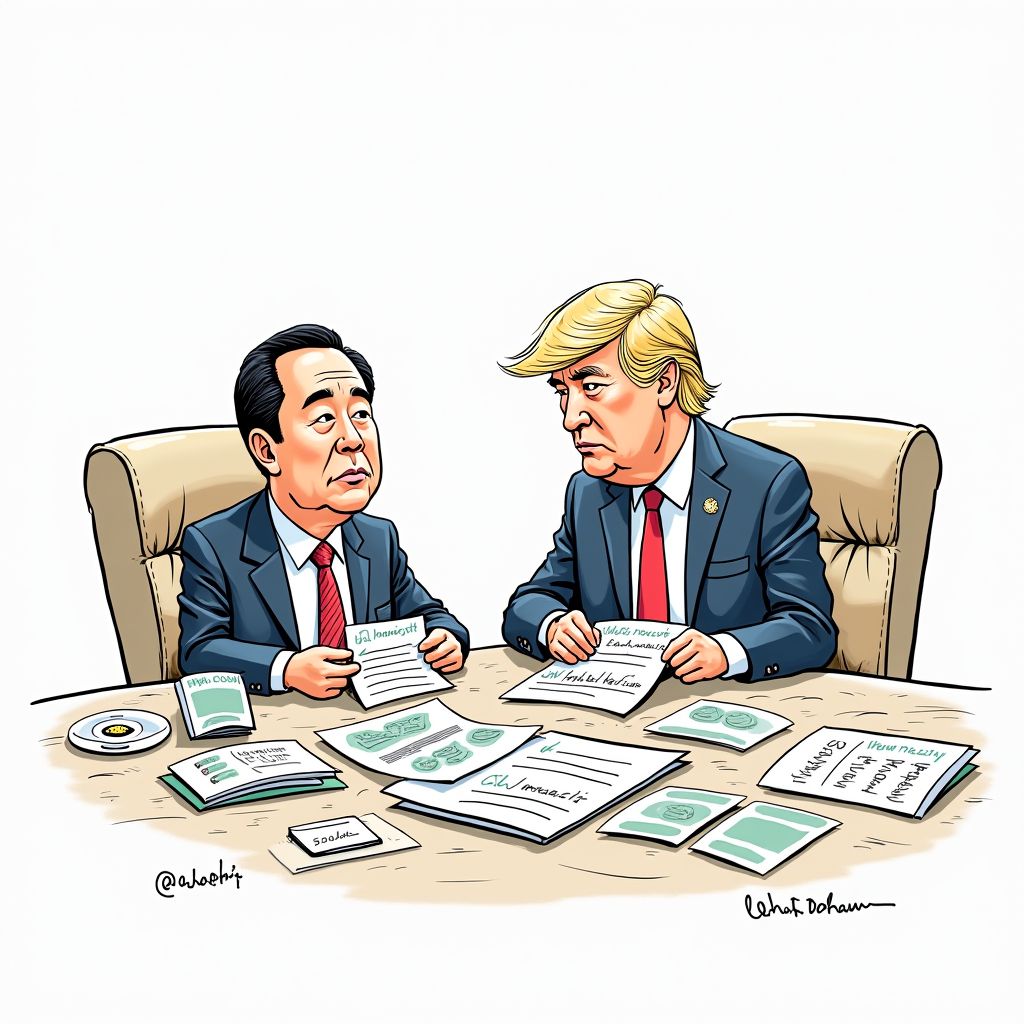
Amid President Trump’s demands for warships in the Strait of Hormuz, Japanese Prime Minister Takaichi navigated Thursday’s White House summit by advancing a $40 billion nuclear reactor investment.
Navigating Middle Eastern Pressures
The bilateral meetings, which spanned Wednesday, March 18, and Thursday, March 19, 2026, highlighted a growing friction over maritime security [2][3]. President Donald Trump has actively pressured international allies to deploy warships to secure the Strait of Hormuz amid the ongoing conflict with Iran [1][4]. However, constitutional and domestic constraints mean Japan cannot directly join the military offensive [4]. In a public Oval Office appearance, Trump expressed frustration over Japan’s initial hesitance to join his coalition, remarking, “I expect Japan to step up, you know, because we have that kind of relationship” [2].
Economic Diplomacy Through Nuclear Energy
To counterbalance the inability to provide direct military support in the Middle East, Prime Minister Takaichi arrived in Washington with a substantial economic offering [4]. The centerpiece of this diplomatic pivot is a $40 billion nuclear reactor agreement [2]. This massive infrastructure deal involves a partnership between American energy company GE Vernova Inc. and Japanese conglomerate Hitachi Ltd [2].
Indo-Pacific Security and the Taiwan Variable
While the Strait of Hormuz dominated immediate headlines, the long-term strategic focus of the summit rested firmly on the Indo-Pacific region [2]. Takaichi, a staunch conservative whose February 8 election victory was endorsed by Trump, is a prominent supporter of Taiwan [1][2]. Her administration views China as an escalating security threat and has actively pushed for a military buildup on Japan’s southwestern islands near the East China Sea [2].
A Strategic and Personal Alliance
The geopolitical maneuvering has already impacted regional diplomacy, delaying Takaichi’s planned trip to China due to the immediate ripple effects of the U.S. demands regarding Iran [2]. Yet, Takaichi has masterfully managed the interpersonal dynamics required to maintain the alliance. During the public portion of their roughly 30-minute Oval Office meeting, she directly praised the U.S. President, stating, “Even against that backdrop, I firmly believe that it is only you, Donald, who can achieve peace across the world” [2].