American Workers' Share of National Income Hits Record Low as Corporate Profits Soar
New York, Friday, 4 September 2026.
The American labor share of income fell to a record low 52.8% as corporate profits surged, signaling a growing economic shift toward capital before AI’s full deployment.
Historic Divergence in Income Distribution
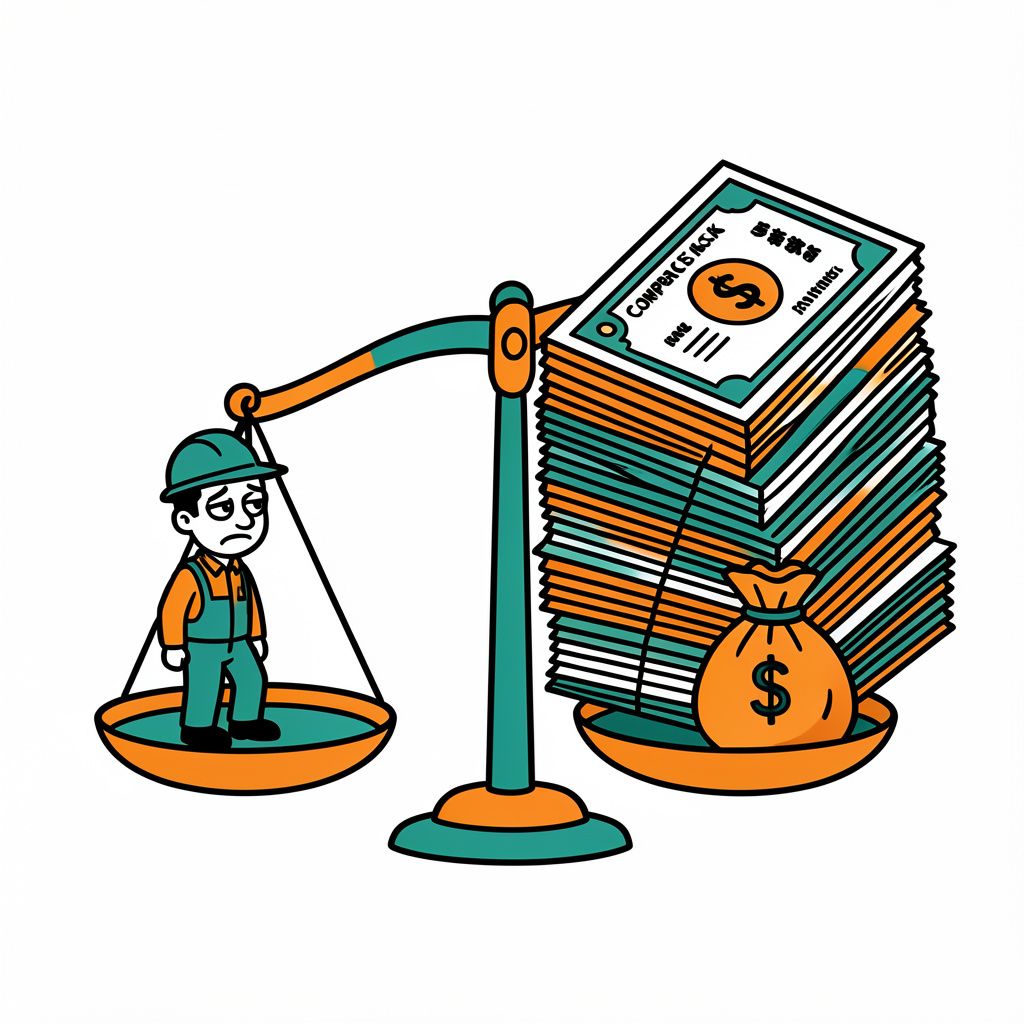
The structural shift in the United States economy has reached a critical inflection point, with workers’ share of national income falling to 52.8%, the lowest level recorded since data collection began in 1947 [1]. Concurrently, corporate profit margins have expanded to a record 14.9% of GDP, highlighting a stark decoupling of productivity gains from wage growth [2]. EY-Parthenon chief economist Gregory Daco notes that while economic output grew 1.7% in the second quarter of 2026, real compensation saw flat to slight contraction due to inflationary pressures [1]. This divergence suggests that productivity growth is currently protecting corporate margins rather than boosting household income [4].
Labor Market Resilience Amidst Expectations
Contrary to expectations of modest growth, the U.S. labor market added 162,000 jobs in August 2026, significantly exceeding the 65,000 jobs forecasted by economists [5][6]. This performance represents a 149.231 beat over projections, signaling unexpected resilience in hiring despite broader economic headwinds [5][6]. The unemployment rate held steady at 4.1%, while the labor force participation increased by 683,000 individuals [6]. However, wage growth remains moderate, with average hourly wages increasing 3.1% year-over-year, the weakest pace since May 2021 [5].
AI Investment and Economic Concentration
The surge in capital expenditure on artificial intelligence infrastructure is accelerating economic concentration, with AI server imports reaching an annualized pace of $450 billion as of August 2026 [4]. This ninefold increase from 2023 levels indicates massive capital deployment that largely benefits equipment manufacturers outside the United States [4]. Gregory Daco warns that as long as gains remain concentrated on the capital side, labor’s share could continue to plummet without a guaranteed floor [1]. Federal Reserve Beige Book data from the week of August 31, 2026, confirms modest activity with mixed AI effects on employment, noting heightened price sensitivity among consumers [3].
Source References
All factual claims in this report are derived from the following verified sources:
Sources
- fortune.com
- fortune.com
- x.com
- valueaddvc.com
- www.clickorlando.com
- spectrumlocalnews.com
- www.businessnhmagazine.com