The Hidden Flaws in Corporate Carbon Capture Strategies
New York, Saturday, 21 November 2026.
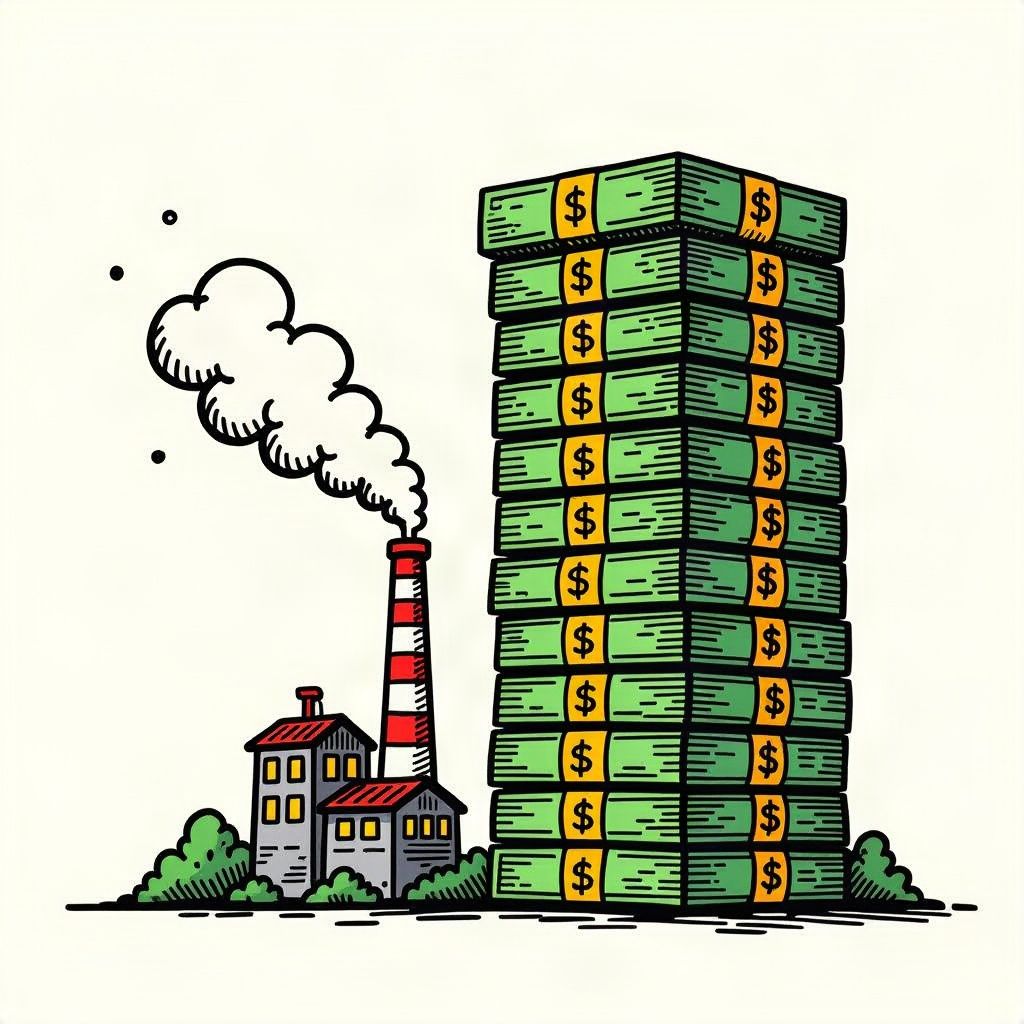
Global climate targets rely on carbon capture projections despite poor performance; in 2025, the world buried less carbon dioxide underground than a single large power plant emits annually.
Climate Models’ Growing Dependence on Unproven Carbon Capture
Corporate decarbonization strategies and national climate pledges are increasingly anchored in carbon capture and storage (CCS) projections, despite the technology’s persistent underperformance and lack of commercial viability. A ProPublica investigation reveals that leading climate models—upon which global net-zero pathways depend—rely on opaque mathematical assumptions about CCS scalability and cost reductions rather than demonstrated large-scale deployment success [1]. This dependence is particularly concerning given that, as of November 2026, the world’s total annual CO2 burial capacity remains far below what is needed to offset even a single large power plant’s emissions, with global underground storage in 2025 amounting to less than the annual emissions of a single facility [1][2]. The discrepancy between model assumptions and real-world outcomes introduces significant transition risks for corporations and investors whose balance sheets and decarbonization timelines are predicated on these projections.
A Technology in Crisis: The State of CCS Deployment
Despite three decades of development and billions in investment, the global CCS landscape remains underwhelming. Only 12 large-scale geologic storage projects have been built worldwide, with at least seven failing or underperforming, as highlighted in ProPublica’s investigation [1]. A prominent example of these challenges is Chevron’s Gorgon project in Australia—the world’s largest CCS operation—which has suffered from clogged wells and pressure spikes, forcing operators to release most captured CO2 into the atmosphere [1]. Meanwhile, the International Energy Agency (IEA) has projected that 14% of total global emission reductions by 2060 must come from CCS, a target that appears increasingly unattainable given current deployment rates [2]. The International Panel on Climate Change (IPCC) also emphasizes the need for CCS to decarbonize sectors like cement production, which accounts for 8% of global CO2 emissions, yet real-world progress lags far behind policy ambitions [2].
The Market Reality: Rising Costs and Stagnant Progress
The performance gap between CCS expectations and reality is stark. A 2023 study cited by Climate Analytics found no evidence of cost reductions across any component of the CCS value chain over the past 40 years, contradicting model assumptions of future affordability [3]. By contrast, renewable energy technologies have experienced dramatic cost declines: between 2010 and 2025, the cost of onshore wind fell by 71% and solar power by 89% [3]. Yet, as negotiators gathered in Antalya, Turkey, for the U.N. COP31 climate summit in November 2026, discussions continued to hinge on a proposed 2.5 gigatonnes of CO2 captured annually by 2035—a 40-fold increase from current capacity [3]. Climate Analytics analysts have dismissed such targets as ‘fantasy economics,’ arguing that CCS remains a ‘bit-part player’ with limited scalability and efficacy compared to renewable alternatives [3].
Corporate and Regulatory Risks: A House of Cards Built on Model Assumptions
The reliance on unproven CCS in climate models poses systemic risks to corporate balance sheets and regulatory frameworks. ProPublica’s investigation reveals that modelers often blend legitimate studies with unreviewed white papers and informal industry consultations, creating projections that lack transparency and accountability [1]. Detlef van Vuuren, leader of the Dutch climate model, admitted to revising some assumptions but emphasized that delays in global climate action leave few alternatives in their projections [1]. Similarly, Jessica Strefler of the German model system highlighted the political and technical hurdles that could undermine CCS adoption, stating that countries unwilling to enforce stringent policies may see their CCS strategies fail [1]. These uncertainties translate into financial risks: corporations banking on CCS offsets to meet net-zero targets could face revaluations if the technology fails to scale as projected, while investors in carbon-intensive industries may confront stranded asset risks [alert! ‘Market and regulatory response to CCS underperformance remains uncertain, with potential cascading effects on corporate valuations and policy frameworks.’]
The Role of Carbon Dioxide Removal: A Complement or a Distraction?
While CCS targets industrial emissions at the source, carbon dioxide removal (CDR) technologies aim to extract CO2 already in the atmosphere. However, CDR’s role in climate strategies is equally contentious. In 2025, global CDR deployment totaled only 2.2 billion metric tons of CO2, with 99.95% derived from conventional methods like reforestation, while novel approaches such as direct air capture (DAC) and bioenergy with carbon capture and storage (BECCS) contributed less than 0.05% [4]. The IPCC’s mitigation scenarios require between 5.5 and 9.4 billion tons of CDR annually by 2050 to limit warming to 2°C, leaving a gap of 3.3 to 7.2 billion tons compared to current levels [4]. Microsoft’s recent pause on novel CDR credit purchases underscores the fragility of this market, signaling a potential contraction in demand just as supply struggles to scale [4]. Even the U.S. Department of Energy (DOE) has cautioned that CDR must meet strict criteria—including durable storage and net-negative emissions—to qualify as a legitimate climate solution, yet many methods remain unverified and ecologically risky [5].
The Economic Implications: Who Bears the Cost of Unproven Solutions?
The economic stakes of relying on CCS and CDR are substantial. The IEA’s projection that CCS must deliver 14% of global emission reductions by 2060 implies an infrastructure buildout that could cost hundreds of billions of dollars, diverting capital from proven decarbonization technologies [2]. Meanwhile, the European Union’s ongoing revision of its Emissions Trading System (EU ETS) may attempt to generate demand for CDR through compliance markets, but the lack of standardized monitoring and verification frameworks risks creating a carbon credit bubble [4]. For investors, the opacity of CCS projections introduces valuation risks: companies with heavy exposure to CCS-dependent decarbonization plans may be overestimating their transition resilience. SINTEF’s research director Mona Mølnvik has argued that gas power with CCS could offer a transitional solution for data centers—a sector now responsible for 7% of global electricity demand—but even this application remains speculative [2]. With COP31 negotiations in Antalya highlighting the disconnect between climate goals and technological feasibility, policymakers and corporations alike face mounting pressure to reassess their strategies or risk financial and environmental missteps.
Sources
- www.propublica.org
- www.sintef.no
- climateanalytics.org
- www.givinggreen.earth
- casrai.org
- www.facebook.com
- x.com
- www.esgdive.com