Florida Surpasses Global Rivals as Economic Output Hits $1.8 Trillion
Tallahassee, Wednesday, 28 October 2026.
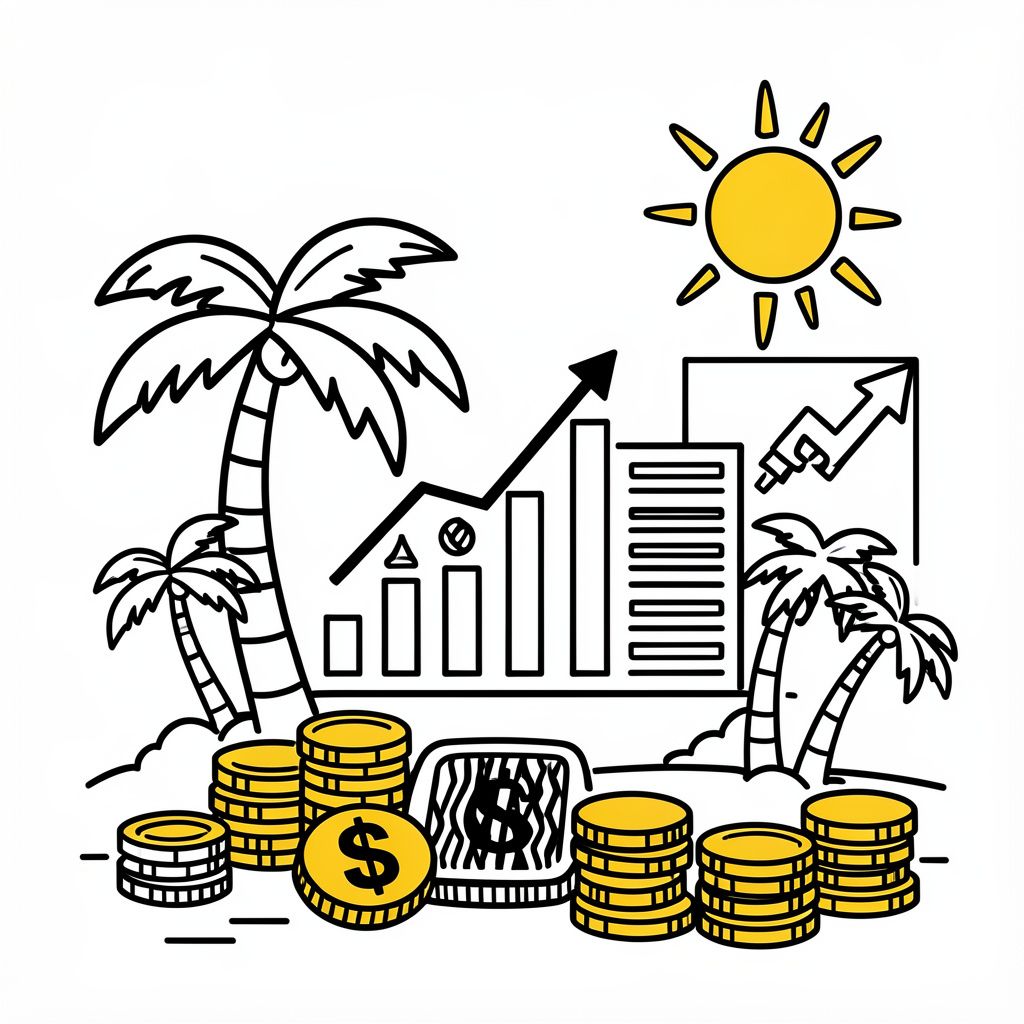
Florida’s economy expanded to $1.8 trillion in 2026, surpassing Australia and Mexico to rank as the world’s 14th-largest economy through aggressive deregulation and zero personal income taxes.
A New Economic Milestone for the Sunshine State
Florida’s economy reached a historic milestone on Wednesday, 28 October 2026, with gross domestic product (GDP) climbing to $1.8 trillion, according to the Florida Chamber of Commerce [1][5]. This achievement vaulted the state past long-standing global rivals Australia and Mexico to claim the 14th spot in the world economy, trailing only South Korea and Canada among other advanced economies [1][5][6]. The expansion reflects a 6.3% year-over-year increase, marking one of the fastest growth rates in the nation and underscoring the effectiveness of Florida’s low-tax, deregulatory model [1][5][6].
The Policy Blueprint Behind the Boom
State officials attribute the record growth to a coordinated policy framework emphasizing three core pillars: the absence of a state personal income tax, aggressive deregulation, and fiscal restraint [1][5][6]. Senator Ashley Moody, R-Fla., who served as Florida’s attorney general alongside Governor Ron DeSantis from 2019 to 2025, framed the achievement as a direct outcome of resisting federal overreach during the pandemic and prioritizing economic freedom [1][2]. Moody argued that Florida’s governance approach—prioritizing individual rights and private-market integrity—created a model that other states and even federal lawmakers are now seeking to emulate [1][2]. ‘We stood up to that [federal overreach], and because of that, our state really showed that if you remain true to the purpose of government—to protect people, both their rights and their safety—you can flourish,’ Moody stated in a Fox Business interview [1][2].
Demographic and Economic Ripple Effects
The economic surge has been accompanied by rapid demographic transformation. Between April 2020 and July 2025, Florida added more than 1.9 million new residents, with nearly 600,000 migrating from other states in 2022 alone—an average of 1,640 people per day [5][6]. This influx has fueled demand across housing, infrastructure, and labor markets, though it has also intensified challenges such as housing affordability and workforce readiness [5][6]. Median single-family home prices in Florida surged by approximately 50% between 2020 and 2024, reflecting both rising demand and constrained supply [5][6]. Despite these pressures, Florida now leads the nation in new business startups and net income migration, with over $20 billion in net income flowing into the state in the past year—outpacing New York, California, and Illinois [6].
From Blueprint to 2040 Vision: Sustaining Momentum
To sustain this growth trajectory, Florida is transitioning from the Florida 2030 Blueprint—its current long-term strategic plan—to a new initiative, the 2040 Blueprint, which will begin formal research in early 2027 and launch in Fall 2028 [3][7]. The Florida Chamber Foundation, led by President and CEO Mark Wilson, is spearheading the effort using AI-enabled analysis and statewide outreach to refine the state’s six-pillar framework, which spans education, workforce development, infrastructure, economic growth, government efficiency, and quality of life [3][7]. Wilson cautioned against complacency, noting that while Florida has climbed from the 19th largest global economy in 2017 to 14th today, the state must continue diversifying and innovating to reach its goal of becoming a top-10 global economy [3][7]. ‘My fear for Florida is that we’re talking about how we’re No. 1 so much that we start acting like we’re No. 1,’ Wilson said at the 2026 Future of Florida Forum. ‘What we need to do is focus on what else we need to do to diversify and grow this economy’ [3].
National Implications and Future Outlook
Florida’s economic ascent is reshaping the U.S. regulatory landscape, drawing capital and businesses away from traditional high-cost centers such as California and New York toward the Sun Belt [1][4][6]. The state’s GDP now exceeds that of major economies like Mexico and Australia, and analysts suggest it is on a path to surpass South Korea (currently 13th) with an additional 2% growth, and Canada (10th) with roughly 21% more expansion [1][6]. While workforce shortages persist—72% of Florida employers report difficulty finding qualified talent—and educational readiness remains a concern, with over half of kindergarteners entering school unprepared and third-grade reading proficiency improving only incrementally, the state’s free-market model continues to attract national attention [3][6]. As Florida prepares its next decade of planning, its story serves as both a blueprint and a cautionary tale about balancing rapid growth with inclusive prosperity [3][6][7].
Sources
- www.foxbusiness.com
- www.foxnews.com
- www.foxnews.com
- floridapolitics.com
- www.floridatrend.com
- wisevoter.com
- vibetrader.com