Unpaid Household Work Worth Six Trillion Dollars Left Out of National Economic Data
Washington, Wednesday, 23 September 2026.
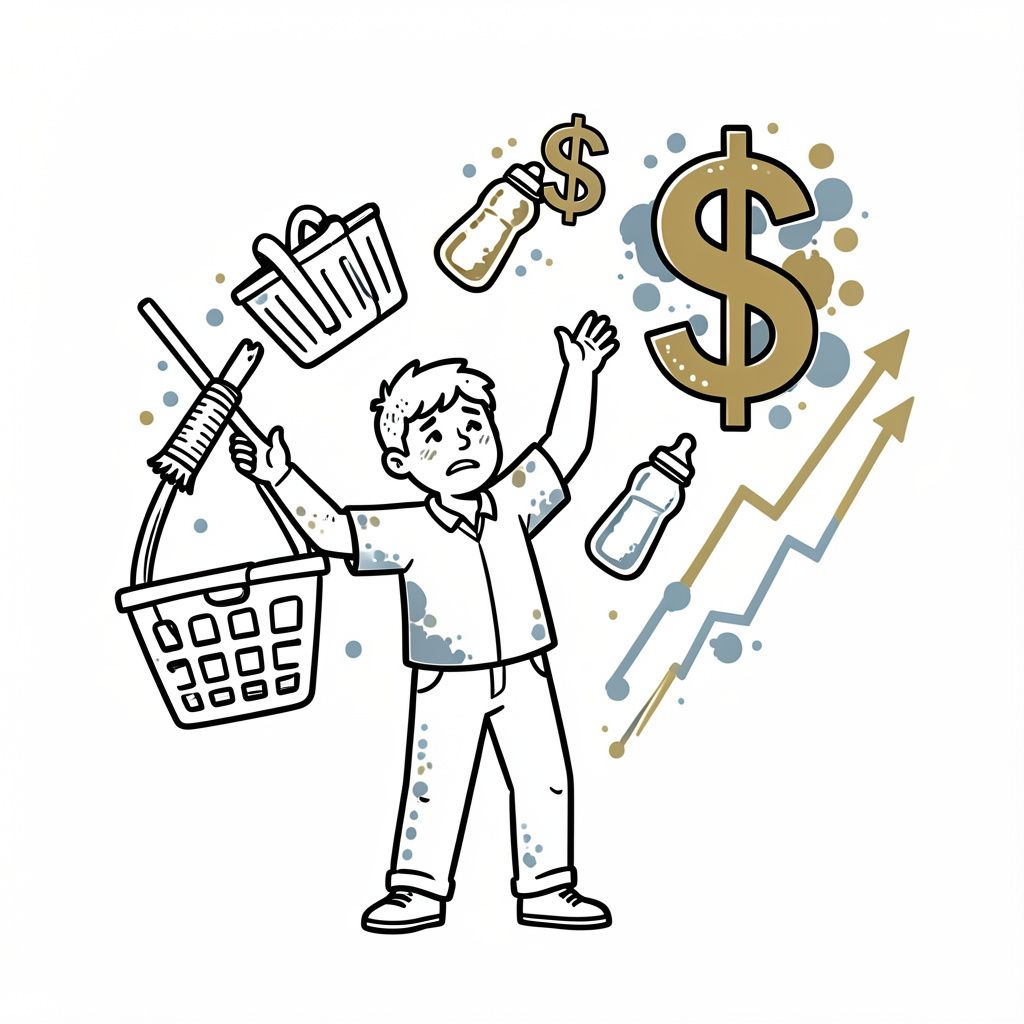
A September 2026 report reveals unpaid American domestic labor is worth six trillion dollars annually—twenty percent of output—yet its exclusion from official calculations distorts true economic growth.
Valuation Methodology and Economic Scope
The Government Accountability Office released report GAO-26-107871 on September 22, 2026, quantifying the monetary value of unpaid household labor for the first time in a comprehensive federal analysis [2]. The report estimates the national market value of this work at approximately $6 trillion annually, a figure representing nearly 20% of the United States Gross Domestic Product for 2024 [2]. This valuation encompasses over $4 trillion in unpaid household chores and up to $1.4 trillion in primary caregiving activities, utilizing a replacement wage methodology to assign economic weight to domestic tasks [2]. Industry data cited in parallel analyses suggests a replacement wage of roughly $70 per day for housework, alongside average daily childcare costs of $51 and house cleaning services averaging $21.29 per hour [4]. By excluding these figures, official metrics present an incomplete view of economic output, as historical data from 1965 through 2020 indicates conventional GDP grew by an average of 6.3% annually while a measure accounting for household labor indicated a lower average growth rate of 6.1% [1]. The difference in growth rates, calculated as 0.2, highlights the distortion caused by omitting non-market production from national accounts [1].
Labor Dynamics and Gender Disparities
Demographic analysis from 2021 through 2024 reveals that 54% of individuals performing unpaid household labor are women, who also dedicate more time to childcare and domestic tasks than their male counterparts [1]. Data indicates that over 87% of Americans aged 15 and older perform unpaid household work on a typical day, averaging 3.72 hours per person [1]. Despite emerging trends where women out-earn male partners, women continue to perform twice the amount of domestic cooking and cleaning, contributing to higher reported workplace burnout rates of 48% compared to 36% for men [1]. Experts note that without these activities, the formal economy would not function, as the value of money earned in jobs would be reduced if survival services had to be purchased on the formal labor market [1]. Furthermore, 71% of unpaid adult care providers are engaged in eldercare, reflecting the pressures on the ‘sandwich generation’ as the population of Americans aged 65 and older has grown from 12% in 2000 to 18% in 2026 [4].
Policy Implications and Future Metrics
The GAO report advocates for a broader definition of efficiency that incorporates activities like cleaning and caregiving into workers’ productivity metrics rather than focusing exclusively on office-based job output [1]. Economists consulted for the report indicate that quantifying unpaid work is essential for informing policymaking regarding caregiver support, including stipends for family members caring for disabled veterans and retirement security for caregivers [2]. Michael Hoffman, a GAO representative, noted that measuring the value of this work helps households understand how much caregivers give up when they leave the workforce or how much they would need to pay someone else to do the work if they could not [3]. While the report has no real implications for the economy itself, it improves the understanding of economic conditions and may encourage more men to step up, as time use data suggests is already happening [4]. Policymakers are now considering how these findings could influence future tax changes or Social Security caregiver credits to better support the invisible infrastructure of the American economy [4].