Tech Giants Drive Market Rally as Wall Street Braces for Inflation Update
New York, Thursday, 22 January 2026.
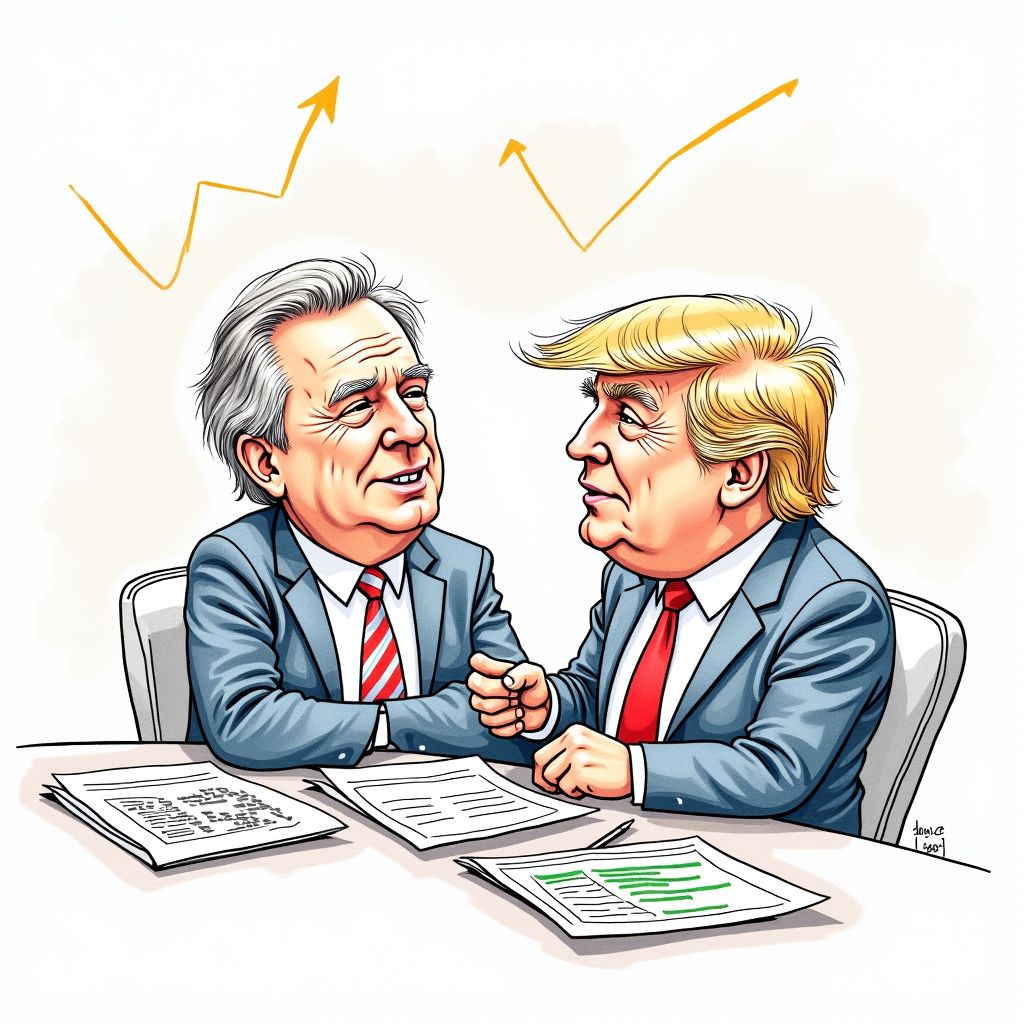
Major US indices are trending upward today, January 22, 2026, driven by significant gains in technology heavyweights like Nvidia and Tesla. This rally comes at a pivotal moment as investors await critical inflation data, with the Consumer Price Index currently holding steady at 2.7%—still above the Federal Reserve’s target. While President Trump recently claimed in Davos that inflation is “defeated,” economic realities suggest a more complex landscape involving sticky prices and political pressure on Fed Chair Jerome Powell. The market’s resilience highlights a fascinating disconnect between macroeconomic tensions and the enduring investor appetite for growth stocks.
Market Resilience Amidst Economic Ambiguity
Futures for the Dow Jones Industrial Average and other major indexes are trading higher today, with technology giants Nvidia and Tesla emerging as early winners [1]. This optimism persists even as the market awaits the release of delayed Personal Consumption Expenditures (PCE) figures and the final reading of third-quarter Gross Domestic Product, which previous estimates placed at an annualized growth rate of 4.3% [2]. The anticipation of these reports is palpable, as they are expected to confirm that inflationary pressures remain well above the Federal Reserve’s stability target of 2% [2]. While the “Sell America” trade observed earlier in the week has paused, the US Dollar Index remains lower on the week as focus shifts back to these macroeconomic indicators [2].
The Divergence Between Rhetoric and Reality
The economic narrative is currently dominated by conflicting signals regarding price stability. On Wednesday, January 21, President Donald Trump declared in a speech at the World Economic Forum in Davos that the United States had “defeated” inflation, asserting the country has “virtually no inflation” [3]. However, federal data paints a more nuanced picture. As of December 2025, the Consumer Price Index (CPI) stood at an annual rate of 2.7%, with core inflation—excluding volatile food and energy sectors—persisting at 2.6% [3][4]. While this represents a decrease from 3% in September 2025, it remains stubbornly above the central bank’s goal [4][6].
Federal Reserve Under Pressure
This mixed economic data complicates the path forward for the Federal Reserve, which lowered interest rates three times last fall to a range of 3.5% to 3.75% [6]. The central bank’s independence is currently being tested by intense political friction. The Justice Department has launched a criminal investigation into Chair Jerome Powell regarding headquarters renovations—a move Powell alleges is politically motivated pressure to lower rates further [6]. With Powell’s term as chair set to expire in May 2026, the governance of monetary policy faces a period of significant uncertainty [5][6].
Sources
- www.investors.com
- www.fxstreet.com
- www.cnbc.com
- www.integratedmortgageplanners.com
- www.euronews.com
- www.producer.com
- www.piie.com