Dimon Warns DOJ Probe Into Federal Reserve Could Trigger Higher Interest Rates
New York, Wednesday, 14 January 2026.
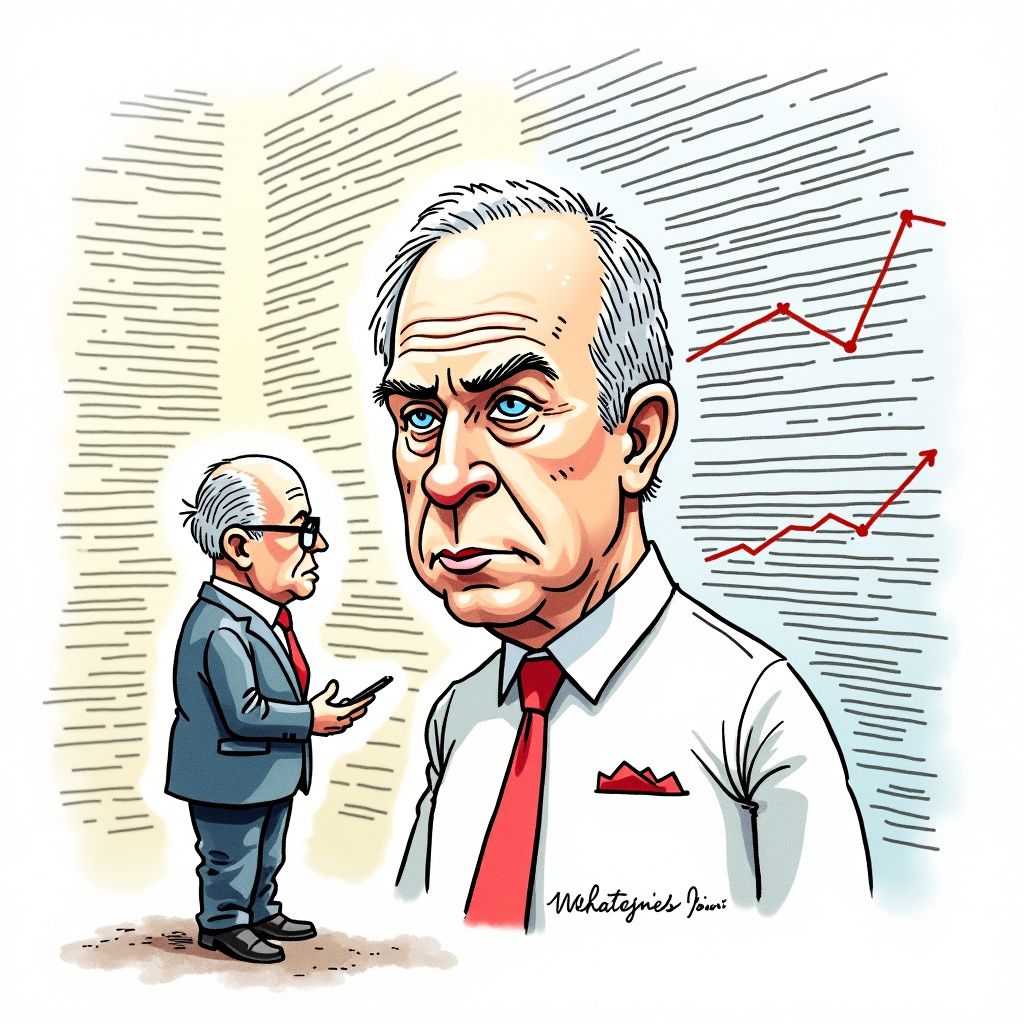
JPMorgan’s CEO warns the administration’s criminal probe into Chair Powell will backfire, creating market instability that forces the very interest rate hikes the White House hopes to prevent.
Market Volatility Fears Mount
JPMorgan Chase CEO Jamie Dimon entered the fray on Tuesday, January 13, cautioning that the Department of Justice’s (DOJ) intensifying investigation into Federal Reserve Chair Jerome Powell creates economic risks that could backfire on the administration [1][2]. While we previously reported that the criminal inquiry threatens to freeze planned rate cuts throughout 2026 [https://wsnext.com/3da56d1-Federal-Reserve-Monetary-Policy/], Dimon’s comments during his company’s fourth-quarter earnings call highlight a more severe consequence: the potential for rising inflation and interest rates driven by market instability [1][2]. Dimon argued that maintaining the central bank’s autonomy is crucial for economic stability, stating that “anything that chips away” at that independence “is probably not a good idea” [1][5].
The Economics of Political Interference
According to the veteran banking executive, undermining the Fed’s credibility forces markets to price in political risk, which “will raise inflation expectations and probably increase rates over time” rather than lower them [1][3]. This specifically contradicts the White House’s stated desire for cheaper borrowing costs, as the federal funds rate currently sits between 3.50 and 3.75 percent following three consecutive quarter-point cuts in late 2025 [1][2]. Dimon emphasized that while he does not agree with every Fed decision, the perception of independence is non-negotiable for global investors [8]. Wall Street analysts warn that if the bond market believes the Fed is being coerced, long-term yields will spike to compensate for the unpredictability of U.S. monetary policy [5].
A Clash of Institutions
The conflict escalated sharply on Sunday, January 11, when Chair Powell revealed that the DOJ had served the Federal Reserve with grand jury subpoenas and threatened a criminal indictment regarding his June 2025 Senate testimony [1][2]. The investigation centers on a renovation project for the Fed’s Washington headquarters, which has seen costs balloon from an initial estimate of $1.9 billion to $2.5 billion—a 0.6 billion dollar increase that critics have labeled the “Palace of Versailles” [1][2][5]. U.S. Attorney Jeanine Pirro confirmed on January 11 that her office would continue the legal effort, alleging the Fed ignored multiple inquiries into these cost overruns [3]. Powell has maintained that the threat of charges is a retaliatory consequence of the Fed refusing to set interest rates based on the President’s preferences [1][3].
Executive Branch Doubles Down
President Donald Trump dismissed Dimon’s economic warnings on Tuesday, doubling down on his attacks against the central bank chair. Trump told reporters that Dimon was “wrong” to defend the Fed’s independence in this context, suggesting the CEO might actually prefer higher rates to increase bank profits [3][4]. In a pointed remark on January 13, the President referred to Powell as “incompetent” or “crooked,” adding, “That jerk will be gone soon” [3]. This rhetoric comes despite Treasury Secretary Scott Bessent expressing concern that the DOJ probe could complicate the confirmation of the next Fed chair after Powell’s term expires in May 2026 [3].
Political and Global Backlash
The administration’s aggressive posture has drawn sharp criticism from lawmakers and the international financial community. Senator Thom Tillis (R-N.C.) warned on January 12 that the inquiry calls into question the “independence and credibility of the Department of Justice” rather than the Fed [1][2]. Tillis pledged to oppose the confirmation of any future Fed nominee—including the replacement for the upcoming vacancy in May—until the legal matter is resolved [1][2]. Similarly, Senator John Kennedy (R-La.) characterized the conflict as a “pissing contest” that guarantees interest rates will rise, noting the economy needs such instability “like we need a hole in the head” [3]. Support for Powell has also extended beyond U.S. borders; on January 12, a coalition of 12 central bankers, including European Central Bank President Christine Lagarde, issued a statement of “full solidarity” with Powell to defend the cornerstone of financial stability [5].
Sources
- thehill.com
- thehill.com
- www.cnbc.com
- www.bloomberg.com
- nypost.com
- www.barrons.com
- www.facebook.com
- www.foxbusiness.com