Bo French Expelled From Elite Texas Country Club Following Social Media Fallout
Fort Worth, Friday, 20 November 2026.
According to reports by Politico and the Express-News, Republican Bo French was expelled from Fort Worth’s River Crest Country Club following bipartisan criticism over controversial social media remarks.
Timeline of Controversy and Expulsion
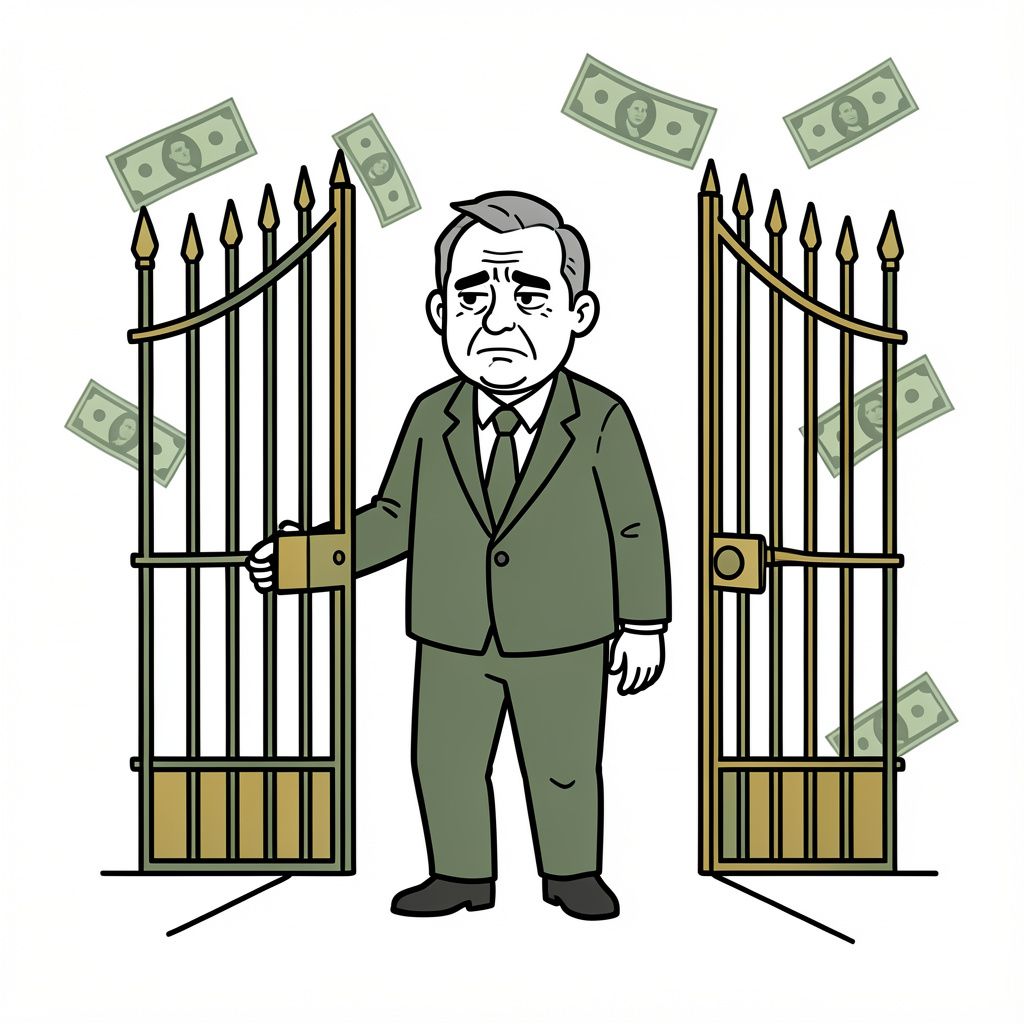
The controversy surrounding Bo French, a prominent Texas Republican figure, began in September 2026 when he posted racially charged commentary on social media targeting South Asian students at the University of Texas. The posts, which included assertions about immigration policies displacing Americans, sparked immediate bipartisan backlash [2][3][5]. French, who was then campaigning for a seat on the Texas Railroad Commission, defended his remarks by framing them as a critique of university policies he claimed disadvantaged Texans [2]. The River Crest Country Club board in Fort Worth initially requested his resignation in September 2026 over these ‘racist posts’ [1][3][5], but French refused, leading to an expulsion meeting [1][3]. On November 10, 2026, the club’s nine-member board voted to terminate his membership ‘for reasons relating to the reputation and general welfare of the Club’ [1][2][3][5].
Election Defeat and Broader Fallout
French’s expulsion from the elite country club followed closely on the heels of his electoral defeat. On November 3, 2026, he lost his bid for the Texas Railroad Commission seat to Democrat Jon Rosenthal by approximately 677,000 votes, marking the first time in over 30 years that a Republican lost the seat to a Democrat [2][3]. The defeat capped a tumultuous period for French, who had previously served as the Tarrant County Republican Party chair. His tenure in that role was marred by additional controversies, including a 2025 social media poll asking whether ‘Jews’ or ‘Muslims’ posed the ‘bigger threat to America,’ which prompted then-Lieutenant Governor Dan Patrick to call for his resignation [4]. French’s refusal to resign from the country club, despite the board’s initial request, underscored his defiance in the face of mounting criticism [1][2][3].
Public and Institutional Reactions
The expulsion decision drew significant attention from both local and national media outlets, with Politico obtaining and publishing the club’s expulsion letter on November 18, 2026 [1][3]. French responded on social media platform X, sharing a six-page defense statement that included references to prominent political figures such as Erik Prince and Donald Trump [1]. Despite French’s defiant stance, the club maintained its decision to terminate his membership, citing broader reputational risks [1][2][3]. The club’s policy of not commenting on past, present, or prospective members further shielded it from public scrutiny, although it did not respond to requests for comment from other media outlets [2]. The episode highlights the growing consequences that public figures face when inflammatory rhetoric transcends political campaigns and infiltrates private institutions.
Implications for Political and Social Networks
The fallout from French’s expulsion extends beyond his immediate political career, illustrating the heightened risks for corporate executives and political figures whose rhetoric spills into private social and business circles [GPT]. The River Crest Country Club, established in 1911 and described as a ‘who’s who’ of Fort Worth’s elite, serves as a microcosm of broader societal shifts where reputational integrity increasingly intersects with public accountability [2]. French’s case underscores how social media controversies can precipitate institutional actions that further isolate individuals from influential networks, potentially limiting future opportunities within both political and business spheres [2][3]. As of November 20, 2026, French has not indicated whether he will appeal the decision or seek reinstatement, leaving the episode unresolved in both personal and professional contexts.