House Blocks Limits on Trump’s Venezuela Strategy in Historic Tie Vote
Washington, Friday, 23 January 2026.
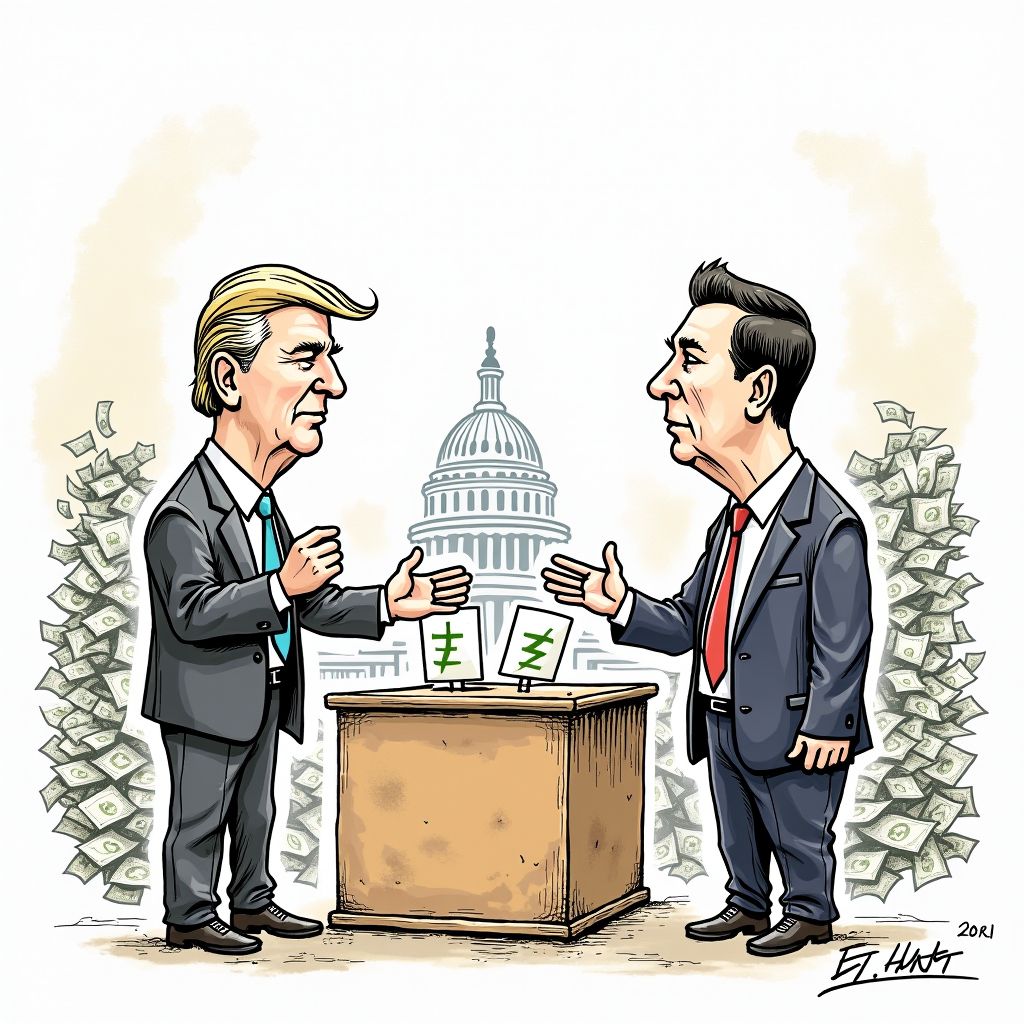
On January 22, 2026, the House of Representatives narrowly blocked a War Powers resolution intended to restrict President Trump’s military authority in Venezuela. The measure failed in a dramatic 215-215 tie, decided only after Republican leadership held the vote open for over 20 minutes to allow Representative Wesley Hunt to return and cast the decisive ballot. While two Republicans broke ranks to support the Democratic-led initiative, the outcome preserves the administration’s strategic flexibility following the recent capture of Nicolás Maduro. For investors, this legislative deadlock signals continued geopolitical volatility in the region. By leaving military intervention options on the table without explicit congressional approval, the vote sustains the risk premiums currently priced into global energy markets, as uncertainty regarding the stability of Venezuela’s vast oil infrastructure remains high.
Partisan Divide and Key Players
The resolution, led by Representative Jim McGovern, a Democrat from Massachusetts, aimed to prevent President Trump from deploying U.S. military forces to Venezuela without explicit congressional approval [4][7]. The House vote highlighted a deep partisan divide, with Republicans largely opposing the measure and Democrats supporting it [1][5]. Despite the Republican majority in the House, with 218 seats compared to the Democrats’ 213, the resolution garnered support from two Republicans, Representatives Don Bacon of Nebraska and Thomas Massie of Kentucky [8][5]. Their votes underscored the internal tensions within the Republican party regarding Trump’s foreign policy decisions [3].
The Context of Military Action
The vote occurred in the wake of heightened U.S. military activity in Venezuela, including the capture of Venezuelan President Nicolás Maduro earlier in January 2026 [4][7]. This operation, along with Trump’s stated intentions to exert control over Venezuela’s oil industry, prompted Democrats to push for the War Powers resolution [1][4]. Representative Brian Mast, the Republican chair of the House Armed Services Committee, defended Trump’s actions, asserting that the military had completed its mission with “Operation Absolute Resolve,” referencing the capture of Maduro [2]. Mast accused Democrats of criticizing Trump regardless of his actions, even when, in Mast’s view, they were successful [1][4].
Echoes of Past Debates and Senate Inaction
This recent House vote echoes similar debates and divisions in Congress regarding military intervention and executive authority. A nearly identical resolution, also led by McGovern, was proposed on December 17, 2025 [7]. Furthermore, Senate Republicans had narrowly dismissed a similar Venezuela war powers resolution around January 14, 2026, after the Trump administration convinced two Republicans to withdraw their support [1][3]. In the Senate, Vice President JD Vance broke a tie to defeat a similar measure [1][8]. These repeated attempts to check the President’s power reflect ongoing concerns about the balance of power between the executive and legislative branches, particularly concerning military actions abroad [3][6].
Broader Implications and Future Actions
The defeat of the resolution signifies more than just a single vote; it reflects a broader struggle over the direction of U.S. foreign policy and the limits of presidential power. Representative Gregory Meeks, a leading Democrat on the House Foreign Affairs Committee, criticized Trump’s approach, arguing that he was isolating the United States and diminishing its global standing [1][3][4]. Despite this setback, Democrats have signaled their intent to continue challenging the President’s military actions through further votes and resolutions [6]. Representative Maggie Goodlander stated on January 22, 2026, that Democrats would be relentless in pressing the issue and engaging their colleagues [6]. The debate over Venezuela is also connected to Trump’s broader foreign policy, including threats against European allies and unusual claims, such as the U.S. acquisition of Greenland [3][6].
Sources
- apnews.com
- www.npr.org
- www.theguardian.com
- abcnews.go.com
- thehill.com
- www.cbsnews.com
- www.reuters.com
- www.nytimes.com