U.S. Returns Armed Fighter Jets to Remote Aleutian Island for the First Time in Decades
Anchorage, Friday, 30 October 2026.
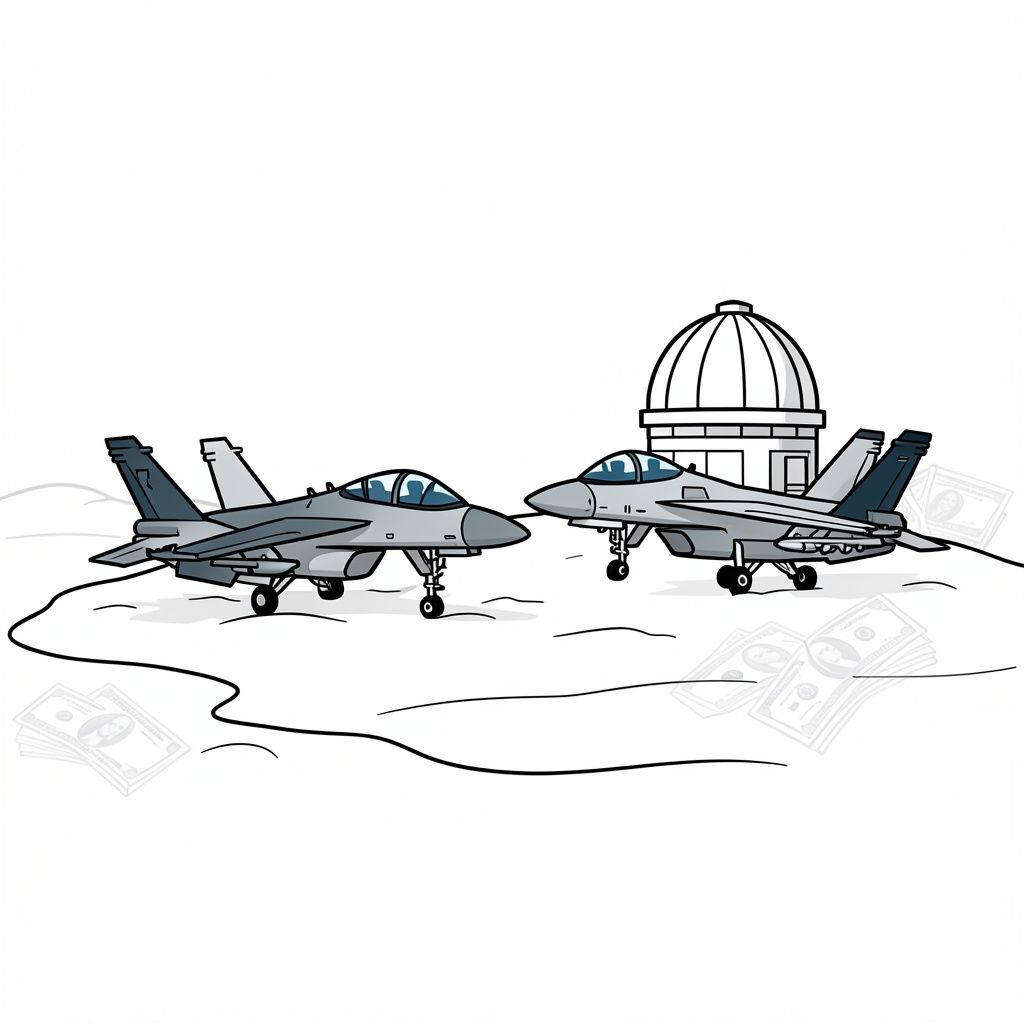
NORAD deployed armed F-16 fighters to an isolated outpost on Alaska’s Shemya Island, reviving Cold War alert operations to strengthen northern defense logistics.
A Historic Return to Cold War-Era Posture
For the first time in decades, the North American Aerospace Defense Command (NORAD) has reactivated fighter alert operations at Eareckson Air Station on remote Shemya Island in Alaska’s Aleutian chain—a strategic move underscoring the evolving security calculus in the Arctic and Pacific theaters [1][4]. The deployment of armed F-16 Fighting Falcons, which maintained an alert posture from October 18 to 26, 2026, before launching on a homeland defense mission on October 25, marks the end of a post-Cold War hiatus at the austere outpost [1][4]. Routine fighter missions at Eareckson date back to the Cold War era, featuring aircraft such as the F-4 Phantom II and F-15 Eagle, but were discontinued in the early 1990s as defense priorities shifted [4].
Binational Integration in the Northern Defense Architecture
The October 25 mission was not merely a symbolic gesture but a demonstration of NORAD’s Agile Combat Employment (ACE) strategy, which emphasizes rapid deployment and sustained operations from dispersed, minimally supported locations [2][5]. The operation integrated U.S. Air Force F-16s and F-35A Lightning IIs from Eielson Air Force Base, Royal Canadian Air Force CF-18 Hornets from Cold Lake, Alberta, along with an E-3 Sentry Airborne Warning and Control System (AWACS), KC-135 Stratotankers, and supporting tanker and rescue aircraft [2][5][8]. The combined force covered distances of approximately 2,575 kilometers (1,600 miles) from Eielson and 4,184 kilometers (2,600 miles) from Cold Lake, highlighting the logistical challenges of projecting airpower across vast northern expanses [2][5]. Lt. Gen. Robert D. Davis, commander of the Alaskan NORAD Region, emphasized the mission’s significance, stating that operating from Eareckson proved the command’s ability to deploy to austere locations, maintain alert status, and integrate forces seamlessly [2][10].
Strategic Imperatives Behind the Deployment
The revival of alert operations at Eareckson Air Station reflects broader geopolitical and military trends, including the increasing assertiveness of Russian military activity in the Arctic and the growing importance of northern transit routes for global trade [7][alert! ‘U.S. and allied responses to Russian Arctic militarization are evolving rapidly; specific policy documents are not cited in the provided sources’]. NORAD’s Alaska Air Defense Identification Zone (ADIZ) has seen heightened Russian aircraft activity, with the command routinely tracking such flights to ensure early detection and identification [7]. While these flights are not always considered imminent threats, they underscore the need for robust air defense capabilities in the region. The deployment also aligns with NORAD’s broader Arctic strategy, which includes periodic certification of austere airfields like Eareckson for future operations rather than permanent basing [8]. Eareckson’s remote location—approximately 500 miles from Russia’s Kamchatka Peninsula and 1,000 miles from mainland Alaska—makes it a critical node for monitoring northern approaches [4].
Logistics, Readiness, and Future Implications
Operating from Eareckson Air Station presents unique challenges, from extended supply chains to limited maintenance infrastructure, but the mission successfully certified the base’s arresting system for F-16 operations, validating its viability for future austere airfield exercises [2][5][8]. The deployment was part of a larger transition from Operation Noble Defender to Operation Noble Eagle, signaling a shift from training to active homeland defense missions [2]. Following the alert period, NORAD will review performance data to refine future deployments across Alaska and the Arctic, with an emphasis on maintaining combat readiness in austere conditions [9]. This exercise is part of a broader trend in U.S. defense strategy, where Agile Combat Employment is becoming a cornerstone of readiness in contested environments, particularly in the Indo-Pacific and Arctic regions [GPT].
Sources
- www.dvidshub.net
- defence-industry.eu
- www.facebook.com
- www.google.com
- www.google.com
- www.google.com
- www.google.com
- www.google.com