Nationwide Flights Delayed as United Airlines Suffers Major Computer Outage
Chicago, Sunday, 19 July 2026.
A major computer outage on July 18, 2026, disabled United Airlines’ check-in kiosks and contact centers nationwide, triggering widespread flight delays and exposing vulnerabilities in legacy airline technology.
System-Wide Failure Disrupts Weekend Travel
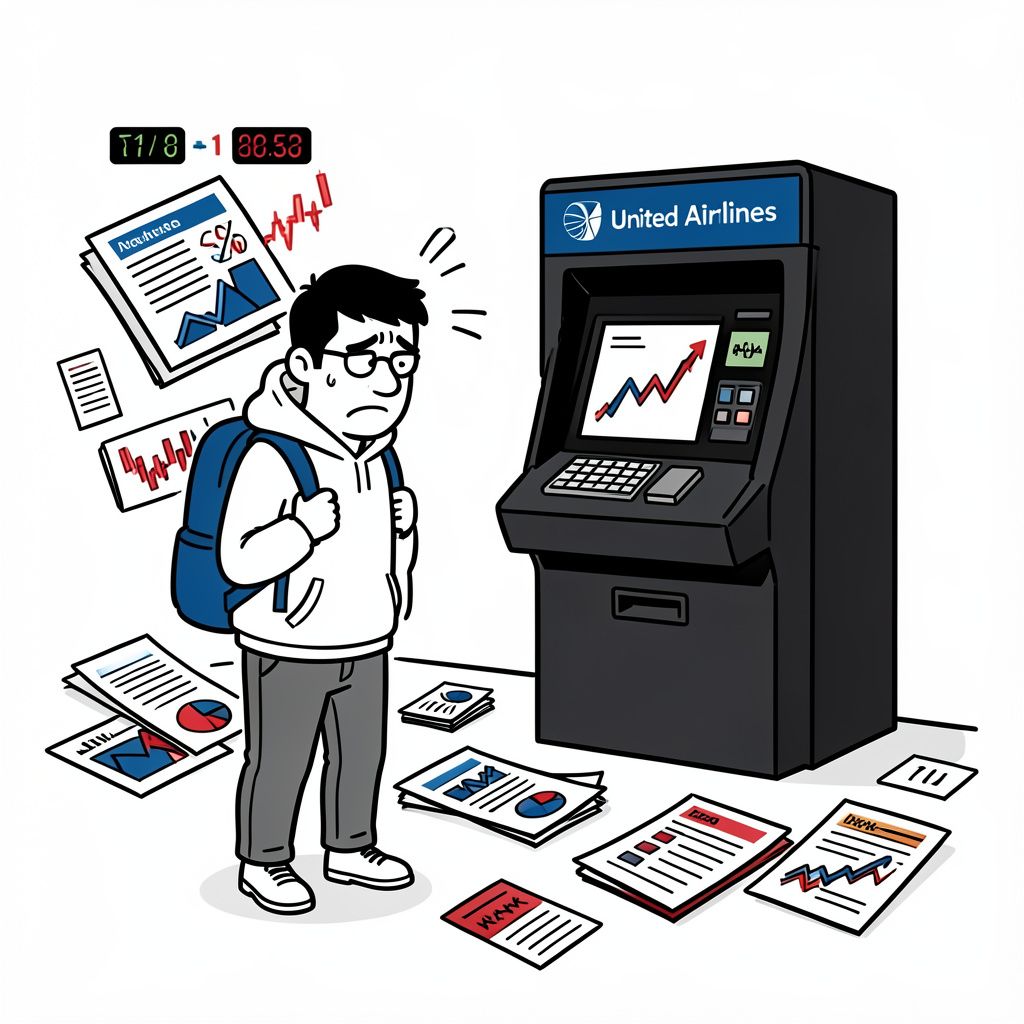
On Saturday, July 18, 2026, United Airlines (NASDAQ: UAL [GPT]) experienced a major nationwide technology outage that severely disrupted its flight operations and reservation systems [5]. The technical failure, which became apparent early in the morning, disabled essential functions including customer contact centers, baggage handling, and check-in processes at numerous airports across the United States [5]. The rapid escalation of the technical failure was evident as the time between the initial Down Detector reports and the peak of the disruption was just 43 minutes, with reports starting before 7:40 a.m. and peaking at over 430 reports by 8:23 a.m. [5]. During this time, passengers attempting to use self-service check-in kiosks were met with “temporarily unavailable” screens, forcing them into lengthy manual queues [4].
Legacy Infrastructure Under the Spotlight
The root of the disruption has been linked to United Airlines’ Unimatic system, a legacy core infrastructure environment responsible for flight tracking, scheduling, and critical aircraft logistics [8][GPT]. While flights already in the air or those that had departed their gates were unaffected, ground operations quickly ground to a halt [5]. The instability within the Unimatic environment triggered cascading delays across United’s domestic hubs [8]. This infrastructure failure forced airport staff to reboot systems and manage passengers manually, demonstrating the profound operational risks that unexpected technical failures pose to corporate travel and logistics [3][8].
Severe Bottlenecks at Major Aviation Hubs
Major transit hubs across the country felt the immediate impact of the system-wide failure. At George Bush Intercontinental Airport (IAH) in Houston, Texas, travelers faced chaotic scenes in Terminal C as the check-in systems failed, causing severe boarding delays [4]. Similar operational bottlenecks were reported at other key hubs, including Newark Liberty International Airport, Washington Dulles International Airport, and Chicago O’Hare International Airport (ORD), where passengers reported completely offline baggage check-in systems [4][5]. At Philadelphia International Airport (PHL), flight logs confirmed significant delays for multiple United flights, including UA 4534 from Washington-Dulles and UA 2642 from Houston, as the carrier struggled to maintain its schedule [8].
System Restoration and Lingering Delays
By mid-morning on Saturday, July 18, 2026, United Airlines and local airport authorities began to resolve the issue. The Houston Airport System confirmed that United’s local systems had been successfully rebooted and were operational, with United Airlines announcing that operations were starting to return to normal by 8:30 a.m. [3][4]. Despite the systems coming back online, a spokesperson for the airline noted that delays would likely linger throughout the weekend as flight crews and aircraft were repositioned [3][5]. As of Sunday, July 19, 2026, travelers are still advised to check their flight status on the United mobile application before heading to the airport [3][5].
The Broader Impact on Aviation Reliability
This disruption highlights the ongoing vulnerability of legacy airline IT systems. United Airlines previously faced severe disruptions in July 2024, when a faulty CrowdStrike software update impacted pilot-to-ground communications and led to thousands of cancellations [5]. The systemic instability stemming from this latest Unimatic outage has continued to impact flight reliability and scheduling into Sunday, July 19, 2026 [8]. For the broader aviation and corporate logistics sectors, these recurring infrastructure failures represent a significant risk, highlighting the pressing need for airlines to modernize their core technology systems [GPT].
Sources
- www.facebook.com
- www.facebook.com
- www.click2houston.com
- www.houstonchronicle.com
- www.businessinsider.com
- www.facebook.com
- davisthompsonfoundation.org
- www.phl.org