Saudi Arabia Launches the World's First Geothermal Outdoor Cooling Project
Riyadh, Sunday, 12 July 2026.
A landmark Saudi Arabian project will pioneer the world’s first open-space geothermal cooling system, cutting electricity consumption by up to 50% with zero water usage.
A Revolutionary Leap in Urban Climate Control
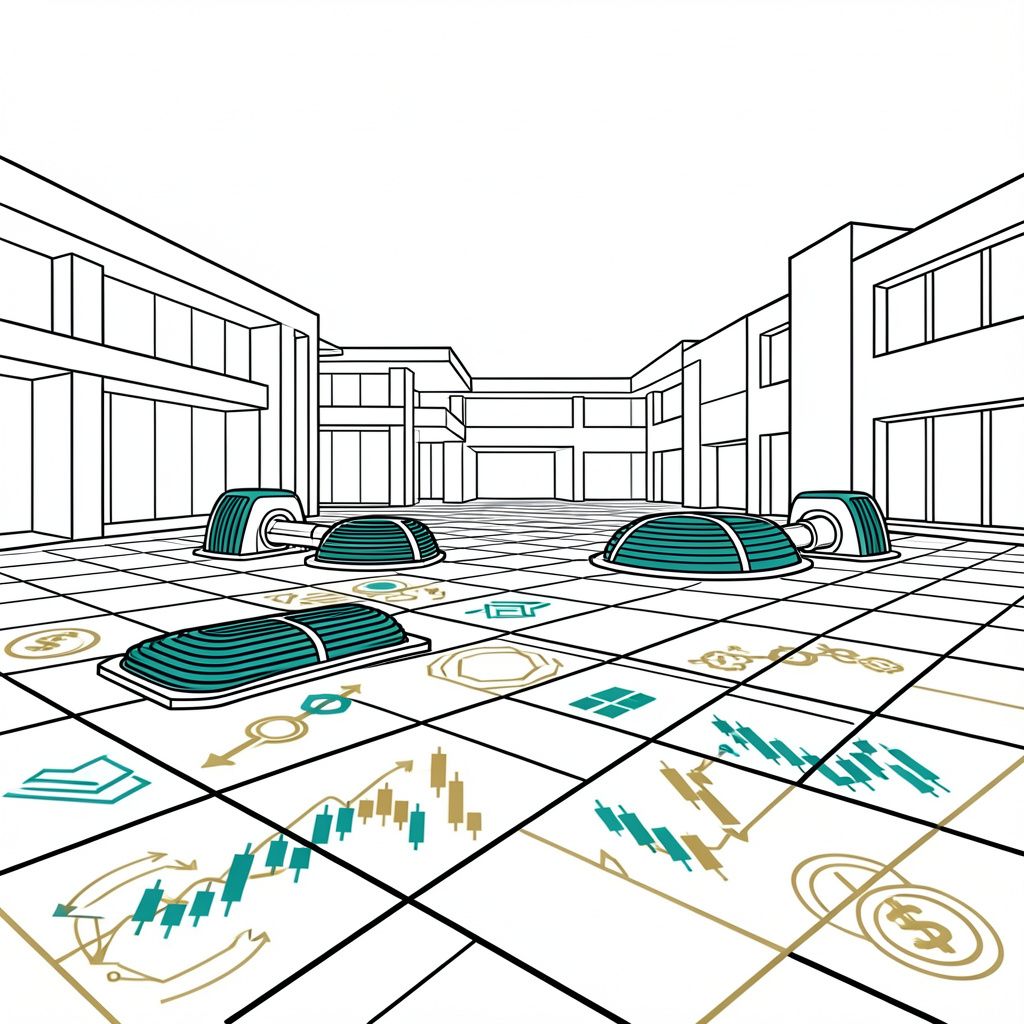
On July 12, 2026, a landmark binding Memorandum of Understanding (MoU) was executed for the Jnayin Nourah Project, situated at the Princess Nourah Bint Abdulrahman University campus in Riyadh, Saudi Arabia [1][2]. Announced on July 11, 2026 [1], this pioneering initiative represents the world’s first open-space geothermal district cooling system [1][2]. The project establishes a crucial precedent for sustainable urban development in arid regions, leveraging innovative shallow geothermal energy to manage outdoor microclimates in pedestrian zones [1][2].
The Consortium and Technology Behind the Innovation
The development is driven by a collaborative consortium consisting of owners and clients Best Land for Real Estate and Investment LLC and Daim Al Athar for Real Estate Co. [1][2]. Saudi District Cooling Company, known as Saudi Tabreed, serves as the infrastructure developer, responsible for delivering a turnkey district cooling solution with an indicative cooling load of approximately 10,000 TR, which is equivalent to roughly 35 MWth [1][2]. The core of this system relies on the patented PrimeLoop technology provided by Strataphy, which utilizes shallow subsurface thermal capacity to facilitate large-scale district cooling [1][2].
Redefining Efficiency and Eliminating Water Consumption
Traditional district cooling systems rely heavily on cooling towers that evaporate vast quantities of water [1][2]. In contrast, the PrimeLoop system achieves zero water consumption by rejecting heat directly into the earth rather than using conventional cooling towers [1][2]. It functions by circulating fluid at 15°C through subterranean loops to regulate microclimates in pedestrian zones [1]. This deep-earth thermal exchange not only preserves vital water resources in a region where water is highly scarce, but also reduces cooling-related electricity consumption by up to 50% [1][2]. Consequently, the system operates on as little as 50% of the electricity required by conventional systems [1][2].
A Vision for Sustainable Cities of the Future
The full-scale operational deployment of this system is scheduled for April 1, 2027 [1]. According to Ammar Alali, CEO of Strataphy, this development represents a fundamental rethinking of urban cooling, proving that world-class performance and genuine sustainability can coexist [1][2]. Ashraf Saleh Bawazir, CEO of Best Land for Real Estate and Investment LLC, emphasized that Jnayin Nourah serves as an integrated model for future cities where intelligent infrastructure directly enhances the quality of life [1][2]. By establishing the first geothermal-supported development on a Middle Eastern university campus, the project provides a scalable proof-of-concept for clean-tech investors and municipal planners worldwide [1][2].