Pentagon Threatens to Cut University Research Funding Over Foreign Ties
Washington, Tuesday, 25 August 2026.
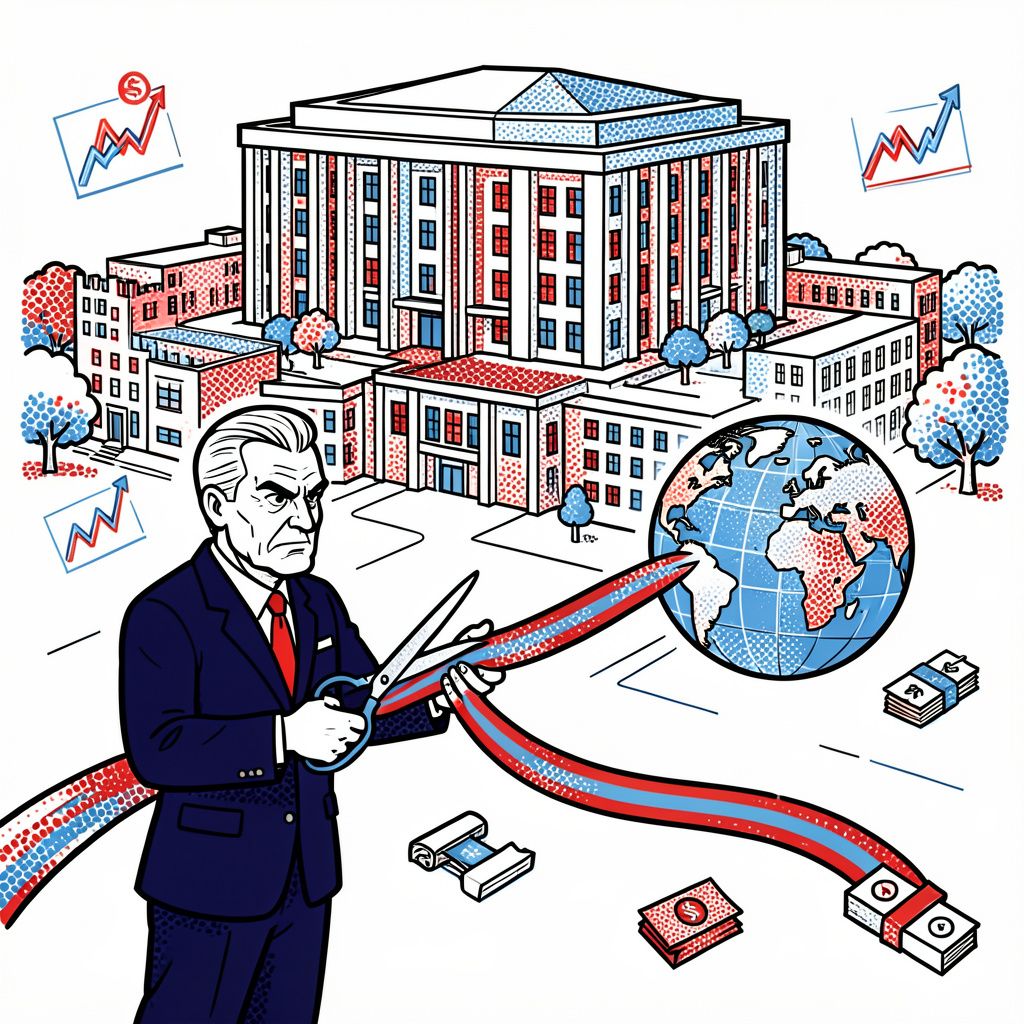
The Pentagon has given 30 top U.S. universities until August 31, 2026, to audit foreign research partnerships or risk losing all federal research funding due to national security risks.
Federal Mandate Issued
On August 17, 2026, the Department of War issued formal notifications to 30 domestic academic institutions, directing them to initiate immediate and comprehensive reviews of their collaborations with foreign entities of concern [1]. These universities are required to report their findings and actions directly to the Department no later than August 31, 2026 [5]. With today being August 25, 2026, institutions have 6 days remaining to comply with the directive [5]. Failure to complete the audit risks losing eligibility for future federal research funding [2].
Scope of Audits
The list of 30 institutions includes prominent universities such as Harvard University, MIT, Johns Hopkins University, and UCLA [6]. The audits specifically target institutional ties and collaborations with foreign entities identified under Section 1286 of the FY19 NDAA, as well as organizations associated with rebranded Confucius Institutes [1]. This section currently flags 130 foreign institutions, primarily located in China, Russia, and Iran, as national security concerns [7]. The Department of War stated this action is designed to protect American taxpayer-funded research investments from unauthorized technology transfer and adversarial exploitation [1].
Financial and Legal Stakes
Institutions must implement strict mitigation plans, including the termination of problematic partnerships, to maintain eligibility for future federal research funding [1]. This mandate follows previous tensions; in July 2025, the federal government froze over $500 million in UCLA research grants, though a federal judge restored most funding between August and September 2025 [3]. Officials emphasize that universities receiving funding from American taxpayers must uphold the highest standards of research security [1]. Non-compliance risks potential legal exposure under the False Claims Act and congressional oversight [7].
Institutional and Political Reaction
Georgetown University stated it maintains a robust and comprehensive research security program designed to preserve the integrity of research and safeguard from foreign interference [8]. The Department is pursuing this effort alongside partners in Congress, including the House and Senate Armed Services Committees [1]. Emil Michael, Under Secretary of War for Research and Engineering, said the Department has zero tolerance for academic partnerships that compromise national security [4]. University leaders note that the goal is informed and secure collaboration rather than isolation [6].
Sources
- www.war.gov
- www.bizjournals.com
- dailybruin.com
- www.thecollegefix.com
- www.mondaq.com
- georgetownvoice.com