China Boycotts Premier US AI Conference Over Sanctions Dispute
Beijing, Friday, 27 March 2026.
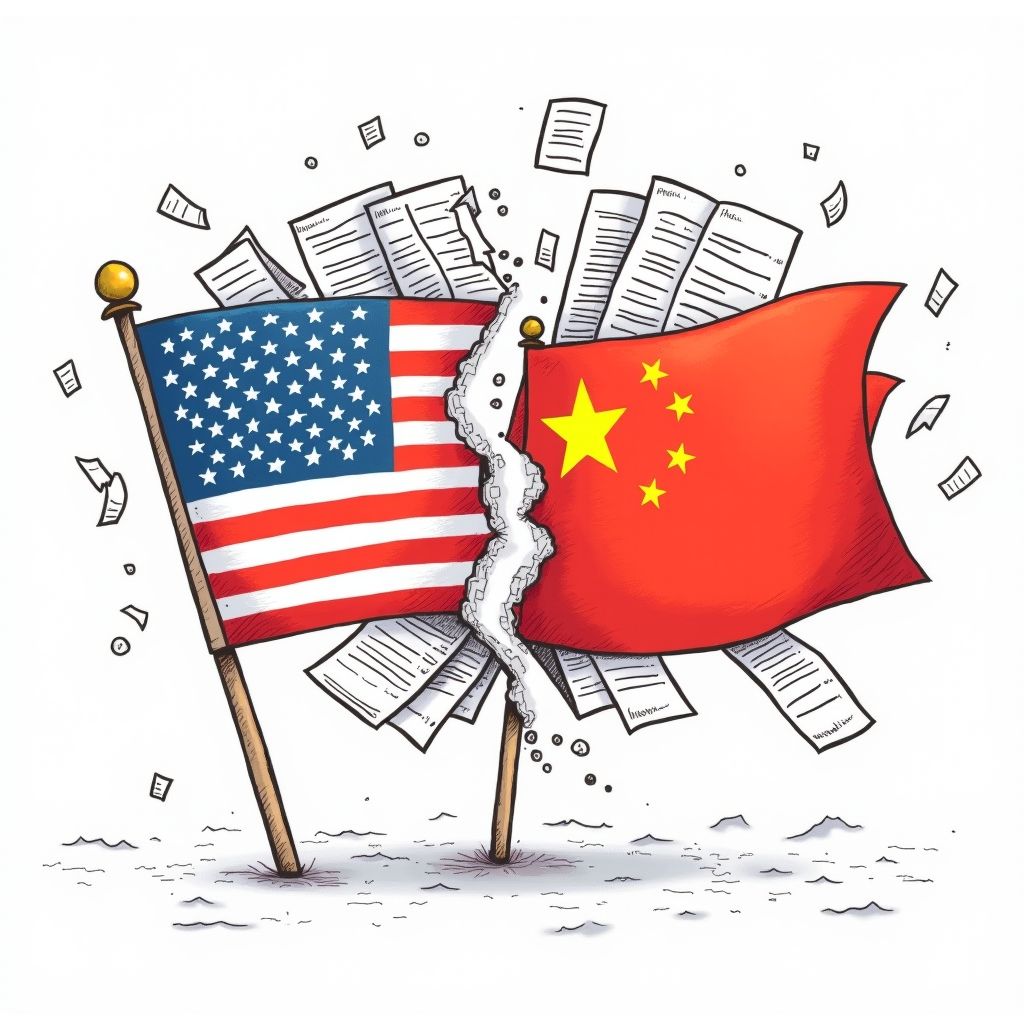
China is boycotting the premier NeurIPS AI conference over US sanctions. This retaliatory move threatens to fracture global research, potentially stripping the event of up to half its contributors.
The Compliance Catalyst
The conflict ignited on March 23, 2026, when the NeurIPS Foundation released its updated handbook for the upcoming 2026 conference [4]. Founded in 1987, the Conference on Neural Information Processing Systems (NeurIPS) operates under United States legal jurisdiction [3][4]. Consequently, its organizers determined they must adhere to the US Department of the Treasury’s Office of Foreign Assets Control (OFAC) financial sanctions framework [6]. The new guidelines explicitly prohibit the conference from providing services—which it defines to include peer review, editing, and publication—to entities listed as Specially Designated Nationals and Blocked Persons (SDNs) [3][4][6].
Beijing’s Institutional Retaliation
The reaction from Beijing was swift and severe. On March 25, 2026, the China Computer Federation (CCF)—a highly influential national academic body established in 1962—issued a vehement statement condemning the ban [2][6]. The CCF accused NeurIPS of politicizing academic exchange and violating fundamental scientific principles of openness, inclusiveness, equality, and cooperation [2][3]. In retaliation, the CCF formally urged all Chinese computer scientists to boycott the event by withholding paper submissions and refusing to provide academic services [4][6].
A Staggering Blow to Global AI Research
The impending boycott threatens to hollow out what is widely considered the world’s premier AI gathering [2]. The fortieth edition of NeurIPS is scheduled to take place later this year in Sydney, Australia [3]. However, without Chinese participation, the conference risks a severe shortage of both submissions and qualified peer reviewers [6]. Historically, Chinese researchers have been foundational to the event’s success; in recent years, their overall contribution has frequently accounted for between 30 and 50 percent of total submissions [6].