Trump Targets Bombardier With 50% Tariff and Decertification Threat
Washington, Friday, 30 January 2026.
Escalating trade tensions, Trump threatens to decertify Bombardier Global Express jets and impose 50% tariffs unless Canada immediately approves U.S.-made Gulfstream aircraft.
Aerospace Sector Becomes New Front in Trade War
North American trade relations have deteriorated sharply this week, marking a volatile shift in the economic landscape between Washington and Ottawa. Following closely on the heels of U.S. threats to impose punitive duties on Canadian goods over Chinese electric vehicle imports—a situation detailed in our previous report, “US Signals Severe Trade Retaliation Over Canada’s Pivot to China“—President Donald Trump has now opened a second front targeting the aviation industry. On Thursday, January 29, 2026, President Trump issued an ultimatum on social media, threatening to levy a 50 percent tariff on all Canadian aircraft sold into the United States [2][4]. The President explicitly linked this potential penalty to allegations that Canadian regulators have “wrongfully, illegally, and steadfastly refused” to certify specific business jets manufactured by U.S.-based Gulfstream [5].
The Certification Standoff
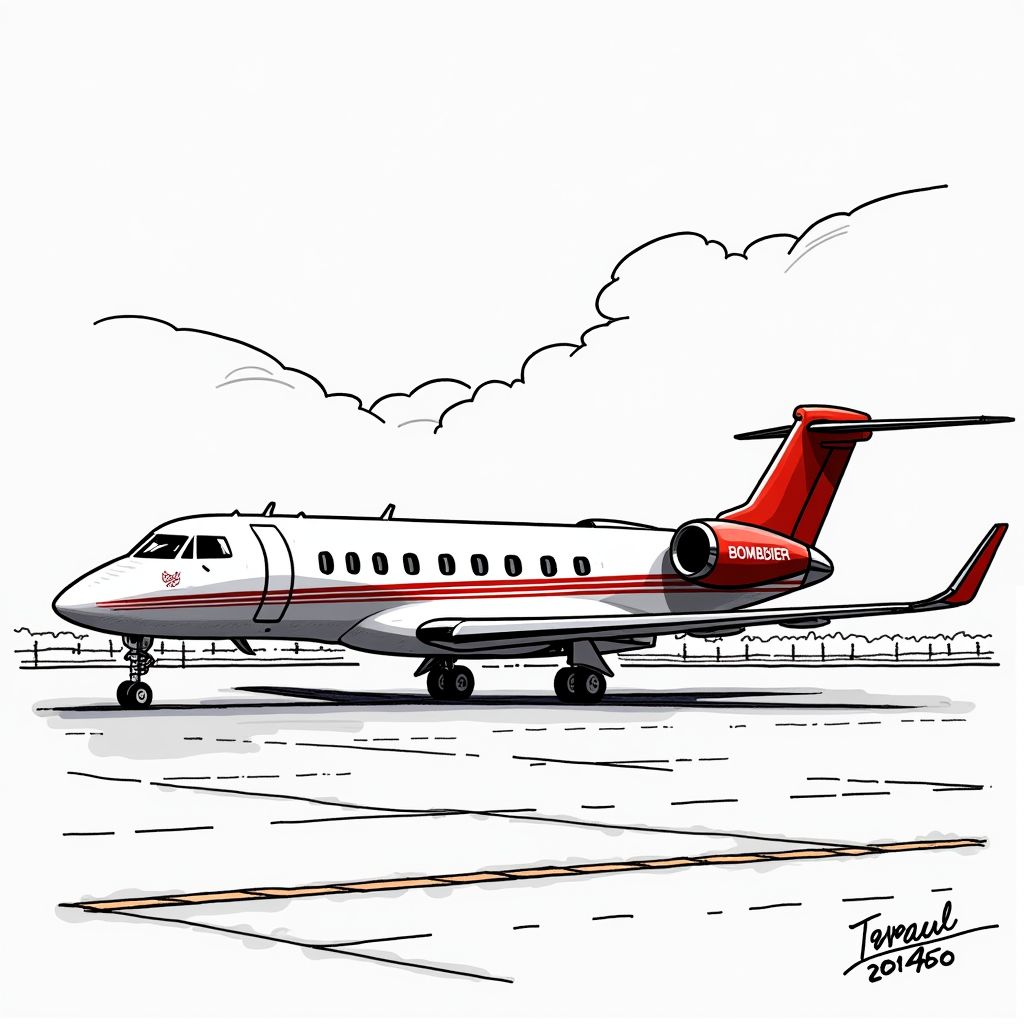
The dispute centers on the regulatory approval of the Gulfstream G500, G600, G700, and G800 series jets, which are products of General Dynamics Corp [2][8]. President Trump stated that unless the situation is “immediately corrected,” his administration will not only impose the 50 percent levy but also move to “decertify” Bombardier’s Global Express jets and “all Aircraft made in Canada” [4][5]. This directive targets Bombardier Inc., a Quebec-based aerospace heavyweight, specifically singling out its flagship Global Express business jets until the American-made Gulfstream models receive full certification from Canadian authorities [2][6].
Operational Turbulence: Feasibility of Decertification
The President’s threat to unilaterally revoke airworthiness certificates has introduced significant uncertainty into the aviation market, though industry experts are questioning the legal mechanisms for such a move. Ross Aimer, CEO of Aero Consulting Experts, expressed doubt regarding the President’s authority to decertify aircraft on economic grounds, noting, “I don’t know if he has that power… You can’t just say, just because Canada didn’t do what we want them to do, I’m going to decertify the airplane” [7]. Typically, decertification by the Federal Aviation Administration (FAA) is reserved for safety concerns rather than trade leverage [6]. However, the disruption to the market could be substantial; data from Cirium indicates that 150 Bombardier Global Express aircraft are currently registered in the U.S., while FlightRadar24 tracking shows over 400 Canadian-made planes operating to and from U.S. airports as of January 30 [6].
Political Fallout: Trump vs. Carney
This escalation in trade rhetoric appears deeply intertwined with a growing personal and ideological rift between President Trump and Canadian Prime Minister Mark Carney. Tensions have simmered since Prime Minister Carney’s January 20 speech at the World Economic Forum in Davos, where he declared the “old world order” dead and called for middle powers to resist economic coercion [5]. President Trump reportedly viewed the speech as ungrateful, responding by withdrawing an invitation for Canada to join his “Board of Peace” and referring to the Prime Minister as a “governor” in social media posts [5]. While Treasury Secretary Scott Bessent had previously indicated that tariffs would be contingent on Canada signing a free-trade agreement with China—a move Carney has denied pursuing—this new aerospace ultimatum suggests a broadening of U.S. economic pressure tactics independent of the China file [5][7].
Sources
- www.cp24.com
- www.cbc.ca
- www.ctvnews.ca
- globalnews.ca
- www.theglobeandmail.com
- www.reuters.com
- vancouver.citynews.ca
- www.bloomberg.com