Why the White House Plan to Lower Beef Prices Is Stalling
Washington, Tuesday, 27 October 2026.
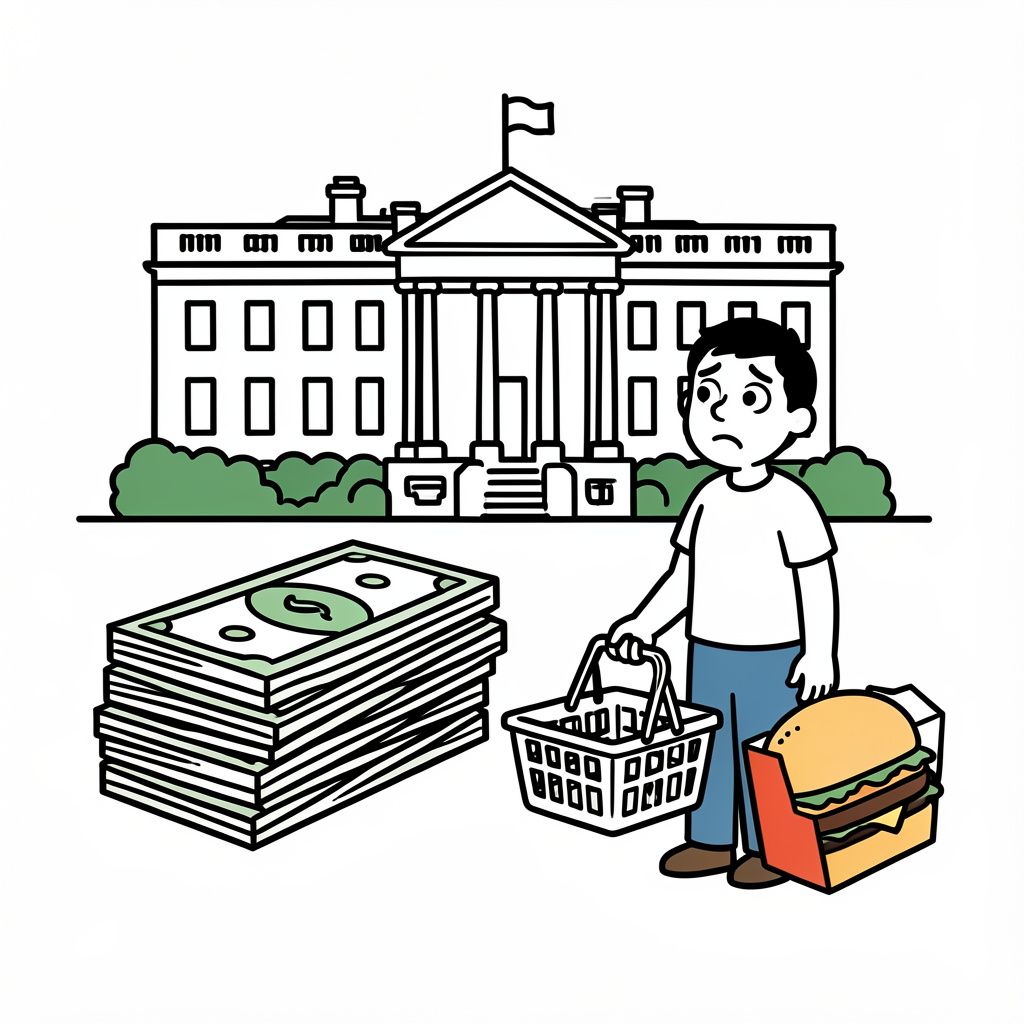
Despite tariff waivers on 300,000 metric tons of foreign beef, U.S. grocery costs remain high because imported trimmings supply fast-food chains rather than retail supermarket shelves.
A Policy Born from Political Pressure
On 26 August 2026, President Donald Trump signed a presidential proclamation to temporarily increase the supply of beef in the U.S. market by allowing 300,000 metric tons of lean beef trimmings to enter the country at reduced tariff rates over a 90-day window from September through November 2026 [1]. The move was framed as a direct response to soaring grocery bills and a strategic effort to curry favor with rural voters ahead of the 3 November 2026 midterm elections [4][1]. Trump’s announcement on Truth Social declared the initiative would ‘reduce prices for Americans while giving space for our Great American Beef Herd to grow again’ [1].
Imports Fall Far Short of Targets
As of 19 October 2026, the U.S. had imported just 59,423 metric tons of beef under the new quota, representing only 20% of the intended 300,000-ton target for the three-month program [1]. This lag reflects a confluence of global supply chain bottlenecks, regulatory compliance delays, and structural rigidities within domestic meat processing and distribution networks [1][3]. The shortfall has rendered the policy ineffective in its primary objective of lowering retail beef prices, which remain stubbornly high despite the expanded import quota [1][3].
Retail Beef Prices Remain Unchanged
Ground beef prices averaged $6.79 per pound in September 2026, down slightly from $6.92 per pound in August but still elevated compared to $6.32 per pound a year earlier [1]. This 7.437 ≈ 7.4% year-over-year increase contrasts sharply with the broader grocery inflation rate, which rose by just 2.5% to 2.9% over the same period [1][3]. The persistence of high beef prices underscores the limitations of import-focused policies in addressing structural supply constraints within the U.S. beef industry [alert! ‘retail price data reflects national averages; regional variations may exist’].
The Type of Beef Matters
A critical flaw in the policy’s design is the focus on lean beef trimmings, which are primarily used by fast-food chains rather than grocery stores [1]. These trimmings are typically blended with domestically produced fatty trimmings to create ground beef products, meaning the imported beef does not directly compete with retail ground beef sold in supermarkets [1]. Derrell Peel, a professor of agribusiness specializing in livestock at Oklahoma State University, noted that ‘the simple assumption that increasing supply of beef in the U.S. would lower prices ignores the complexity of the beef industry,’ where processing, distribution, and herd dynamics operate on multi-year cycles [1].
Industry Skepticism and Economic Strain
The policy has drawn criticism from both farmers and agricultural economists, who argue that the initiative is misguided and potentially harmful. The National Cattlemen’s Beef Association and the United States Cattlemen’s Association have dismissed the move as politically motivated, stating that ‘Trump’s announcement is not about helping U.S. cattle producers but is 100% about the 74 days between now and the midterm elections’ [5]. David Anderson, an agricultural economist at Texas A&M University, emphasized that the tariff suspension ‘works against the market signal to expand and produce more domestically,’ further complicating efforts to rebuild the U.S. cattle herd [5][4].
Broader Economic and Political Fallout
The policy’s shortcomings have intensified political tensions within rural communities, where cattle producers face mounting financial strain. Chad Basinger, a rancher in Pretty Prairie, Kansas, expressed frustration, noting that while some voters may swing to the opposing party or abstain from voting, the administration’s actions have left many feeling ‘let down’ [4]. The White House’s subsequent announcement of an $8 billion farm relief package in Kansas on 19 October 2026 underscores the political urgency to mitigate backlash ahead of the midterms [4][5]. Meanwhile, the U.S. cattle herd remains near its smallest size since 1951, with 86.2 million cattle and calves recorded on 1 January 2026—a 0.4% year-over-year decline [3][5].
What’s Next for Beef Imports and Prices?
The third and final tranche of the 300,000-ton import quota is scheduled to open on 31 October 2026 and close on 30 November 2026 [3]. However, given the current import pace, it is unlikely that the full quota will be filled by the deadline. Analysts warn that even if the quota targets are met, the impact on retail beef prices may remain minimal due to the structural mismatch between imported lean trimmings and domestic retail demand [1][3]. The USDA’s tentative awards of $57.4 million to 147 meat processing projects across 40 states—announced on 26 October 2026—aim to address long-term processing bottlenecks, but these funds remain pending congressional allotment [3].
Sources
- finance.yahoo.com
- www.facebook.com
- www.riotimesonline.com
- www.aljazeera.com
- www.peacocktariffconsulting.com
- www.columbian.com
- www.instagram.com
- www.facebook.com