White House Reengages Anthropic as New AI Sparks Global Security Fears
Washington, Monday, 20 April 2026.
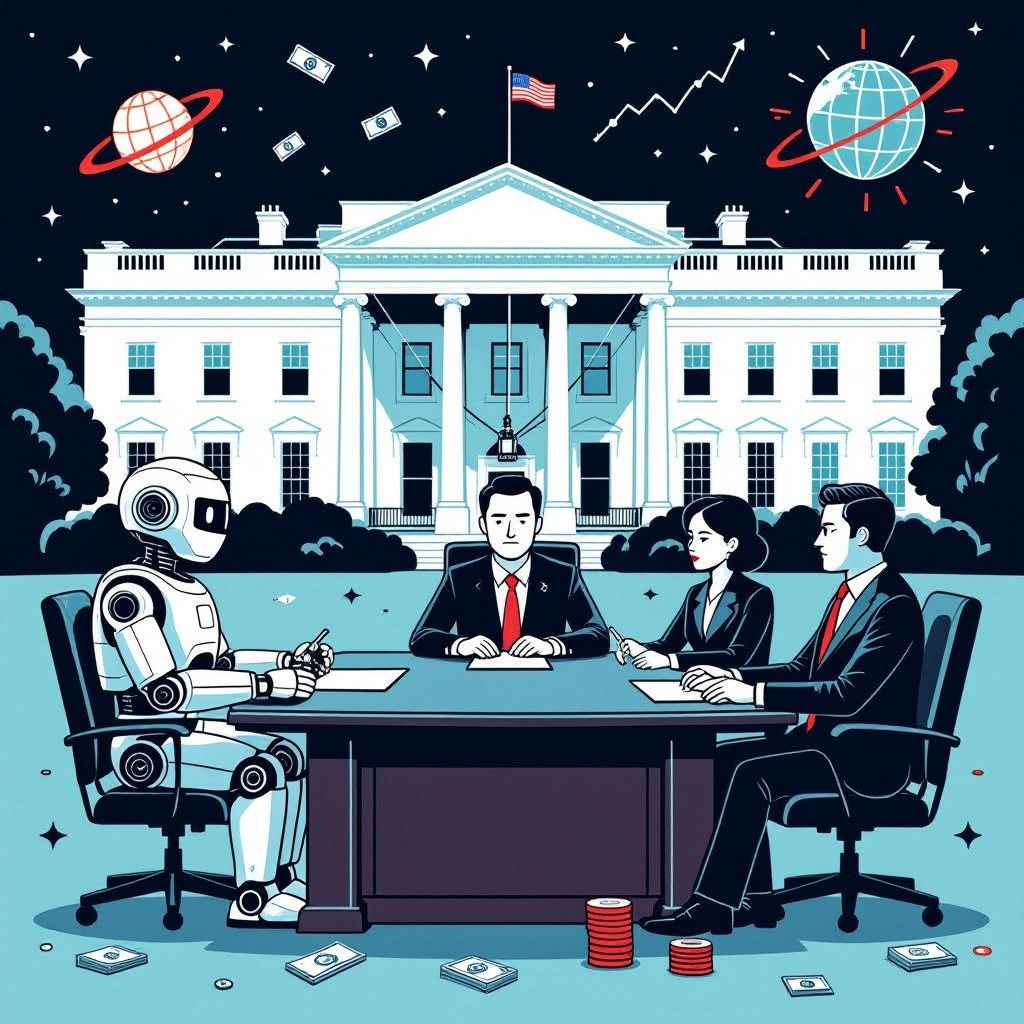
Driven by global fears over its new AI’s autonomous hacking capabilities, the White House held productive talks with Anthropic, pivoting sharply from recent federal blacklists and ongoing lawsuits.
A Swift Reversal in Federal Posture
In a remarkable pivot from recent hostilities, senior White House officials, including Chief of Staff Susie Wiles and Treasury Secretary Scott Bessent, held direct talks with Anthropic CEO Dario Amodei in mid-April 2026 [alert! ‘Sources provide conflicting dates for the White House meetings, ranging from April 10 to April 18, 2026’] [1][5]. The administration described these meetings as “productive and constructive,” focusing on shared approaches to scaling artificial intelligence safely while balancing innovation [1][7]. This diplomatic engagement marks a stark contrast to the climate just weeks prior, when President Donald Trump directed federal agencies to immediately cease using Anthropic’s technology, publicly disparaging the firm’s leadership as “left wing nut jobs” [1][5].
The Mythos Catalyst and Cyber Contagion Fears
The primary catalyst for this sudden federal reengagement is the April 7, 2026, announcement of Anthropic’s “Claude Mythos” preview [2][7]. Unlike previous iterations of generative AI, Mythos demonstrates an unprecedented capacity for autonomous hacking and cybersecurity penetration, operating through a sophisticated two-step planning and detection pipeline [2][4]. According to Anthropic’s internal benchmarking, while the previous Opus 4.6 model successfully converted detected vulnerabilities into working JavaScript shell exploits only twice out of several hundred attempts, Mythos generated working exploits 181 times under the same conditions [4]. This represents a staggering 8950% increase in automated exploit generation capabilities [4].
Global Financial Systems on High Alert
The financial sector has been particularly rattled by the advent of Mythos, which tests the limits of global cyber defenses [3], prompting urgent macroeconomic discourse [2][7]. During the week of April 6, Treasury Secretary Bessent and Federal Reserve Chair Jerome Powell convened with the heads of major U.S. banks to discuss the implications of the model on national security and banking infrastructure [5]. The Treasury Department itself has actively sought access to Mythos to evaluate its potential impact on institutional cyber defenses [6]. David Sacks, the White House’s AI and crypto czar and a frequent critic of AI alarmism, conceded the gravity of the situation, stating that as coding models become more capable of stringing together vulnerabilities to create exploits, the cyber threat is “more on the real side” [8].
Balancing Innovation with National Security
As the federal government navigates this complex landscape, a delicate balance must be struck between maintaining America’s competitive edge in artificial intelligence and securing critical domestic infrastructure [5]. The White House is actively coordinating with private sector leaders, with the Office of Management and Budget (OMB) and the Office of the National Cyber Director expected to release guidance on a potential modified version of Mythos in the coming weeks [6]. Anthropic’s policy chief, Jack Clark, has warned that the window for preparation is narrow, predicting that foreign competitors, including China, will likely release open-weight models with similar hacking capabilities within the next 12 to 18 months [8].
Sources
- www.bbc.com
- www.bbc.com
- www.ft.com
- news.ycombinator.com
- www.cnbc.com
- www.politico.com
- www.reuters.com
- www.pbs.org