Silver Caught Between Industrial Demand and Fed Rate Pressures
New York, Thursday, 21 May 2026.
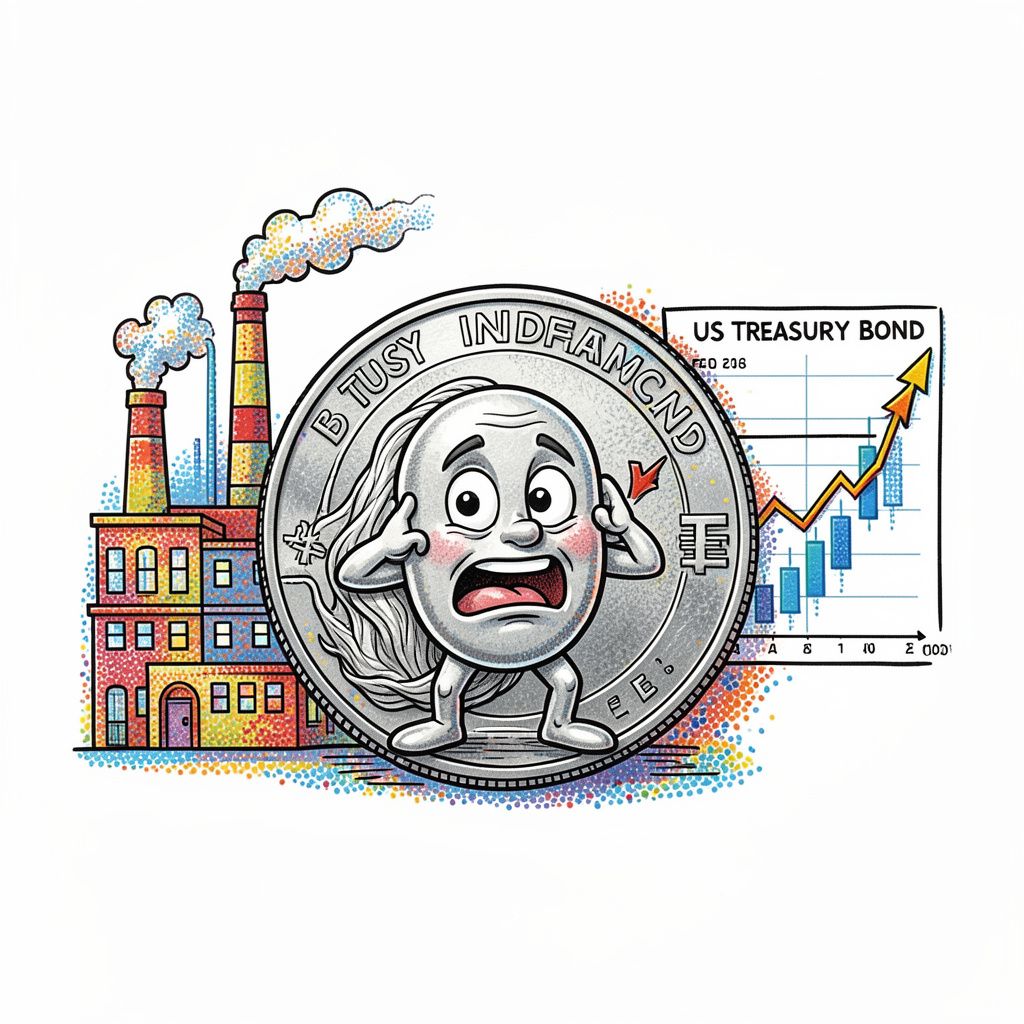
Silver faces a structural shift as the Fed’s “higher-for-longer” stance pits the metal’s robust industrial applications against mounting pressure from rising U.S. Treasury yields.
The Macro Squeeze: Yields Versus Industrial Demand
As trading opened on May 21, 2026, silver found itself caught in a compressed market structure, heavily influenced by the release of the Federal Open Market Committee (FOMC) minutes [1]. The minutes from the April 28-29 meeting, released on May 20, reinforced a “higher-for-longer” interest rate framework, placing immediate tactical pressure on precious metals [1][3]. While some analysts noted internal divisions within the Fed and a potential easing bias [8], the overarching sentiment indicated a willingness among officials to consider additional rate hikes if inflation fails to moderate [7]. This hawkish undertone has elevated real-yield constraints, becoming a primary headwind for silver’s upside potential [1].
Industrial Divergence and Institutional Hesitation
A defining characteristic of the current market regime is what analysts term “industrial divergence” [1]. While broader shipping and industrial systems remain active, silver is notably lagging behind copper in attracting institutional investment [1]. Copper has taken the leadership role in the industrial metals space, leaving silver to struggle with fragmented participation despite resilient underlying physical flows [1]. This divergence suggests that silver’s recent price weakness is driven primarily by macroeconomic repricing and yield pressures rather than a fundamental decline in industrial demand [1].
Geopolitical Cooling and Technical Junctures
Geopolitical developments have also played a crucial role in reshaping the broader commodities landscape [5]. Metals prices saw a broad recovery on May 20 as tensions between the United States and Iran showed signs of cooling [2]. Following statements from U.S. President Donald Trump that nuclear negotiations with Iran had entered their “final stages,” Brent crude futures tumbled by 5.27% to close at $105.42 per barrel [7]. The easing of energy prices and a softening U.S. Dollar Index (DXY), which slipped 0.21% to 99.12, provided a temporary tailwind for silver, allowing its ask price to climb $2.37 to $76.59 per troy ounce during the Wednesday session [7].
The Broader Precious Metals Outlook
Silver’s trajectory is intrinsically linked to the broader precious metals complex, where gold continues to demonstrate resilience against a backdrop of sovereign debt concerns. Precious metals are traditionally viewed as a hedge against inflation and currency devaluation [GPT]. Driven by a U.S. national debt crisis that has reached $40 trillion, institutional narratives surrounding gold remain heavily bullish [2][8]. Prominent forecasts project gold could reach $5,000 per ounce by the end of 2026, with some long-term estimates suggesting a climb to $17,250 per ounce [2][8]. During the May 20 session, gold gained $61.53 to close at $4,554.95 per troy ounce [7].
Sources
- www.fxstreet.com
- www.indexbox.io
- alexlexington.com
- x.com
- www.cmegroup.com
- www.livemint.com
- texmetals.com
- www.indexbox.io