Japan Tests Autonomous Robots on Construction Sites to Combat Severe Labor Shortages
Tokyo, Sunday, 9 August 2026.
Shimizu Corporation has initiated site trials of artificial intelligence-powered robots, successfully automating hazardous concrete spraying and site navigation to address Japan’s severe construction labor shortages.
Deployment of Physical AI on Active Sites
Shimizu Corporation has officially commenced trials of artificial intelligence-powered robots across active construction sites in August 2026, marking a significant shift toward automating complex manual tasks [1]. The initiative leverages ‘Physical AI,’ which integrates advanced AI models directly into heavy machinery to perceive and adapt to real-world conditions rather than relying on pre-programmed repetitive motions [1]. At the Torch Tower site in Tokyo, a humanoid robot successfully demonstrated autonomous navigation capabilities, moving at a speed of 0.91 meters per second while carrying an inspection camera [1]. This deployment aims to mitigate the severe labor shortages caused by Japan’s aging demographics while enhancing site safety and productivity [1]. The company plans to evaluate the integration of multimodal large language models to analyze inspection video footage for improved site management [1].
Automation in Tunneling Operations
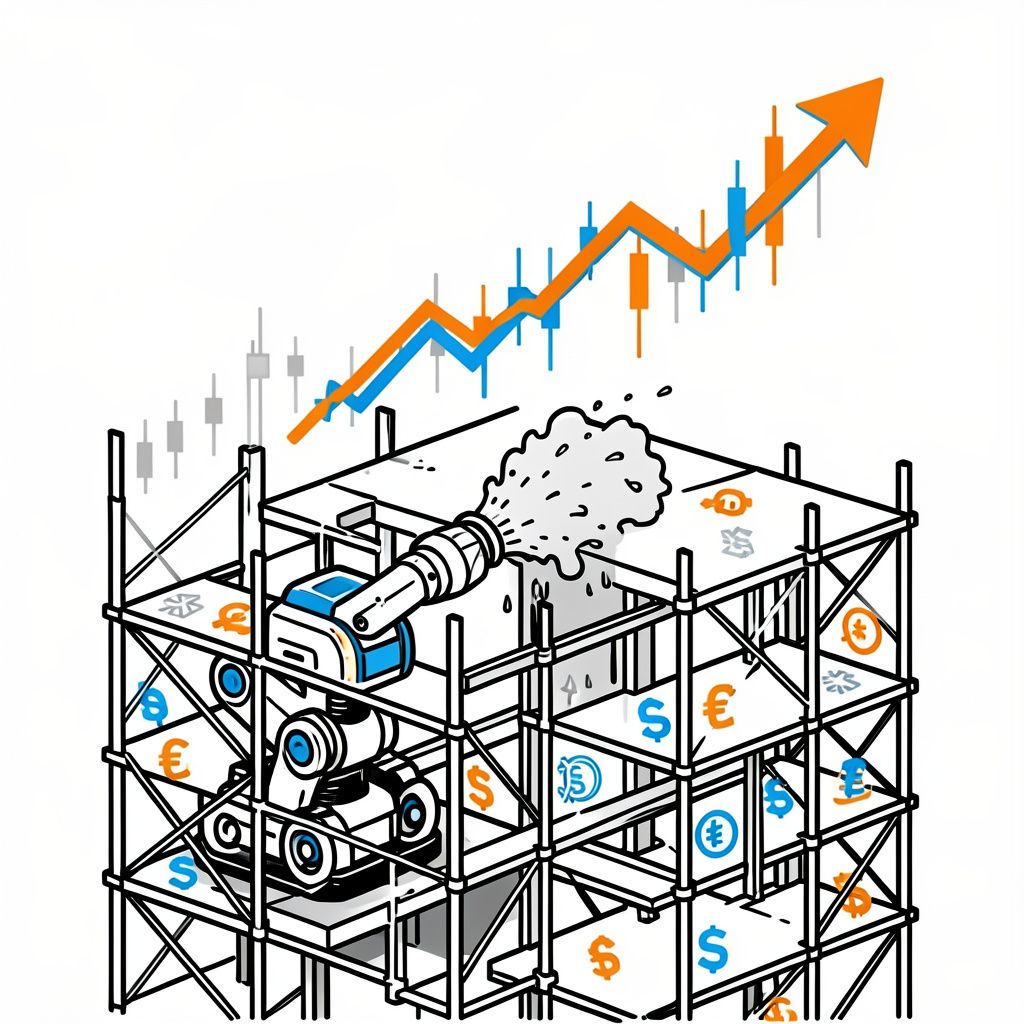
Complementing the humanoid trials, Shimizu Corporation has applied the ‘Hercules-AUTO’ concrete automatic spraying system to tunnel construction sites, specifically the Kuwano Road Nagaru・Akatani Tunnel project [2]. This system combines a spraying navigation system that visualizes thickness in real-time with a robot-controlled nozzle system to ensure uniform application even in high-concentration dust environments [2]. Shimizu Corporation introduced Hercules-AUTO to the site in June 2025 and has since completed automatic spraying of approximately 5,500 cubic meters of concrete over a 250-meter section [2]. Operational data confirmed that the system reduces cycle time by approximately 5% compared to conventional manual operation by eliminating the need for workers to operate near the tunnel face [2]. The technology utilizes millimeter-wave radar and motion capture to measure thickness and feedback data to nozzle control systems instantly [2].
Industry-Wide Collaboration and Ecosystem
Beyond individual company trials, the construction sector is fostering broader collaboration to standardize autonomous machinery, evidenced by the Auto-Drive Synchronized Control System for Compaction Equipment (ASCS) project [3]. Shimizu Corporation is one of ten construction companies participating in this initiative, which aims to develop industry-standard machines equipped with autonomous control and steering functions [3]. The project, which includes partners like Obayashi Corporation and Taisei Corporation, began joint development of autonomous roller systems in 2015 and started orders for Automatic Driving Rollers in October 2024 [3]. Such ecosystem building relies on data sharing between companies to coordinate decision-making and learning across multiple organizations [4]. This collaborative approach addresses the structural labor shortage by transferring specialized skills into AI models accessible across the industry [1].