Justice Department Orders Washington State to Withhold Hundreds of Ballots
Olympia, Tuesday, 27 October 2026.
Federal officials demanded Washington set aside over 400 ballots from alleged noncitizens, citing historical voting data reaching back to 1994, just days before the November 2026 midterm elections.
Federal Intervention Raises Legal and Procedural Questions
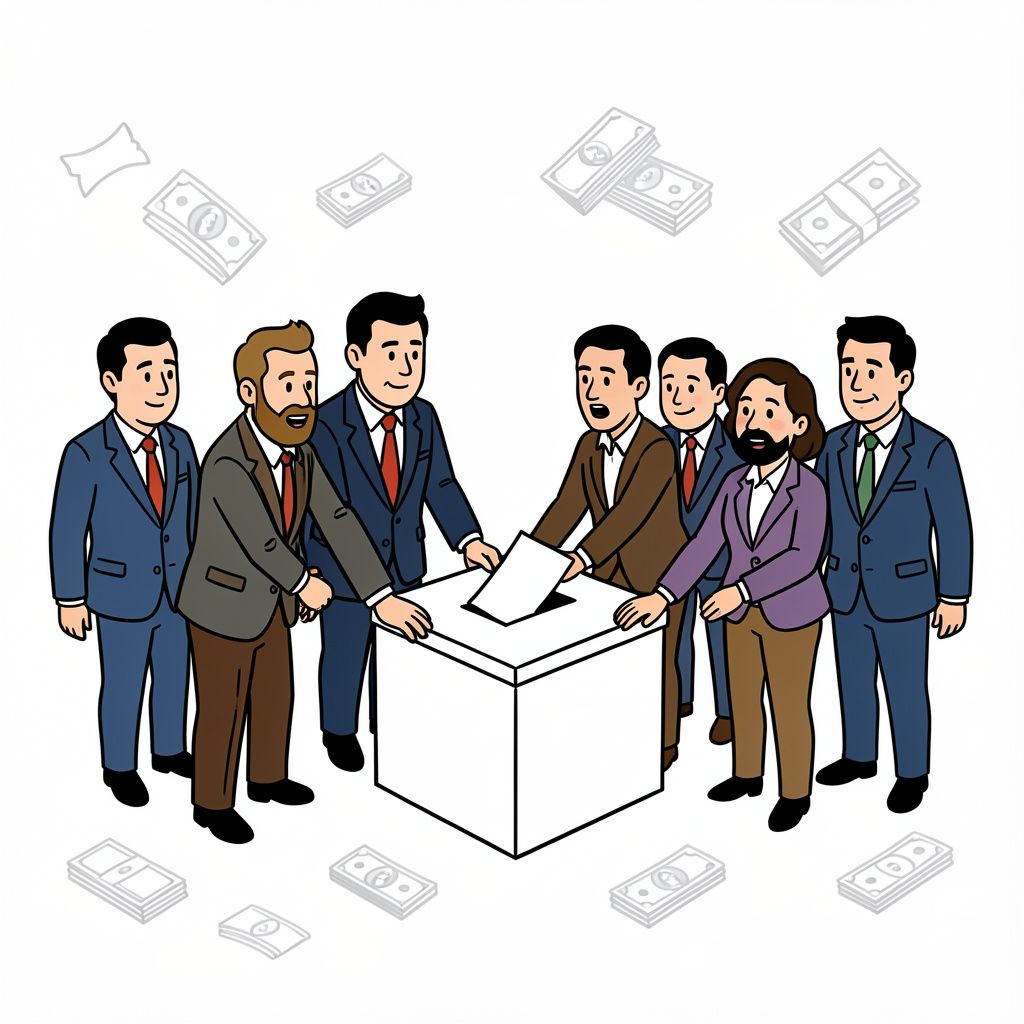
On Monday, 26 October 2026, the Trump administration, acting through the U.S. Department of Justice (DOJ), formally directed Washington State Secretary of State Steve Hobbs to segregate ballots cast by 405 registered voters suspected of being noncitizens [1][2][3][4][5][6][7]. The directive, issued just seven days before the 3 November 2026 midterm elections, requires state officials to withhold and separately store these ballots until citizenship and eligibility can be verified [1][2][3][4][5][6][7]. Acting U.S. Attorney for the Western District of Washington Neil Floyd framed the action as part of a broader effort to address alleged patterns of illegal voting, stating that the identified cases represented ‘only the tip of the iceberg’ and that additional suspects would likely be uncovered [1][2][3][4][5][6][7]. Floyd’s comments came during a press conference at the federal courthouse in Seattle, where he and First Assistant U.S. Attorney Pete Serrano alleged that more than 1,500 ballots had been cast by noncitizens across multiple elections, with one instance dating back to 1994 [1][2][3][6][7].
Washington Responds with Legal and Procedural Resistance
Steve Hobbs, a Democrat and Washington’s top election official, responded critically to the timing and substance of the DOJ’s request, calling it an attempt to ‘cast unfounded suspicion on the results’ one week before the general election [1][2][3][4][5][6][7]. Hobbs emphasized that Washington had already withheld its unredacted voter rolls from the DOJ earlier in 2026, asserting that the state would only comply with requests that adhere to due process and state and federal law [1][3][4][7]. He noted that federal law prohibits removing voters from registration lists within the 90-day quiet period prior to an election, and pointed to historical data showing only 15 documented cases of noncitizen voting in Washington since 1982, representing approximately 0.000006% of all ballots cast [1][3][4][5][7]. The state has also received over 60 federal subpoenas seeking voter records in recent weeks, further straining intergovernmental relations [4][5].
Legal Precedents and Broader National Context
The DOJ’s action in Washington is the third such directive issued in October 2026, following similar demands in California and Alaska, all targeting states with competitive congressional races that could determine control of Congress [1][2][3][4][5][6]. In California, the DOJ sought to block the counting of up to 20,000 ballots from alleged noncitizens, leading to a federal lawsuit and a rare Sunday hearing before a panel of appellate judges on 25 October 2026; the court declined to rule on the DOJ’s expedited timeline and remanded the case to a lower court the following day [1][2][3][4][5][6]. Meanwhile, in Alaska, the DOJ filed a lawsuit on 19 October 2026 to delay certification of results if the Republican incumbent loses, a move critics argue lacks clear federal legal authority [1][2][3][4][5][6]. Legal experts have noted that the DOJ’s interventions appear designed to influence election outcomes in politically contested states under tight timelines [1][2][3][4][5][6].
Data Disputes and Ongoing Investigations
The lists provided by the DOJ to state officials have faced scrutiny. In Los Angeles County, Assistant Registrar-Recorder Monica Flores stated in a court filing that a sample of 200 records from the administration’s list included canceled or inactive registrations, individuals with no voting history, and U.S.-born voters [1][2][3][4][5][6]. Flores’ analysis contradicted the DOJ’s claims and highlighted concerns over data accuracy and methodology [1][2][3][4][5][6]. The DOJ has indicated it anticipates sending Washington an additional list of suspected noncitizens prior to Election Day, though the legal authority and timeliness of such a request remain unresolved [1][2][3][4][5][6][7]. Homeland Security Investigations has stated it is investigating the allegations within the scope of federal criminal authorities, while Washington Governor Bob Ferguson has offered to deploy National Guard members to protect ballot drop boxes amid heightened federal scrutiny [4][5][7].
Sources
- www.theguardian.com
- apnews.com
- www.nbcnews.com
- washingtonstatestandard.com
- www.democracydocket.com
- www.opb.org
- www.fox13seattle.com
- www.facebook.com