Federal Officials Pause Border Infrastructure Construction Inside Big Bend National Park
Washington, Monday, 17 August 2026.
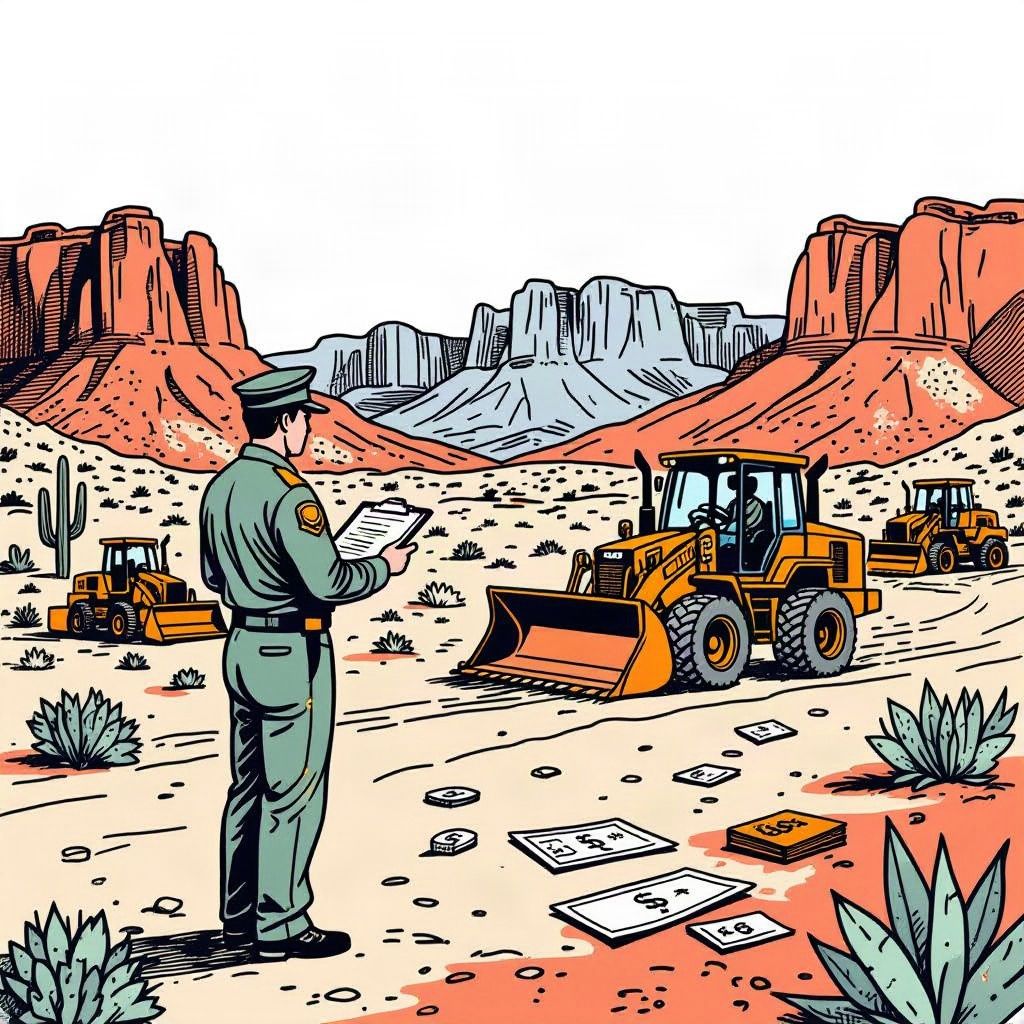
On August 16, 2026, U.S. Customs and Border Protection temporarily suspended all border security construction within Texas’s Big Bend National Park. The decision follows widespread bipartisan opposition from federal and state lawmakers, environmental advocates, and local residents concerned over irreparable ecological damage to the Chihuahuan Desert. Federal contractors had recently deployed heavy machinery to clear land for access roads, surveillance technology, and vehicle barriers. Opponents highlighted that the remote park accounts for less than 1% of total border crossings, making heavy construction unnecessary. CBP Commissioner Rodney Scott instituted the pause ahead of an on-site evaluation and meetings with local officials scheduled for the week of August 17, 2026. While administration officials maintain the project focuses on targeted detection infrastructure rather than a continuous wall, the halt highlights growing tension between federal border policy and environmental preservation on public lands.
Bipartisan Legislative Pressure Mounts
The decision to halt construction follows a concerted effort by Texas state and federal officials to intervene before significant ecological damage occurred. On August 7, 2026, U.S. Senator John Cornyn (R-TX) sent a letter to Homeland Security Secretary Markwayne Mullin questioning the necessity of barriers in the Big Bend terrain, noting that the 1,000-foot riverbank cliffs offer natural deterrence [3][4]. This federal concern was mirrored at the state level on August 13, 2026, when 44 Texas lawmakers from both parties sent a letter to Governor Greg Abbott urging him to use every available avenue to stop the demolition and barrier construction [4]. State Representative Eddie Morales Jr. (D) highlighted that the area accounts for less than 1% of all border crossings, arguing there was no need to spend upwards of $7 billion on shady no-bid contracts [4]. The bipartisan nature of the opposition signaled a significant political hurdle for the administration, which had previously removed Big Bend from its federal border construction map in March 2026 before reversing course [3].
Infrastructure Scope and Environmental Concerns
While CBP Commissioner Rodney Scott stated on August 16, 2026, that the agency is not building a 30-foot wall or stadium lighting, contractors had already moved heavy machinery into the park between August 9 and August 16, 2026 [5][7]. The project involves constructing one new access road, improving existing roads, installing detection technology, and placing vehicle barriers in strategic locations, though opponents allege plans include 80 miles of new road [5][6]. Southwest Valley Constructors was awarded a $1.7 billion contract for work in the region, funded by a $46.5 billion border wall expansion bill signed into law on July 4, 2025 [2][3]. Environmental advocates and local residents expressed deep concern over irreversible damage to the Chihuahuan Desert ecosystem and historical sites, such as the 1918 Porvenir Massacre site where contractors were reported to be working within 9 meters (30 feet) of archaeological evidence [5][7]. Laiken Jordahl of the Center for Biological Diversity noted that destroying places like Big Bend means they are never recovered, emphasizing the permanence of the ecological threat [7].
Federal Pause and Strategic Evaluation
In response to the backlash, Commissioner Scott announced on August 16, 2026, that CBP is pausing all construction activity while he conducts a personal, on-the-ground evaluation [2][6]. The suspension is effective as of the night of August 16, 2026, with Scott scheduled to visit West Texas during the week of August 17, 2026, to assess the project and speak with local stakeholders [1][2]. This pause signals a potential shift in federal policy execution regarding border barrier expansion through protected federal lands, although administration officials maintain the goal is to secure the park and protect its legacy from cartel activity [5][6]. Local residents reported that contractor traffic had already ceased by August 17, 2026, with one Terlingua resident stating that every day the bulldozers are not working is a nice day [1]. The outcome of Scott’s evaluation will determine whether the project resumes in its current form or undergoes significant modification to address the widespread concerns raised by conservation groups and lawmakers [1][2].