Soaring Jet Fuel Prices Drive Holiday Airfares to Ten Year Highs
Washington, Friday, 23 October 2026.
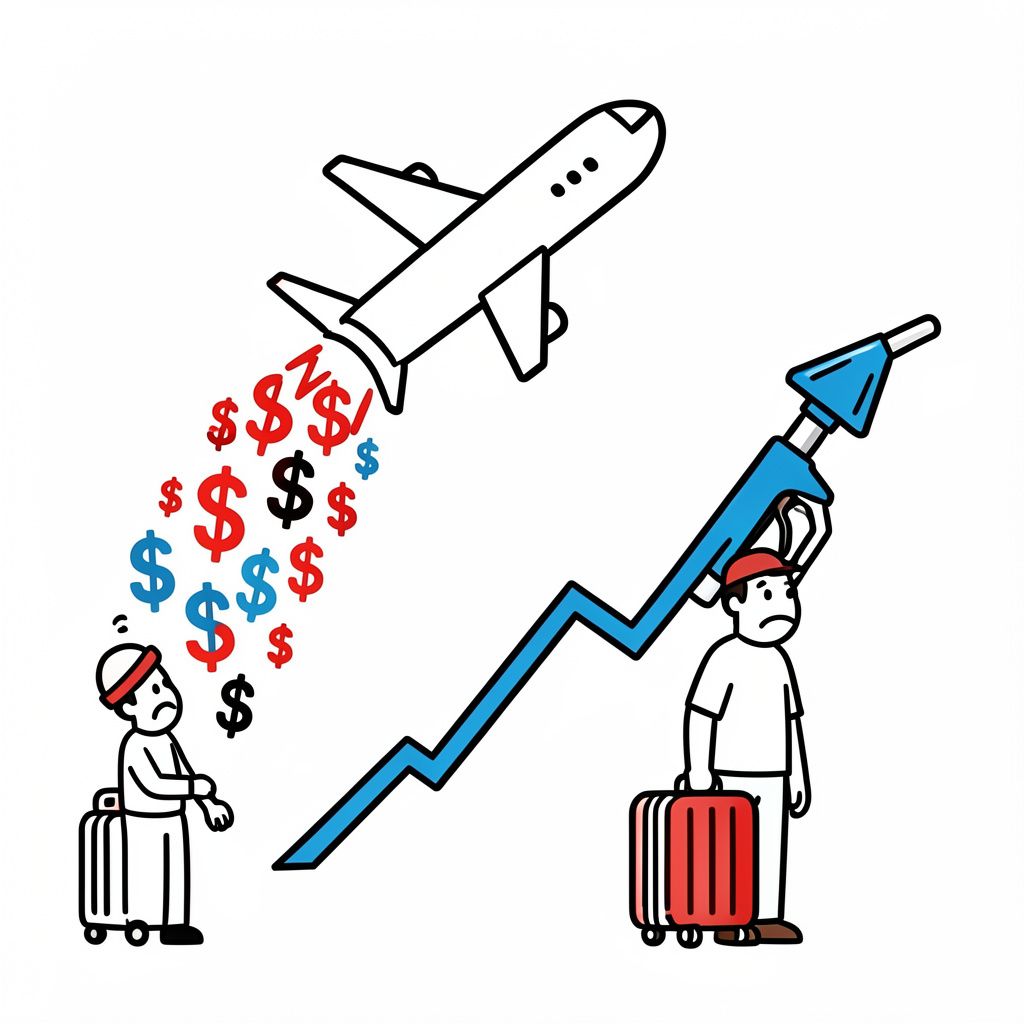
U.S. jet fuel prices nearing $4.75 per gallon have doubled since last year, pushing holiday airfares up to 30% higher as unhedged airlines pass record costs onto travelers.
Record Fuel Costs Reshape Holiday Travel Economics
U.S. jet fuel prices have surged to near-record levels, fundamentally altering the economic landscape for airlines and travelers alike as the holiday season approaches. During the week of October 19–22, 2026, the average U.S. jet fuel price surpassed $4.75 per gallon, approximately double the price from one year prior [1]. This sharp increase is driving holiday airfares higher, with Thanksgiving tickets increasing by ~30% and Christmas tickets by >20% compared to 2025, averaging a 25 percent increase across the season [1]. Because jet fuel represents one of the largest operational costs for commercial carriers, the cost pressure is forcing companies to pass expenses on to travelers, potentially impacting broader holiday consumer spending patterns across the economy [1].
Airline Industry Response and Strategic Shifts
Major carriers are responding to the volatility by adjusting pricing structures and route networks to maintain profitability. In September 2026, airfares increased 22% year-over-year, marking the 10th consecutive monthly rise and reaching an all-time high in the U.S. government’s airfare price index [2]. American Airlines reported on October 15, 2026, that its third-quarter fuel bill rose nearly 70% year-over-year, adding $1.9 billion in costs [2]. Consequently, airlines are increasingly cutting unprofitable routes, a trend United CEO Scott Kirby confirmed on October 21, 2026, will continue across the industry as carriers prioritize profitability [2]. Chris Sununu, head of Airlines For America, stated on October 20, 2026, that U.S. airlines are absorbing most increased jet fuel costs, though some is being passed to customers as a 20% to 30% price increase for holiday travel [1].
Consumer Demand and Market Elasticity
Despite the steep price hikes, consumer demand for holiday travel remains resilient, though signs of elasticity are emerging. Travelers are currently booking major holiday trips despite price increases, as demand remains sticky for traditional holiday travel [1]. Ed Bastian, CEO of Delta Air Lines, stated in an October 2026 earnings call that consumer resistance to higher fares remains limited, with passengers still viewing travel as reasonably affordable [1]. However, United Airlines reported a 1.3% decline in leisure travel seat occupancy in Q3 2026, which the company views as acceptable elasticity regarding higher ticket prices [6]. This suggests that while demand persists, the margin for error is narrowing as costs climb.
Global Outlook and Future Projections
The ripple effects of rising fuel costs extend beyond the United States, with significant implications for the global aviation market. Michael O’Leary, CEO of Ryanair, predicted on October 20, 2026, that European airfares could rise by 10% to 20% over the next 12 months, potentially marking the largest historical increase in European airfares [1]. The Argus US Jet Fuel Index reported the price of jet fuel reached $4.76 per gallon on October 19, 2026, marking a 90% increase since the start of the Iran war in late February 2026 [4]. Aviation risk management expert John Gradek at McGill University projects jet fuel prices to reach $225 per barrel by December 31, 2026, while AirAsia adviser Tan Sri Tony Fernandes has suggested prices could reach $250 per barrel [4]. These projections indicate that the current pricing environment may persist, driven by geopolitical instability and supply constraints.