United States Targets Expanding Trade With India to Five Hundred Billion Dollars
Washington, Wednesday, 21 October 2026.
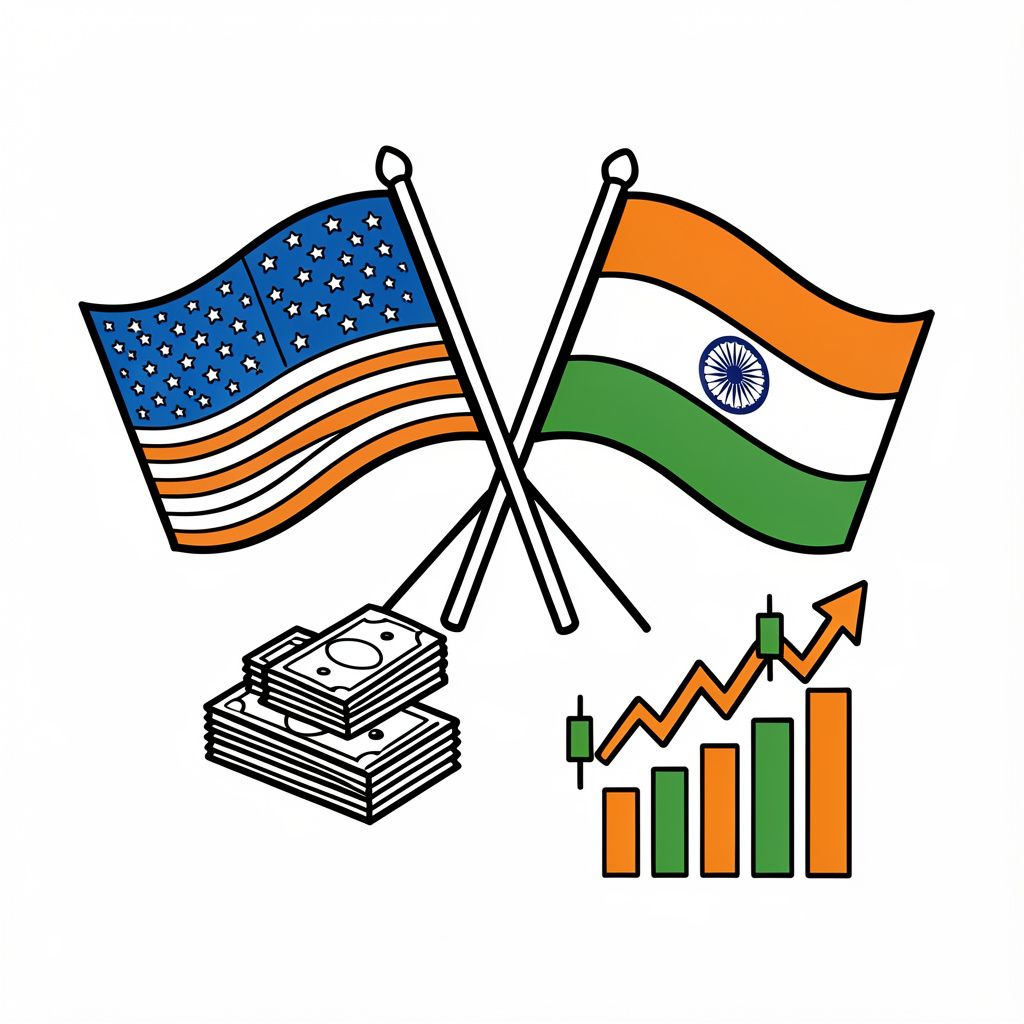
The U.S. aims to more than double bilateral trade with India to over $500 billion by 2029, deepening economic, defense, and technology integration between both nations.
Ambitious Trade Targets Unveiled in Mumbai
During the “Freedom 250” reception held in Mumbai on October 20, 2026, U.S. Ambassador to India Sergio Gor formally announced the strategic goal to elevate bilateral trade volume past the $500 billion mark within the next three years [1][7]. This target represents a significant escalation from the current record of approximately $240 billion, requiring a growth rate of 108.333 percent to achieve by 2029 [1]. Ambassador Gor emphasized that the partnership between the two nations is not static but rather on an upward trajectory rooted in fundamentals such as critical data infrastructure, manufacturing, and commercial space exploration [1][8]. The announcement underscores a deliberate effort to deepen economic integration, with specific focus areas including semiconductors, critical minerals, energy, defense, and artificial intelligence [1]. This push is supported by the presence of over 500 major American corporations operating in Mumbai alone, including industry leaders like Google, Meta, and JPMorgan Chase [1]. U.S. institutional investors currently represent the largest single block of foreign capital in Indian equities, signaling strong market confidence [1].
Diplomatic Engagements and Trade Negotiations
Concurrent with the trade announcement, U.S. Secretary of State Marco Rubio is conducting a three-day official visit to India from October 20 to October 22, 2026 [1][3]. Secretary Rubio and Indian Foreign Minister Subrahmanyam Jaishankar held talks in Mumbai to discuss energy, trade, technology, and defense ties, including a trilateral meeting with UAE Foreign Minister Sheikh Abdullah bin Zayed Al Nahyan [3]. While Commerce and Industry Minister Piyush Goyal stated on October 13, 2026, that the first tranche of the US-India trade deal was in its final stages, Secretary Rubio noted on October 17, 2026, that negotiations are very close but not yet executed [3]. There are conflicting reports regarding the finalization status, with some social media commentary suggesting the deal is done while official channels indicate remaining items to wrap up [3][5]. A point of contention remains India’s energy purchases from Russia, though U.S. officials acknowledge the difficulty of pivoting away from established supply chains overnight [3]. Secretary Rubio is scheduled to visit the Reliance Industries refinery in Jamnagar, Gujarat, on October 21, 2026, further highlighting the focus on energy cooperation [3][4].
Global Trade Dynamics and AI Drivers
The push for expanded US-India trade occurs against a backdrop of accelerating global trade growth, driven significantly by artificial intelligence infrastructure [2]. According to the DHL Globalization Tracker released on October 20, 2026, global goods trade growth in the first half of 2026 was the fastest in 15 years, excluding the post-pandemic rebound [2]. Trade in AI-enabling goods, such as semiconductors and data-transmission equipment, accounted for 76% of goods trade growth in the first quarter of 2026, up from 42% in 2025 [2]. Regional trade outlooks for 2026–2029 position South and Central Asia as the second-fastest growing region for goods trade, trailing only the Middle East and North Africa [2]. While U.S. tariffs have reached multi-decade highs, the global impact remains limited as the U.S. represents only 13% of world imports, with approximately 50% of those imports exempted from tariff increases as of August 2026 [2]. This resilience in trade flows supports the feasibility of ambitious bilateral targets despite geopolitical disruptions such as the Iran war and Strait of Hormuz closure [2].
Corporate Footprint and Strategic Alignment
The economic relationship is bolstered by substantial corporate investment and parallel trade agreements with Western partners. In the 2025-26 financial year, India’s merchandise exports to the U.S. totaled $87.31 billion, providing a strong baseline for expansion [1]. Simultaneously, the European Union and India concluded a landmark free trade agreement on January 27, 2026, scheduled for signing on December 16, 2026 [6]. This EU agreement involves the elimination or reduction of tariffs on 96.6% of EU goods exports by value, mirroring the market access goals of the US-India framework announced in February 2026 [1][6]. Western nations are increasingly pursuing deeper ties with India to reduce supply chain dependency on China, utilizing a strategy that combines U.S. security interests with EU regulatory focuses [6]. However, potential friction points remain, such as the EU’s Carbon Border Adjustment Mechanism, which India views as protectionism [6]. Despite these challenges, the alignment on core national interests between the U.S. and India is described as extraordinary, forming the bedrock of this economic expansion [1][3].
Sources
- indicanews.com
- www.dhl.com
- abcnews.com
- www.facebook.com
- x.com
- www.gisreportsonline.com
- www.facebook.com
- www.facebook.com