Escalating Naval Blockade Threatens Vital Middle East Oil Corridors
Tehran, Monday, 23 November 2026.
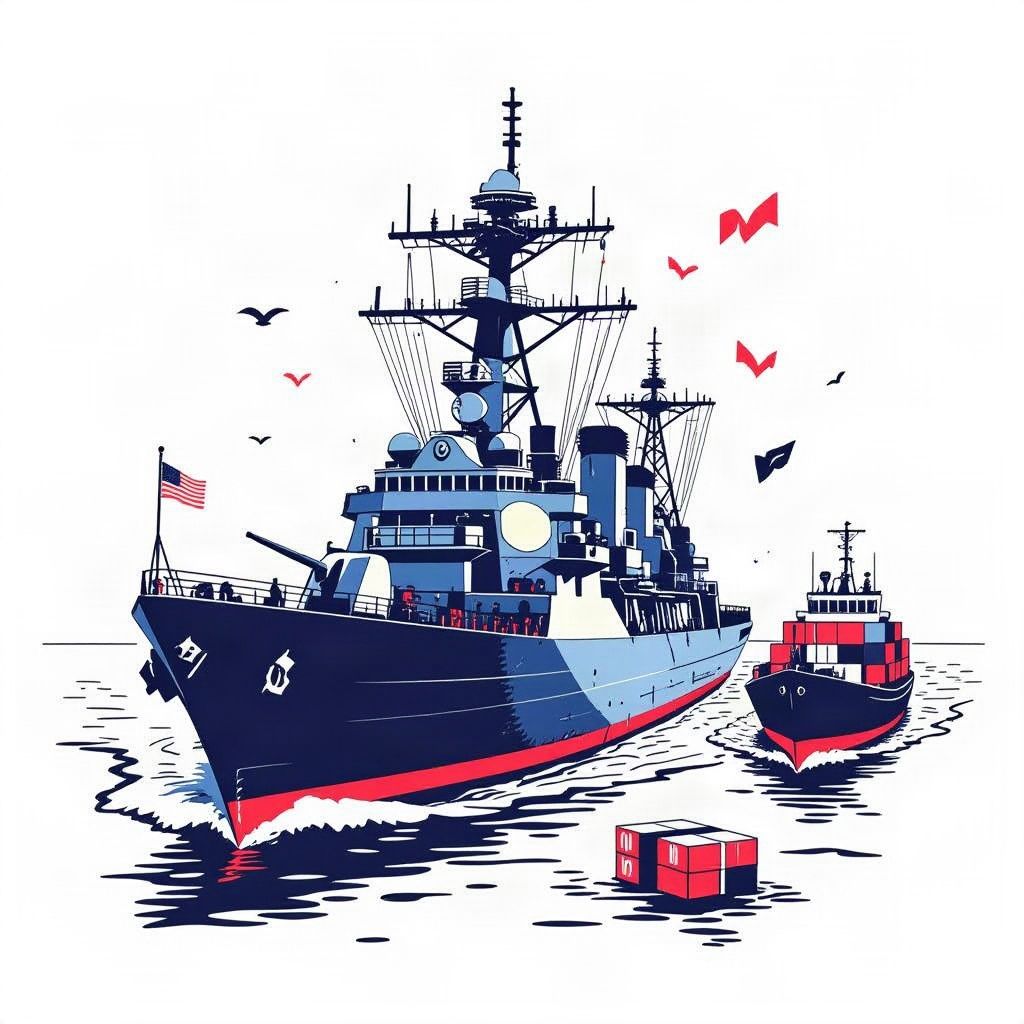
Tehran has threatened retaliation against an ongoing American naval siege under UN defense rights, jeopardizing over 80 percent of Iranian trade and escalating global energy supply risks.
Renewed Naval Blockade Triggers Immediate Regional Reactions
On Monday, 23 November 2026, Iran’s Ministry of Foreign Affairs issued a stark warning, declaring it would use ‘all available means’ to counter the United States’ naval blockade of Iranian ports. The blockade, which Tehran describes as an act of military aggression under Article 51 of the UN Charter, has intensified tensions in a region already strained by nearly a decade of conflict [1][2]. This latest escalation follows the reimposition of the blockade on 14 July 2026, after a brief lifting in June that had provided temporary relief to global energy markets [2]. The blockade directly threatens the Strait of Hormuz, a chokepoint through which 21.000 million barrels of oil transit daily, representing approximately 21% of global supply [GPT].
Energy Markets Braced for Volatility Amid Escalating Threats
Global energy markets are bracing for potential volatility as the blockade threatens to disrupt oil shipments through the Strait of Hormuz. The reimposition of the blockade in July 2026 had already slashed Iran’s crude oil exports to near zero, a stark contrast to the pre-blockade period when Iran exported 2.500 million barrels per day [2]. Iran’s threat to retaliate comes as the country’s foreign ministry spokesman, Esmaeil Baghaei, reiterated that the blockade constitutes ‘military aggression’ and that Iran retains the right to defend itself under international law [1][2]. Analysts warn that any disruption to the Strait of Hormuz could trigger a supply shock, reminiscent of the 40% surge in crude prices observed following the initial U.S. strikes on Qeshm Island earlier this year [3][alert! ‘Historical comparison may not account for current market conditions’].
Geopolitical Fallout Extends Beyond Oil: Regional Conflicts and Diplomatic Standoffs
The blockade has also exacerbated existing regional tensions, with Saudi-led airstrikes in Hodeida, Yemen, killing four people and wounding 18 on 23 November 2026 [1]. This incident underscores the broader geopolitical instability gripping the Middle East, where the Israel-Hezbollah war—now in its ninth month—has claimed over 4,300 lives and displaced thousands more [1]. Meanwhile, Lebanese Prime Minister Nawaf Salam condemned an Israeli military spokesperson’s visit to a school in Debl, southern Lebanon, as an attempt to ‘exploit children’ for propaganda purposes during Lebanon’s independence day celebrations [1]. These developments highlight the interconnected nature of regional conflicts, where actions in one theater can rapidly escalate tensions in another.
Diplomatic Maneuvering and Potential Pathways to De-escalation
Despite the bellicose rhetoric, diplomatic channels remain open. Iranian Deputy Foreign Minister Kazem Gharibabadi confirmed that a Qatari delegation visited Tehran on 20 November 2026 for two hours of talks, though the outcomes remain undisclosed [1]. Iran has reiterated that the Strait of Hormuz could reopen within two days if Washington halts hostilities, lifts the blockade, and waives sanctions [1][2]. However, Baghaei cautioned that discussions on the Strait’s opening are ‘pointless’ unless Iran’s demands are met, signaling a rigid stance from Tehran [2]. Meanwhile, U.S. President Donald Trump has dismissed Iran’s recent barrage of drones and missiles as causing ‘no damage,’ a claim contradicted by independent reports of rising military activity [1]. The coming days will be critical in determining whether diplomacy can avert a full-blown crisis or if the blockade will push the region further into uncharted territory.
Sources
- www.cbsnews.com
- www.aljazeera.com
- www.aljazeera.com
- www.youtube.com
- www.youtube.com
- www.facebook.com