The End of the One-Cent Coin: Why America Is Finally Retiring the Penny
Washington, Saturday, 21 November 2026.
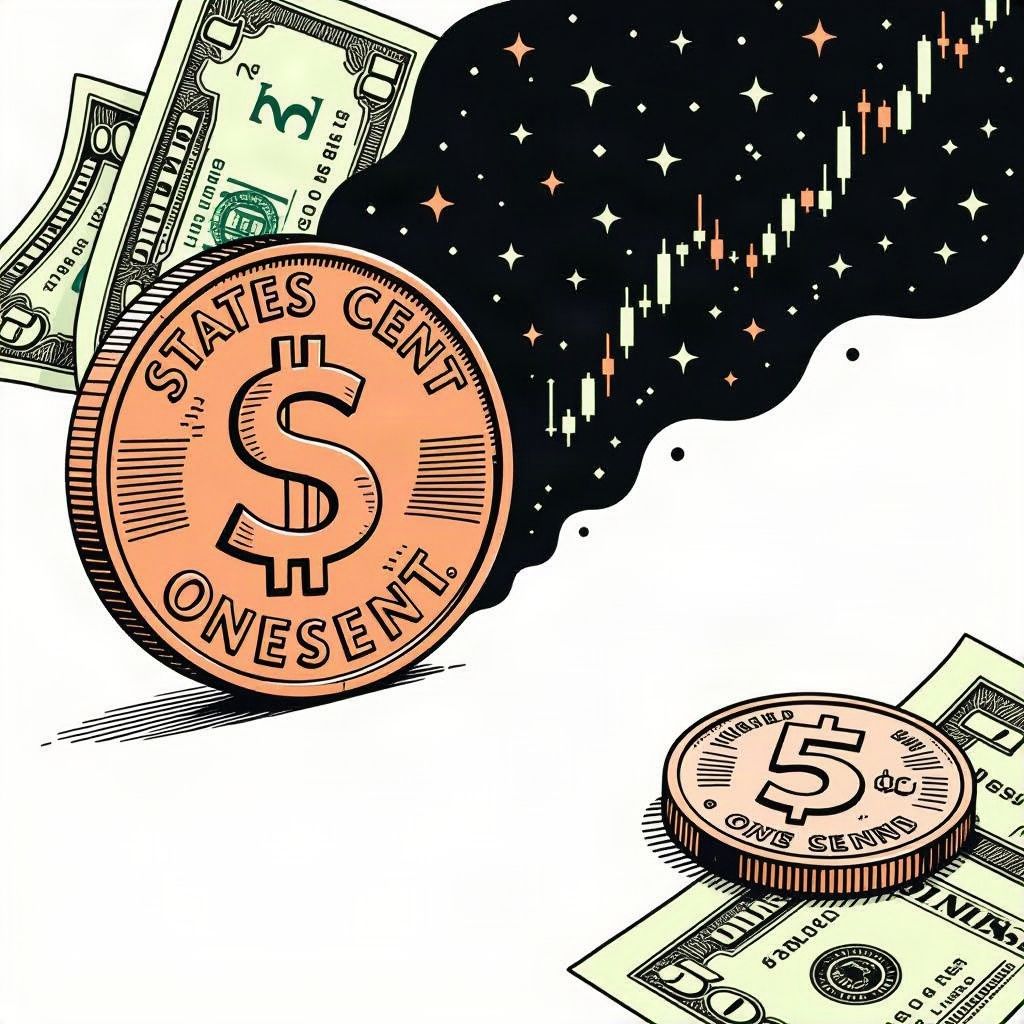
Manufacturing each one-cent coin cost taxpayers nearly four cents, prompting newly signed federal legislation that permanently ends penny production and authorizes five-cent rounding rules for cash purchases nationwide.
A Century and a Half of Fiscal Folly
The United States Mint has produced the one-cent coin since 1793, but the economics of its creation have long defied logic. As of November 2026, manufacturing each penny costs nearly four cents—3—a deficit that has ballooned into a $85 million annual loss for federal taxpayers, according to Rep. Lisa McClain (R-Mich.) [1]. This fiscal absurdity culminated on November 20, 2026, when President Donald Trump signed the bipartisan Common Cents Act into law, marking the official end of penny production for general circulation after nearly 250 years [2][3]. The legislation, which passed the House unanimously on September 14, 2026, and the Senate on September 28, 2026, directs the U.S. Department of the Treasury to cease minting pennies except for numismatic collector editions [4][5].
The Legislative Backdrop: From Waste to Common Sense
The Common Cents Act emerged from bipartisan frustration over the penny’s unsustainable economics. As early as November 2025, President Trump had labeled the penny’s production as “so wasteful!” [6], a sentiment echoed by lawmakers in both chambers. The fiscal burden was stark: in 2026 alone, the U.S. Mint spent 4 cents per penny to produce a coin worth one cent, a calculation confirmed by Rep. McClain’s statement that the bill would save $85 million annually [1]. The act not only halts penny production but also allows businesses to round cash transactions to the nearest five cents, a provision championed by retail groups like NACS and Kwik Trip, which cited years of confusion and litigation risks under prior ambiguous state laws [7][8].
Legal Tender Legacy: What Happens to Existing Pennies?
While the Common Cents Act ends new penny production, approximately 114 billion pennies—nearly 80% of which remain in circulation—will continue to serve as legal tender indefinitely [9]. The Federal Reserve will recirculate existing pennies “for as long as possible,” ensuring no immediate disruption to cash-based transactions [9]. The U.S. Mint will retain limited production capabilities solely for collectors, preserving the coin’s cultural and historical significance [3]. Retailers and financial institutions must now adapt to the new reality: cash transactions will be rounded to the nearest five cents, with guidelines codified federally to eliminate state-level inconsistencies. For example, a $10.02 purchase would round down to $10.00, while $10.04 would round up to $10.05 [10].
Economic Ripples: Winners, Losers, and the Digital Shift
The phaseout of the penny accelerates broader trends in U.S. payment systems. Retailers like Kwik Trip and convenience store associations have praised the legislation for ending years of ambiguity, reducing compliance costs, and mitigating litigation risks associated with rounding practices [7][8]. The act’s passage follows a nine-month hiatus in penny production after Trump’s 2025 criticism, during which businesses operated in a legal gray area [11]. While cash users may face minor inconveniences—such as rounding discrepancies—the law prioritizes fiscal responsibility and aligns with the Federal Reserve’s push toward digital payment adoption. The U.S. Mint’s shift to zinc-nickel composites for nickels, mandated by the act, further underscores the government’s focus on cost efficiency in coin production [9].
A Historical Footnote: The Penny’s Evolution and Demise
The penny’s journey from Benjamin Franklin’s 1787 sundial design to Abraham Lincoln’s 1909 portrait reflects America’s economic and cultural shifts [12]. Originally made of pure copper, the coin’s composition evolved in 1857 to an 88% copper alloy before adopting its modern zinc-copper core in later decades [12]. Yet its symbolic value has long clashed with its practical costs. The Common Cents Act, signed on November 20, 2026, closes a chapter that began in 1793, when the U.S. Mint first struck the cent under the Coinage Act of 1792 [12][3]. As the nation embraces rounding rules and digital transactions, the penny’s legacy endures—not as a circulating currency, but as a relic of fiscal inefficiency.
Sources
- www.nbcnews.com
- www.whitehouse.gov
- www.cbsnews.com
- financialservices.house.gov
- www.rila.org
- www.nbcnews.com
- www.convenience.org
- www.cbsnews.com
- www.nbcnews.com
- www.cbsnews.com
- www.nbcnews.com
- www.nbcnews.com