Weight-Loss Drugs Projected to Cut Airline Fuel Costs by $580 Million
New York, Monday, 19 January 2026.
Financial analysts project a $580 million annual windfall for U.S. airlines, as the widespread adoption of weight-loss medications leads to lighter passengers and significantly reduced jet fuel consumption.
Unlikely Economic Synergies
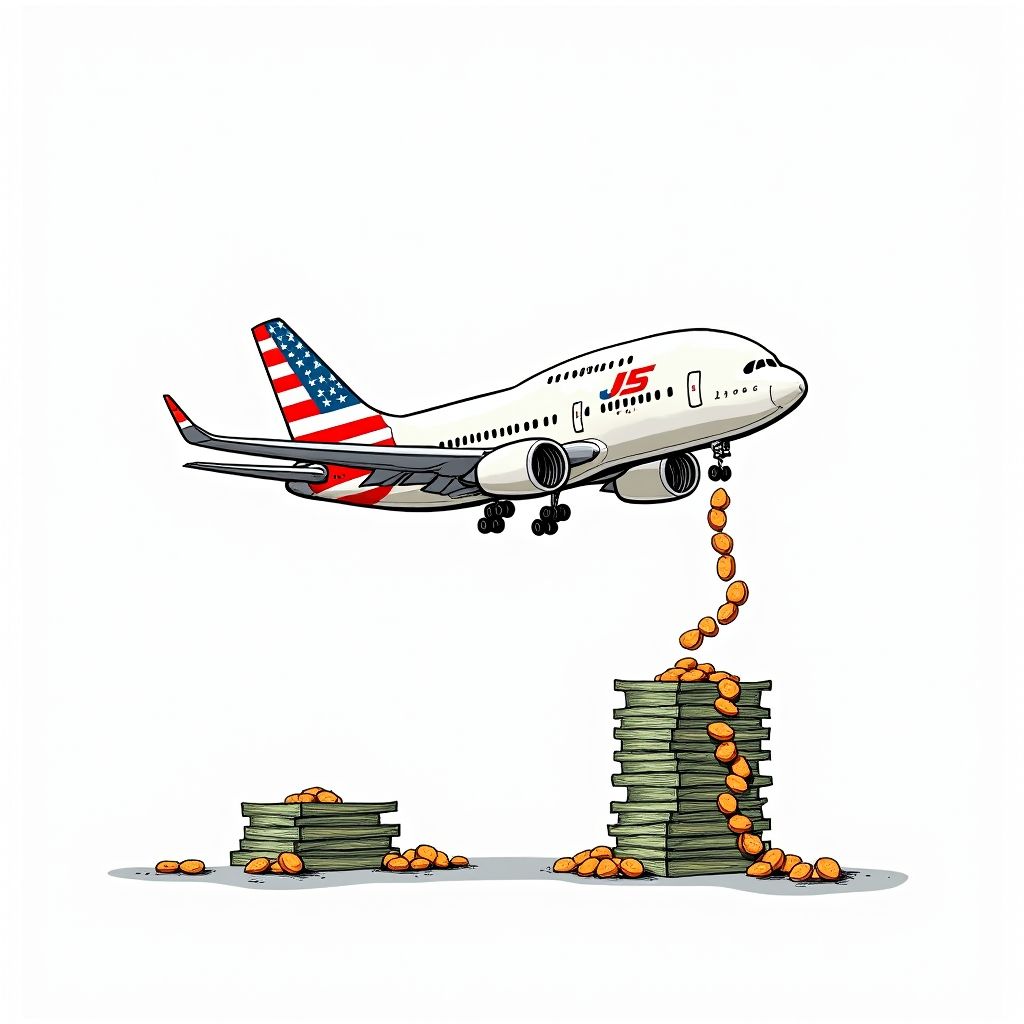
In a striking convergence of healthcare trends and aviation economics, a study published by the financial firm Jefferies on January 11, 2026, projects that United States airlines could save up to $580 million annually on fuel costs [1]. This potential windfall is attributed to the widespread adoption of GLP-1 weight-loss medications, such as Ozempic and Wegovy, which are reducing the average weight of passengers [3]. The analysis focuses on the four largest domestic carriers—American Airlines, Delta Air Lines, Southwest Airlines, and United Airlines—suggesting that a lighter passenger base could significantly improve fuel efficiency without any operational changes by the carriers themselves [1][2].
The Physics of Financial Savings
The correlation between waistlines and bottom lines is rooted in the physics of flight. Jefferies analysts estimate that if the average passenger weight decreases by 10 percent, the total weight of an aircraft drops by approximately 2 percent [2]. This reduction in payload is calculated to lower fuel consumption by 1.5 percent [1]. While these percentages may appear marginal, the aggregate impact is substantial. For 2026, the four major U.S. airlines are projected to consume 16 billion gallons of jet fuel, resulting in a collective bill of approximately $38.6 billion [1][3]. With fuel accounting for nearly 20 percent of total operating expenses, a 1.5 percent saving represents a significant reduction in overhead [2].
Market Implications and Profitability
Beyond immediate cost savings, the reduction in weight has positive implications for shareholder value. Researchers indicate that the projected 2 percent reduction in aircraft weight could increase earnings per share by roughly 4 percent [1]. Sheila Kahyaoglu, an equity analyst at Jefferies, emphasized the logic behind the numbers, stating that “it only makes sense that the weight of their passengers also impacts their costs” [1]. This data underscores how the pharmaceutical industry’s success in addressing obesity is inadvertently optimizing the cost structure of the aviation sector.
Adoption Rates and Accessibility
The scale of these savings depends heavily on the continued uptake of these medications. A survey conducted by KFF in November 2025 revealed that one in eight U.S. adults were already using a GLP-1 drug for weight loss or chronic conditions [1][4]. Accessibility has likely been bolstered by recent policy shifts; in November 2025, the Trump administration announced a deal to cap the cost of oral GLP-1 doses at $149 per month for Medicare and Medicaid beneficiaries, and $245 for other prescriptions [3]. Furthermore, the recent market entry of the Wegovy pill by Novo Nordisk is expected to broaden patient adoption compared to injectable alternatives [2].
Historical Context and Future Revenue
Airlines have a long history of aggressive weight management to conserve fuel. In the 1980s, American Airlines famously saved approximately $40,000 annually by removing a single olive from each dinner salad [1][4]. While carriers have previously scrutinized items ranging from catering to paper stock, passenger weight has largely remained a variable outside their direct control [2]. However, the shift in passenger habits may present a double-edged sword. Ms. Kahyaoglu noted that while fuel costs may drop, revenue from onboard sales could also decline if appetite-suppressed passengers purchase fewer snacks [1]. As of January 18, 2026, none of the four major airlines had commented on the study [1].