Government Shutdown Triggers Five-Hour Airport Delays During Spring Break Rush
Houston, Monday, 9 March 2026.
A partial government shutdown is forcing spring break travelers to endure five-hour security lines, compounding travel chaos after over 1,000 TSA officers resigned during last year’s funding lapse.
Spring Break Travel Grinds to a Halt
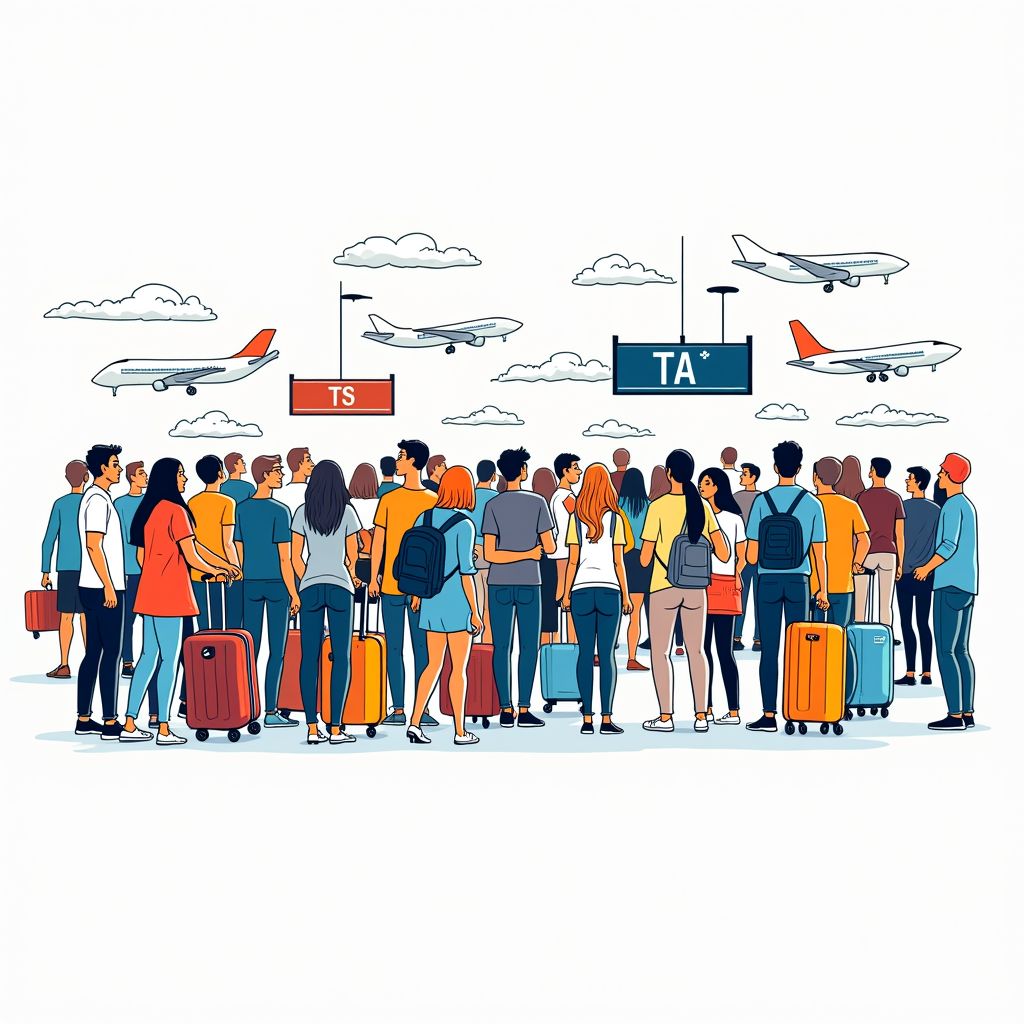
The logistical strain became glaringly apparent at William P. Hobby Airport in Houston on Sunday, March 1, 2026, when departing passengers encountered security wait times stretching up to five hours [1]. The severe bottleneck, driven by a reduction in open Transportation Security Administration (TSA) screening lanes, resulted in widespread frustration and missed departures [1]. For instance, traveler Michael Cevallos was forced to rebook a later flight after spending three hours trapped in the security queue [1]. The timing is particularly perilous for the local economy, as the Houston Airport System anticipates that more than 2.2 million passengers will transit through Hobby and George Bush Intercontinental Airports during the peak spring break travel period [1].
Homeland Security Funding in Limbo
The root cause of these travel disruptions is a lapse in funding for the U.S. Department of Homeland Security (DHS), compelling TSA personnel to work without financial compensation [1]. This marks the second time in a five-month span that federal workers have faced such circumstances [1]. In Washington, the political maneuvering continues; House Republicans recently passed legislation intended to fully fund the DHS for the upcoming year [2]. Concurrently, President Trump has nominated Senator Markwayne Mullin to serve as the new Secretary of Homeland Security, signaling an intent to stabilize the department’s leadership amidst the ongoing fiscal gridlock [2].
Heightened Threat Levels and Recalled Personnel
Beyond airport logistics, the partial shutdown is actively disrupting higher-level national security operations [GPT]. Over the weekend of March 7 to March 8, 2026, the DHS was forced to recall analysts from its Office of Intelligence and Analysis (I&A) who had previously been furloughed [2]. This emergency recall was triggered by a combination of escalating unrest in the Middle East and a recent terrorist attack in Austin, Texas [2]. The necessity of recalling unpaid, furloughed intelligence staff highlights the immediate vulnerabilities created by appropriations lapses during periods of elevated domestic and international threats [2].
Looming Logistical Threats to Major Events
The political stalemate in Washington arrives at a precarious moment for the United States’ international hosting duties [GPT]. The 2026 FIFA World Cup is now less than 100 days away, with matches scheduled across 11 U.S. cities [2]. The DHS projects that nearly five million fans will travel to the United States for the tournament, averaging approximately 454545.455 fans per host city [2]. However, on March 1, 2026, law enforcement stakeholders and a FIFA host city official testified that delays in Federal Emergency Management Agency (FEMA) grant funding—exacerbated by the shutdown—are already hindering vital security planning [2]. With the final match in New Jersey expected to be designated a National Special Security Event (NSSE), the continued gridlock threatens to undermine the safety infrastructure required for one of the world’s largest sporting events [alert! ‘The NSSE designation is noted as likely by sources, but has not yet been officially finalized’].