White House Expands TrumpRx with 600 Generic Medications to Disrupt Pharmacy Pricing
Washington D.C., Tuesday, 19 May 2026.
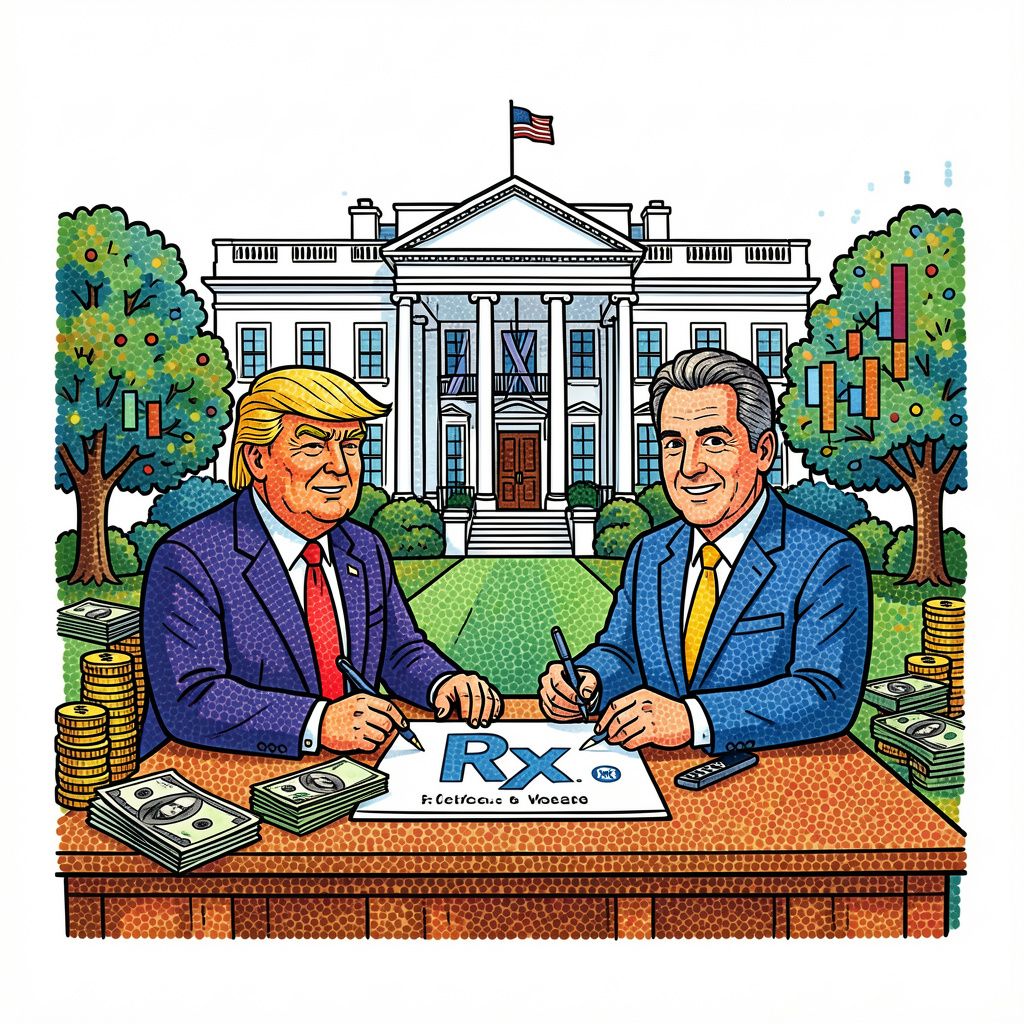
By partnering with Mark Cuban, the Trump administration is adding 600 generic medications to TrumpRx, bypassing traditional pharmacy middlemen to significantly lower out-of-pocket healthcare costs for consumers.
A Bipartisan Push for Pricing Transparency
On Monday, May 18, 2026, President Donald Trump officially announced the expansion of the government-backed TrumpRx platform during a White House press conference [2][4]. The initiative, framed as a top political priority ahead of the upcoming midterm elections [3], integrates major private-sector players into the federal framework. Notably, the administration has secured partnerships with Amazon Pharmacy, GoodRx, and the Mark Cuban Cost Plus Drug Company [2][4][6]. This coalition bridges a stark political divide; billionaire investor Mark Cuban openly endorsed Kamala Harris during the 2024 presidential election and previously criticized Trump [1][6]. Addressing the former rivalry, President Trump remarked that Cuban “made a mistake” but praised his company, asserting that Cuban is “going to do a lot of business through this” [1]. Cuban himself emphasized that lowering drug costs is a universal priority, noting that the platform is already saving patients significant amounts of money on treatments like in vitro fertilization [6].
Targeting the Generic and Brand-Name Markets
The inclusion of high-volume generic medications is designed to alleviate everyday healthcare expenses for American consumers. For example, the widely prescribed diabetes medication metformin is now listed at $8.42 via TrumpRx, compared to approximately $20 for the brand-name equivalent Glucophage [1]. The expanded formulary also features common treatments such as the cholesterol-lowering drug atorvastatin [4]. However, the administration has instituted specific guardrails: the platform explicitly excludes controlled substances, medications subject to FDA-mandated Risk Evaluation and Mitigation Strategies (REMS), and drugs not typically sold directly to consumers [4].
Market Realities and Limitations
Despite these highly publicized discounts, the broader impact of the TrumpRx initiative remains a subject of intense scrutiny among healthcare economists. The platform is primarily tailored for uninsured consumers who pay cash for their prescriptions [4]. Rena Conti, a professor at Boston University’s Questrom School of Business, cautions that for patients with existing health coverage, utilizing insurance is “still usually a better deal than paying cash through TrumpRx,” as cash purchases typically do not count toward annual insurance deductibles [4][6]. Furthermore, while approximately 60 percent of American adults express concern over prescription affordability [5], independent analyses suggest the administration’s claims of international price parity may be premature. A recent review of publicly available data indicated that prices listed on TrumpRx are still not lower than those paid by consumers in the United Kingdom [4].
Sources
- nypost.com
- www.nytimes.com
- www.washingtonpost.com
- www.reuters.com
- www.dermatologyadvisor.com
- fox2now.com