Federal Reserve Signals Alarm as Stock Market Valuations Reach Historic Extremes
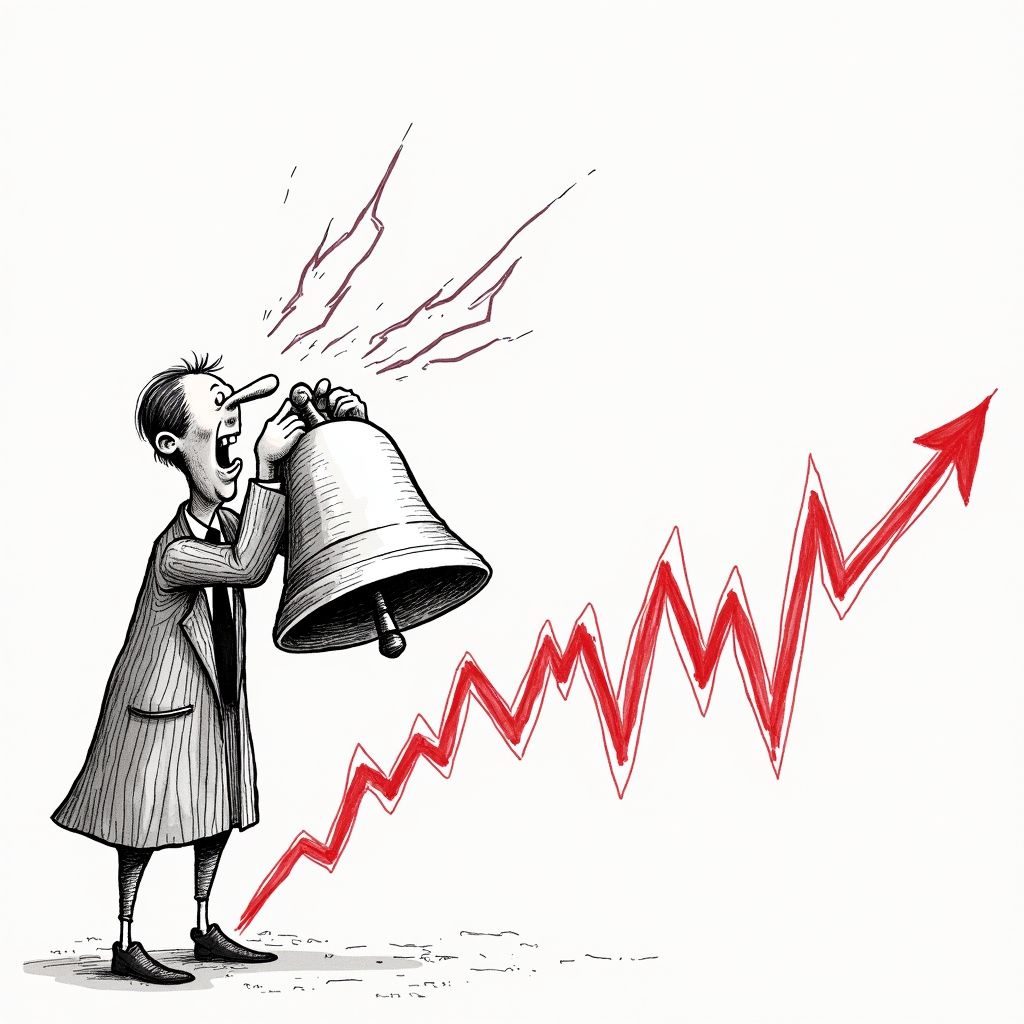
Washington D.C., Sunday, 22 February 2026.
With the S&P 500’s forward price-to-earnings ratio exceeding 22—a historical precursor to bear markets—Federal Reserve officials are actively warning that current equity valuations may be unsustainable.
Historical Echoes in Current Valuations
The Federal Reserve’s anxiety stems from a persistent disconnect between stock prices and underlying earnings power. Since July 2025, the S&P 500 has maintained a forward price-to-earnings (P/E) ratio above 22, significantly outpacing the 10-year average of 18.8 [1]. This metric is not merely a statistical anomaly but a warning signal that has reliably preceded major market downturns. For context, the forward P/E ratio surpassed 22 in 1998, peaking above 24 in 1999 before the index eventually plummeted 49% by late 2002 [1]. Similarly, valuations peaked above 23 in 2020, foreshadowing a 25% decline by late 2022 [1]. Adding to the chorus of concern, the “Warren Buffett indicator,” which compares the total stock market value to GDP, has climbed to 220.1%, a level exceeding the heights reached prior to the 2022 market decline [4]. Furthermore, the Shiller PE ratio currently stands at 39.90, signaling stretched equity valuations reminiscent of the dot-com era [6].
Sector Divergence and the AI Cost Burden
Beneath the headline numbers, the market is displaying significant internal fracture. As of February 19, 2026, the market-cap-weighted S&P 500 is underperforming its equal-weighted counterpart by the widest margin since the early 1990s, indicating that the rally is not broad-based [3]. Specific sectors are already feeling the strain; software stocks have emerged as the worst-performing industry, down 20% year-to-date as of February 20, 2026 [3]. A critical factor driving this uneasiness is the surging capital expenditure required for artificial intelligence. Market risks are mounting as AI-driven spending pressures the free cash flow of hyperscalers like Meta, Amazon, Microsoft, and Google [6]. Projections indicate that the combined free cash flow for these tech giants could plunge by 77.5% (averaging the projected 75-80% range) to between $35 billion and $50 billion in the 2026 fiscal year, a shift that sharply raises valuation multiples [6].
The Federal Reserve’s Stance on Rates and Risk
Despite market optimism for rate relief, the macroeconomic backdrop remains challenging. Minutes from the Federal Open Market Committee (FOMC) meeting in January 2026 revealed that officials see inflation stalling above the 2% target, with staff projections anticipating growth above potential through 2028 [5]. While markets are currently pricing in 55 basis points of easing this year, starting potentially in June, the Fed’s hawkish tone suggests a disconnect between investor expectations and central bank policy [5]. Compounding the risk is the behavior of the bond market; in late January 2026, the spread between investment-grade corporate bonds and U.S. Treasuries narrowed to 71 basis points, the lowest level since 1998 [1]. This historically low spread indicates that credit markets may be underpricing risk just as equity valuations reach precarious heights. While Bank of America maintains a year-end 2026 target of 7,100 for the S&P 500, they also acknowledge that the index is statistically expensive on 18 of 20 valuation metrics [3], suggesting that investors must navigate a highly complex financial landscape in the coming months.
Sources
- www.theglobeandmail.com
- www.tradingkey.com
- evrimagaci.org
- m.economictimes.com
- www.tastylive.com
- seekingalpha.com