US Social Security System Faces Severe Shortfall by 2032
Washington, Wednesday, 21 October 2026.
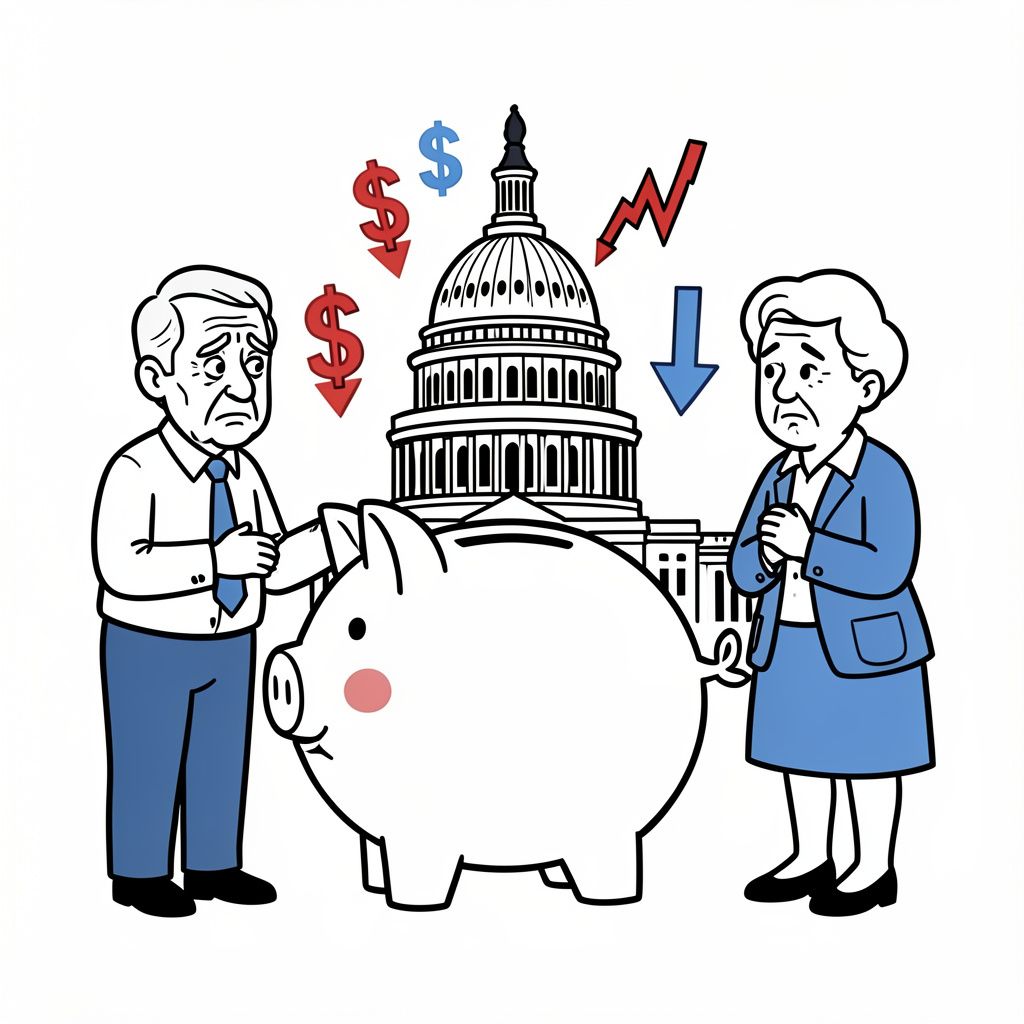
Without congressional intervention, the Social Security trust fund will exhaust its reserves in late 2032, automatically triggering an immediate 22% benefit cut for millions of American retirees.
Immediate Relief Versus Long-Term Risk
On October 14, 2026, the Social Security Administration announced a 3.6% cost-of-living adjustment for 2027, impacting nearly 72 million beneficiaries starting in January 2027 [1][2]. This adjustment raises the average monthly retirement benefit by approximately $75, shifting from an estimated $2,095 to $2,170 [2]. While this provides temporary relief, the program faces a long-term funding shortfall that could trigger automatic benefit cuts in the early 2030s [2]. The Old-Age and Survivors Insurance Trust Fund is projected to be depleted in the fourth quarter of 2032, leading to an estimated 22% cut in scheduled benefits [1][3]. Combined Old-Age and Survivors Insurance and Disability Insurance trust funds are projected to be depleted in the third quarter of 2034, resulting in a 17% cut [1]. Without legislative changes, incoming revenue would cover only 78% of scheduled benefits after 2032 depletion [3][8].
Mechanics of Trust Fund Depletion
Trust fund depletion does not mean the program stops collecting payroll taxes or paying benefits entirely [4][8]. Instead, the program would only be able to pay the share of scheduled benefits that its incoming revenue covers [2]. The Disability Insurance Trust Fund is financially distinct and is projected to pay 100% of scheduled benefits through at least 2100 [3][7]. In 2025, the worker-to-beneficiary ratio was approximately 2.6:1 and is projected to decline to 1.9:1 by 2075, driven by the retirement of baby boomers and increased life expectancy [8]. For 2026, the Social Security tax rate is 6.2% for employees and 6.2% for employers, with a taxable wage base limit of $184,500 [8]. This demographic shift creates a structural imbalance where fewer workers support more retirees [8].
Economic Impact on Retirees and Regions
A hypothetical retiree expecting $2,000 monthly would face a monthly loss calculated as 440 if benefits are reduced by 22% [3]. The Committee for a Responsible Federal Budget estimates that a typical dual-earning couple retiring around 2032 could lose $16,900 annually [3][5]. Regional impacts vary significantly; in Oregon, 22% of the population receives Old-Age, Survivors, and Disability Insurance [7]. Some counties such as Curry County, where 44% of residents receive benefits, would suffer more than urban centers like Multnomah County where only 16% receive benefits [7]. Experts warn there will be downstream effects on housing, other kinds of assistance, Medicaid, and Medicare if nothing is done [7].
Legislative Pathways and Reform Tools
Policymakers are weighing dramatic proposals to preserve solvency, including a potential 40% payroll tax increase that would heavily impact younger generations [1]. The Committee for a Responsible Federal Budget has released an updated interactive tool to model policy mechanisms such as benefit formula changes and retirement age increases [5]. Congress must act to change benefits, taxes, or funding rules to prevent the projected 22% benefit reduction upon fund depletion [3]. While no specific legislative deadline was missed between October 20 and October 21, 2026, warnings indicate time is running out to prevent insolvency in less than six years [5][6]. Social Security Commissioner Frank Bisignano stated the program will continue for 90 more years, confirming the agency is correcting 30 million erroneous records [1].
Sources
- fortune.com
- finance.yahoo.com
- www.phillyburbs.com
- www.facebook.com
- www.crfb.org
- www.facebook.com
- www.wweek.com
- pay.day