Aviation Authorities Probe Dangerous Runway Incident at Newark Airport
Newark, Friday, 20 March 2026.
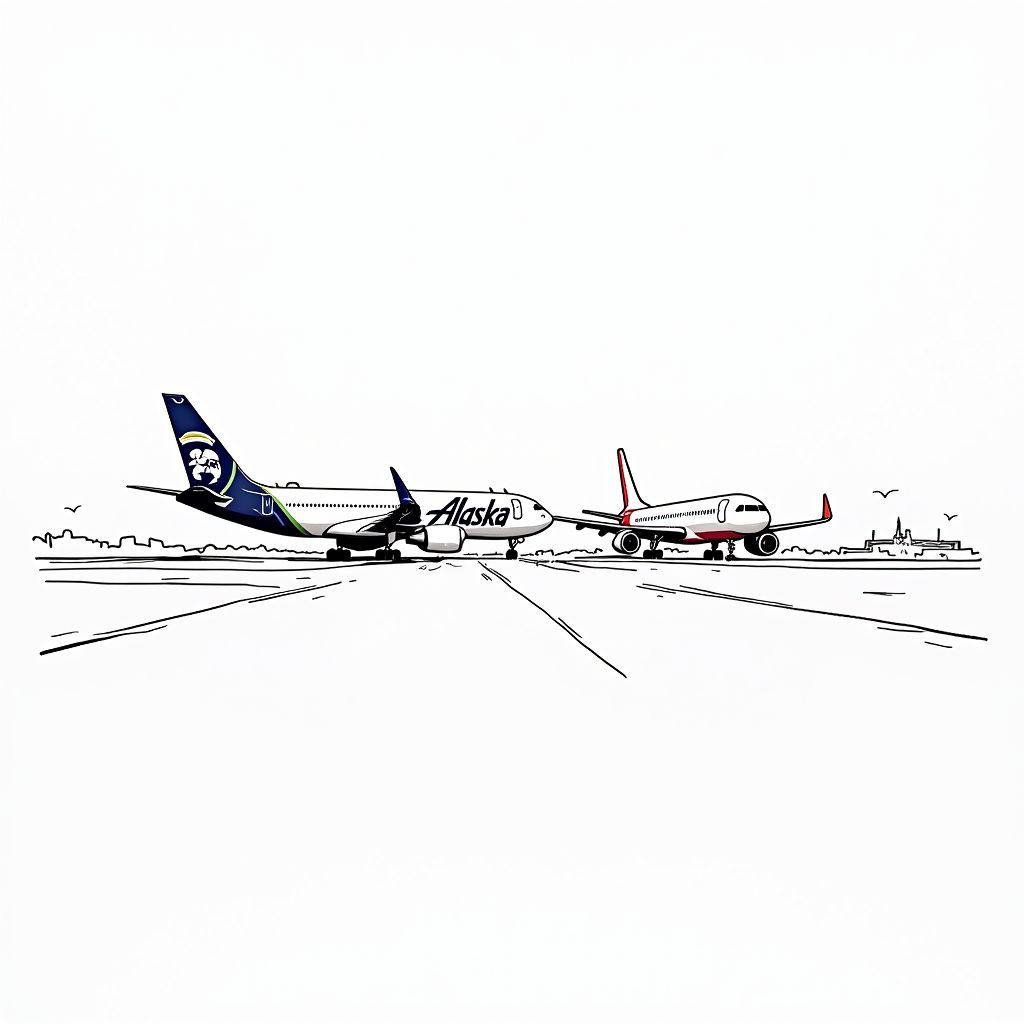
An Alaska Airlines passenger jet and a FedEx cargo plane avoided a catastrophic collision at Newark Airport by just 91.4 meters, prompting immediate federal investigations into runway safety protocols.
A Narrow Escape on Intersecting Runways
On Tuesday, March 17, 2026, a routine landing sequence at Newark Liberty International Airport nearly devolved into a fatal disaster [1][6][7]. [alert! ‘Fox News reported the incident date as March 10, but multiple primary aviation sources and radar data confirm the event occurred on March 17’]. Alaska Airlines (NYSE: ALK) Flight 294, a Boeing 737 MAX 9 arriving from Portland, Oregon, and FedEx (NYSE: FDX) Flight 721, a Boeing 777 freighter inbound from Memphis, Tennessee, were conducting simultaneous approaches to intersecting runways [1][6][7]. At approximately 20:15 to 20:17 local time, air traffic controllers recognized the impending conflict [1][4]. The tower issued an urgent “go-around” instruction to the Alaska Airlines crew when their aircraft was a mere 45.7 meters above the ground [1][7].
Regulatory Scrutiny and Air Traffic Control Pressures
The severity of this sequencing failure has triggered immediate federal intervention. On Friday, March 20, 2026, the National Transportation Safety Board (NTSB) officially launched an investigation into the “close call,” running parallel to a review by the Federal Aviation Administration (FAA) [6][7]. Investigators are currently analyzing radar data, air traffic control communications, and flight data recorders to determine whether human error, technological malfunctions, or systemic operational challenges are to blame [6][7]. While the FAA has historically classified go-arounds as a “routine safety procedure,” the NTSB’s direct involvement signals the potential severity of this specific runway incursion [1][6].
A Troubling Pattern in Aviation Safety
This runway incursion is not an isolated event but rather the latest in a series of alarming aviation incidents that have rattled the industry. Just weeks prior, on March 3, 2026, a Singapore Airlines aircraft clipped wings with a parked Spirit Airlines plane at the same Newark airport [1]. More devastatingly, the industry is still recovering from a catastrophic midair collision in 2025 between an Army Black Hawk helicopter and an American Airlines passenger plane near Ronald Reagan Washington International Airport, which resulted in 67 fatalities [2][4]. These compounding events underscore the critical vulnerabilities present in current airspace management [GPT].
Sources
- abc7ny.com
- www.foxnews.com
- www.instagram.com
- www.foxnews.com
- www.facebook.com
- www.aeronewsjournal.com
- www.linkedin.com