Artemis II Rocket Reaches Launch Pad Ahead of Historic Crewed Lunar Mission
Cape Canaveral, Sunday, 18 January 2026.
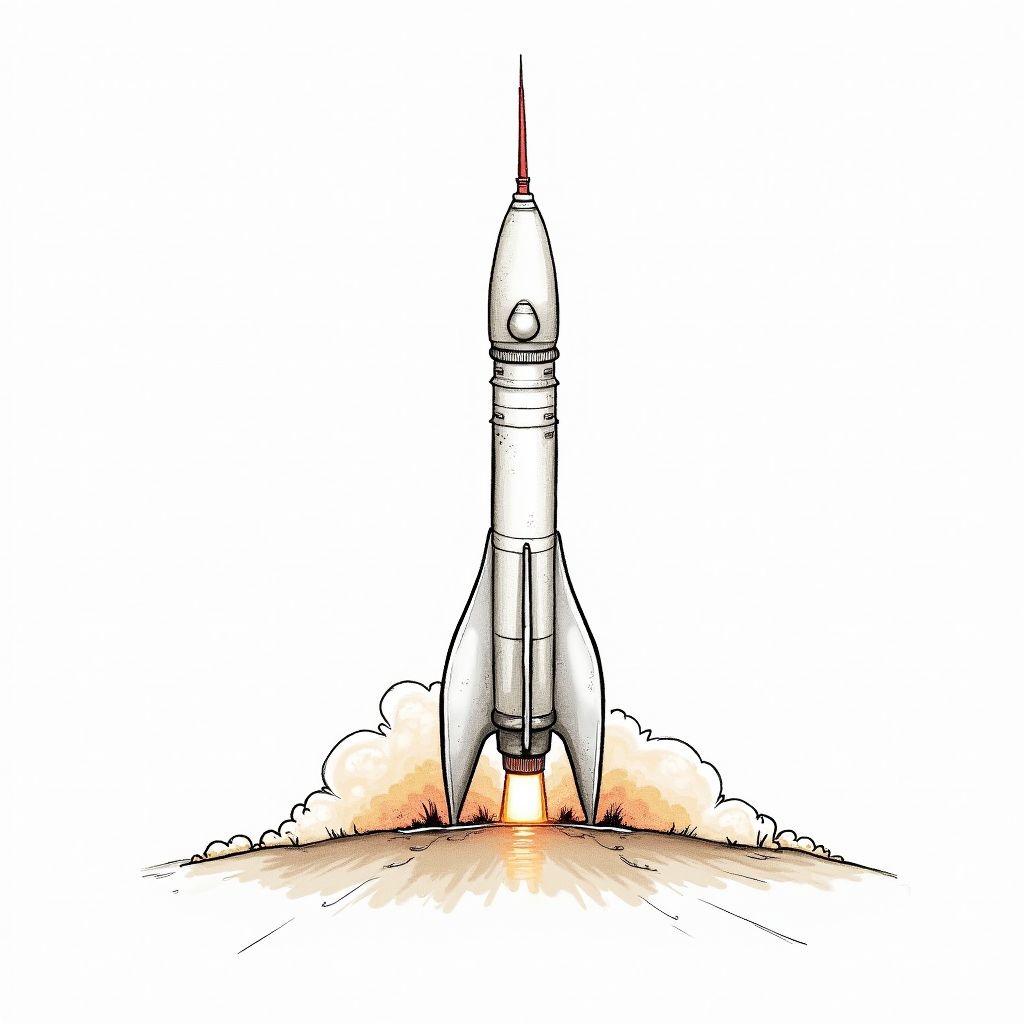
NASA positioned its 322-foot rocket on the pad Saturday, a critical milestone for the first crewed lunar mission since 1972, targeting a potential February launch window.
A Heavy Lift to the Pad
The journey from the Vehicle Assembly Building (VAB) to Launch Pad 39B began on the morning of Saturday, January 17, and concluded nearly 12 hours later at 18:41 local time [2][5]. The 98-meter (322-foot) Space Launch System (SLS) rocket traveled approximately 6.4 kilometers (4 miles) to reach its destination [2][3][5]. This logistical feat was executed by a crawler-transporter moving at a top speed of roughly 1.6 kilometers per hour [1][5].
Engineering on a Massive Scale
The operation involved moving a staggering amount of hardware. The rocket itself weighs 5.7 million pounds, while the crawler-transporter adds another 6 million pounds, resulting in a total moved weight of 11.7 million pounds [1]. The sheer scale of the machinery prompted Artemis II Commander Reid Wiseman to describe the vehicle as “engineering art” [1]. Wiseman, along with Pilot Victor Glover, Mission Specialist Christina Koch, and Canadian Space Agency Mission Specialist Jeremy Hansen, witnessed the rollout firsthand at the Kennedy Space Center [1][2].
Mission Parameters and Crew Readiness
The Artemis II mission, slated to be the first crewed lunar voyage since Apollo 17 in 1972, is designed as a 10-day test flight rather than a landing mission [2][3]. The crew will loop around the moon, venturing into deep space to validate the Orion spacecraft’s life-support, propulsion, and navigation systems [2][3]. This trajectory will take them over unmapped areas of the lunar surface that “no human has ever seen,” providing critical data for the subsequent Artemis III mission, which aims to land astronauts on the moon no earlier than 2027 [2][3].
Critical Testing and Scheduling Hurdles
With the rocket now at the pad, NASA is preparing for a “wet dress rehearsal,” a crucial test scheduled for February 2 that simulates launch countdown procedures and involves loading nearly 3,028,328 liters of cryogenic propellant [1][5]. NASA Administrator Jared Isaacman has emphasized that the agency has “zero intention” of confirming a specific launch date until this test is cleared [1]. If the rehearsal proceeds without issues, the earliest launch opportunity is February 6, with additional windows available through February 11 [1][2].
Orbital Traffic Jams
Despite the rocket’s readiness, orbital logistics may necessitate a delay. Following the early return of four International Space Station (ISS) crew members on January 15 due to medical issues, NASA is considering advancing the launch of their replacements [1]. Flight controllers aim to avoid simultaneous piloted missions to ensure safety and resource availability; consequently, a conflict with the expedited ISS schedule could push the Artemis II launch from its February target into March [1].