How a $2,000 Guitar Session Sparked a Federal Trial Over Jason Derulo's Royalties
Los Angeles, Tuesday, 28 April 2026.
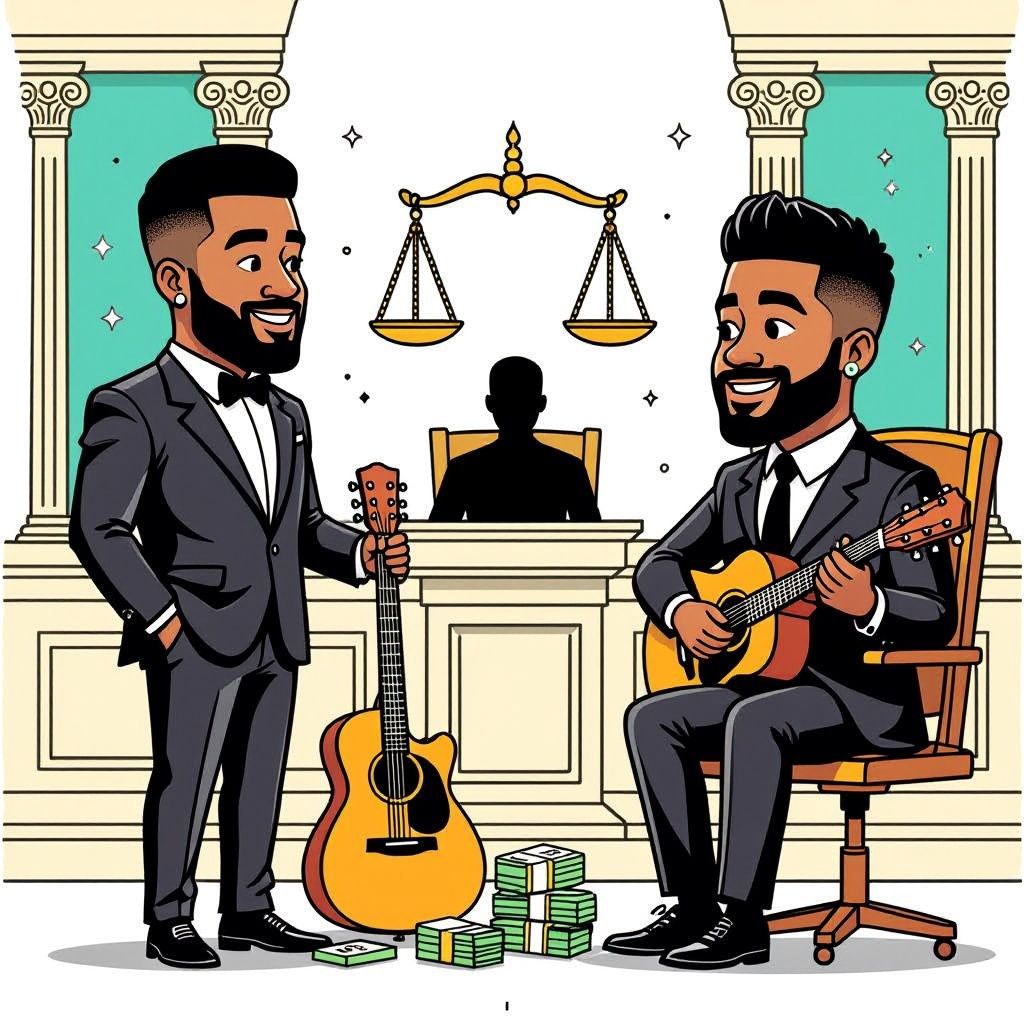
Highlighting the financial stakes of music monetization, a federal trial will decide if a $2,000 flat-fee guitarist is owed lucrative co-writing royalties for Jason Derulo’s viral hit, ‘Savage Love.’
The Anatomy of a Hit and a Lawsuit
Opening statements commenced in a Los Angeles federal courtroom, where a jury of four women and five men will decide the fate of Matthew Spatola’s 2023 lawsuit against Jason Derulo and Sony [1]. Spatola, an experienced guitarist whose production and performance credits include work with The Weeknd, Future, and A Boogie Wit Da Hoodie, is seeking co-authorship recognition and a share of the profits for the hit song “Savage Love (Laxed — Siren Beat)” [1]. For the music industry, this trial underscores the complex financial ecosystem where initial session fees often pale in comparison to long-term publishing royalties [GPT].
Disputed Contributions and the Defense
The core of the legal battle hinges on the creative process itself. Derulo maintains that he directed the musical arrangements by vocalizing the parts to his collaborators, a claim supported by 2024 deposition footage shown to jurors where the pop star states, “I can sing whatever you’d like” [1]. Furthermore, excerpts from Derulo’s 2023 book, ‘Sing Your Name Out Loud’, reveal his eagerness to release the song, noting he “hated the idea of shelving it” before securing a signed deal with the original synthesizer composer, Jawsh 685 [1]. However, Spatola’s legal team vehemently rejects the vocalization defense, with Werge pointing out the mechanical impossibility of the claim: “You cannot sing a guitar chord. The guitar has six strings, and a voice can only sing one note at a time” [1].
The Financial Stakes of Authorship
The financial implications of writing credits are immense, particularly for a chart-topping hit in the streaming era. Currently, the ownership split for “Savage Love” is divided entirely among four individuals: Jawsh 685 holds 50 percent, Derulo claims 25 percent, Jacob Kasher Hindlin receives 20 percent, and Paul Greiss takes the remaining 5 percent [1]. This distribution accounts for exactly 100 percent of the track’s royalties, leaving Spatola completely excluded from the ongoing publishing revenue [1]. If the jury rules in favor of the plaintiff during this initial two-week trial, a secondary trial will be convened specifically to calculate and award the profits owed to the guitarist [alert! ‘Exact timeline for the secondary trial phase is not specified in the source material’] [1].
Setting Precedents for Session Musicians
As the federal trial over “Savage Love” unfolds over the next two weeks [1], the verdict will likely serve as a crucial bellwether for the music industry. It highlights the fine line between work-for-hire session playing and legally recognizable co-authorship. For producers, session musicians, and the investment firms acquiring music catalogs, the outcome will reinforce the necessity of ironclad contracts prior to a song’s commercial release [GPT]. Without definitive paperwork, the difference between a $2,000 flat fee and millions in residual royalties remains a matter for a jury to decide [GPT].