US Hemp Industry Faces Sweeping Supply Chain Changes Ahead of 2026 Federal Deadline
Washington, D.C., Saturday, 25 April 2026.
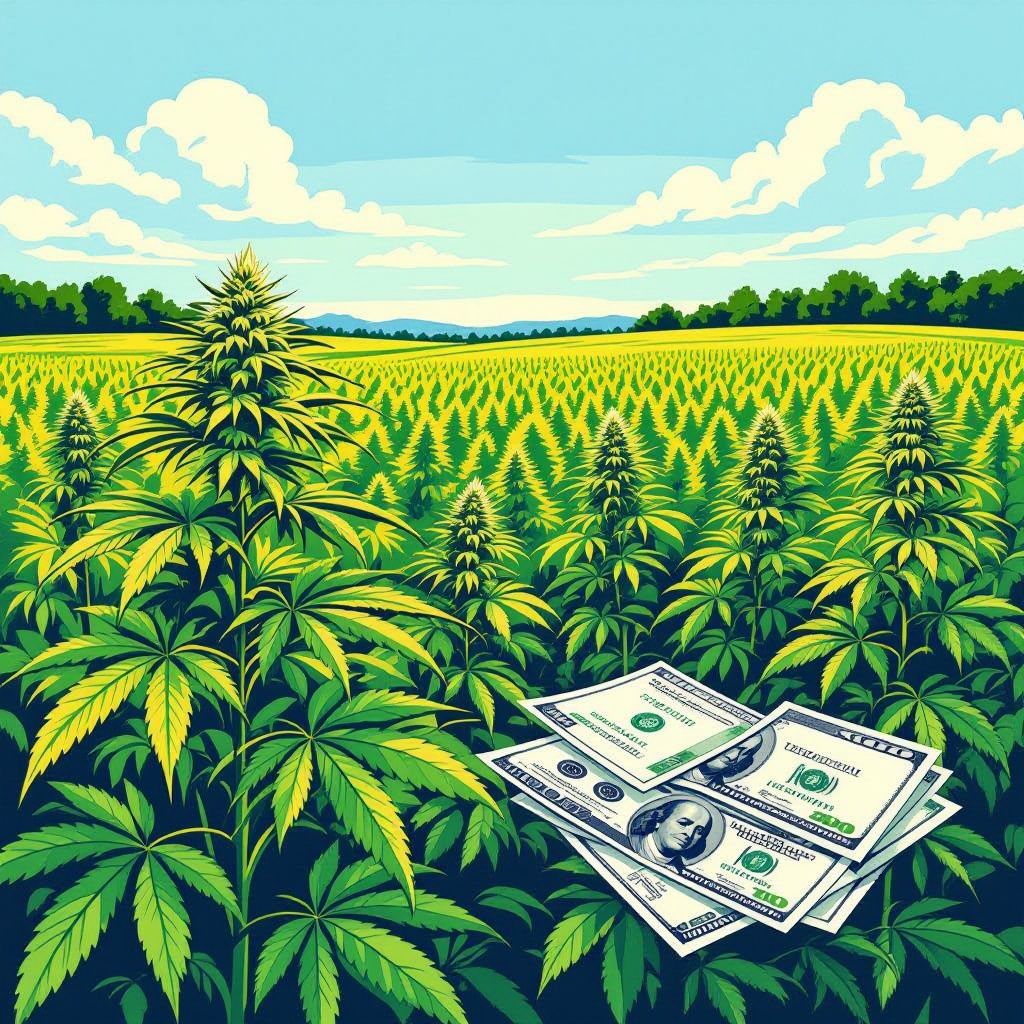
US hemp businesses have until November 2026 to align their supply chains with a strict new federal regulatory framework that promises to drastically reshape industry economics and compliance costs.
The New Federal Framework and Economic Stakes
In late 2025, Congress passed and President Donald Trump signed legislation that fundamentally redefines legal hemp in the United States [1][4]. Moving away from the 2018 Farm Bill standard—which limited delta-9 THC to 0.3 percent on a dry-weight basis—the new law implements a stringent total THC standard [1][2]. This new metric aggregates all THC isomers and THCA acids, removing the legal loopholes that allowed intoxicating synthetic cannabinoids to proliferate [1]. Crucially, final consumer products will face a hard cap of 0.4 milligrams of total THC per container when the regulatory transition takes full effect on November 12, 2026 [alert! ‘While one source notes a 2025 date, the consensus across industry and legislative sources confirms the enforcement deadline is November 12, 2026’] [1][2][4].
Political Tug-of-War Over Implementation
As the November 2026 deadline approaches, a fierce political debate has erupted over the timeline and scope of the impending recriminalization of certain hemp-derived THC products [2][4]. Lawmakers are utilizing the Farm, Food, and National Security Act of 2026 (H.R. 7567) as a vehicle for competing amendments [2]. Representative James Comer (R-KY) and Representative Kelly Morrison (D-MN) have proposed a bipartisan amendment to delay the ban by one year, pushing the effective date to November 2027 [2][4]. This legislative push follows a February 2026 effort in which Representative Comer and Kentucky Agriculture Commissioner Jonathan Shell directly lobbied Senator Mitch McConnell (R-KY) to avert the recriminalization [2].
Strict Compliance and the Push for H.R. 7212
Beyond the Farm Bill amendments, Congress is actively exploring standalone legislation to regulate the market. On April 24, 2026, Representative Morgan Griffith (R-VA) and Representative Marc Veasey (D-TX) introduced H.R. 7212, the Hemp Enforcement, Modernization, and Protection Act [3]. This bill seeks to amend the Federal Food, Drug, and Cosmetic Act to establish a rigorous regulatory framework for oral, inhalable, and topical cannabinoid hemp products [3]. Under the proposed legislation, inhalable products would be strictly prohibited from containing more than 0.3 percent of total intoxicating cannabinoid content by weight, and all new inhalable products would require formulation reporting to the Secretary of Health and Human Services 90 days prior to market introduction [3].
Intersecting Federal Policies and Healthcare Initiatives
The tightening of hemp regulations coincides with novel federal healthcare initiatives surrounding cannabinoids. In April 2026, the Trump administration launched a Medicare program designed to cover up to $500 worth of hemp-derived products annually for eligible patients, equating to a monthly benefit of approximately 41.667 dollars [2][4]. This initiative, which focuses heavily on CBD but permits a certain amount of THC, has already faced legal challenges [4]. Anti-marijuana organizations filed a lawsuit against the coverage policy, prompting lawyers for Health and Human Services Secretary Robert F. Kennedy Jr. and Centers for Medicare & Medicaid Services Director Mehmet Oz to file a brief requesting the case’s dismissal [2][4].
Sources
- www.einpresswire.com
- www.marijuanamoment.net
- www.congress.gov
- www.marijuanamoment.net
- www.cga.ct.gov