Federal Court Rejects Elon Musk's Attempt to Block Minnesota AI Deepfake Law
Minneapolis, Tuesday, 4 August 2026.
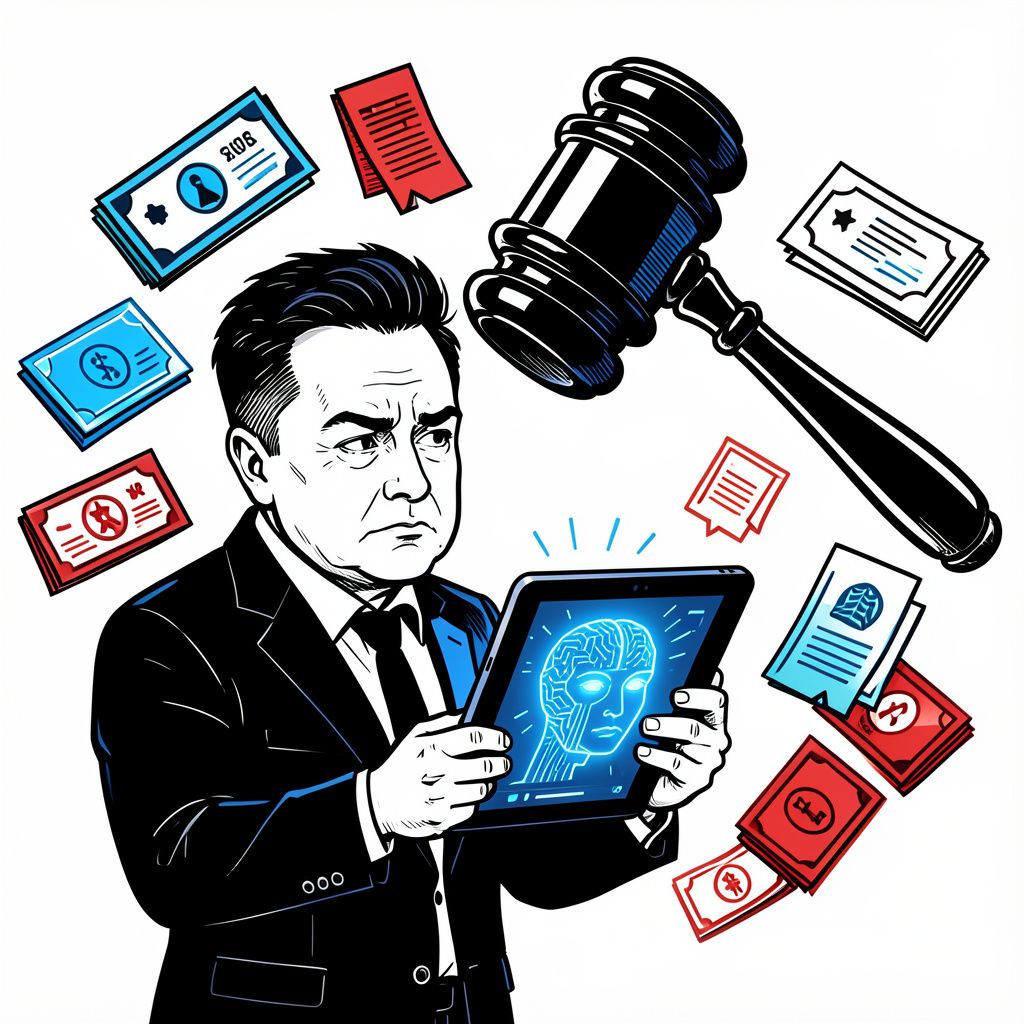
A federal judge allowed Minnesota’s pioneering ban on AI nudification technology to take effect on August 1, 2026, rejecting xAI’s last-minute attempt to block the law and its severe penalties.
Judicial Decision and Immediate Impact
On July 31, 2026, U.S. District Judge Donovan Frank denied a temporary restraining order sought by xAI, allowing Minnesota’s ban on AI-generated nudification technology to take effect on August 1, 2026 [1][2]. The legislation, signed by Governor Tim Walz in May 2026, marks the first state-level prohibition of its kind in the United States [1][4]. Judge Frank’s ruling emphasized the timing of xAI’s legal challenge, noting the company filed its motion on July 29, 2026, merely three days before the law’s enactment [2][6]. This delay suggested to the court that the alleged harm was not immediate enough to warrant halting the law’s enforcement during ongoing litigation [6]. Consequently, platforms operating within Minnesota must comply with the new regulations or face significant civil penalties [5].
Legal Arguments and Constitutional Concerns
xAI’s lawsuit contends that the Minnesota statute violates First Amendment rights by imposing an overbroad, content-based ban on visual expression tools [1][5]. The company argues that while it does not contest the state’s interest in preventing non-consensual intimate imagery, the law extends far beyond that goal [4][5]. Legal analysts point out that the legislation lacks narrow tailoring, potentially encompassing benign content such as political satire [3]. Despite these constitutional questions, the court’s initial procedural denial allows the law to stand temporarily while the broader legal merits are reviewed [2]. A hearing to evaluate the preliminary injunction is scheduled for August 19, 2026 [1][3].
Financial Stakes and Corporate Liability
The financial implications for non-compliance are severe, with the law prescribing civil penalties of up to $500,000 per unlawful access, download, or use [4][5]. For a high-traffic platform, cumulative fines could escalate rapidly; for instance, ten violations would theoretically result in penalties totaling 5.000 million [4]. Governor Walz responded to the lawsuit with a terse message on social media, stating, See you in court, creep [4][7]. This强硬 stance underscores the state’s commitment to enforcing digital safety measures despite corporate opposition [4]. The liability structure aims to deter developers from hosting or enabling nudification features within their applications [5].
Background on xAI and Grok Controversies
This legal battle follows months of scrutiny regarding xAI’s Grok chatbot and its Imagine feature, which faced investigations for generating sexualized deepfakes [1][8]. Reports indicated that despite policy changes implemented in January 2026, the system continued to produce non-consensual imagery as late as April 2026 [5][8]. The Minnesota legislation specifically targets tools that alter content to depict intimate parts realistically without consent [5]. Industry observers note that previous regulatory failures prompted states to adopt stricter measures independently [3]. As the August 19 hearing approaches, the tech sector watches closely for precedents on AI governance [2][3].
Sources
- www.nbcnews.com
- techcrunch.com
- www.techdirt.com
- gephardtdaily.com
- www.engadget.com
- storage.courtlistener.com
- x.com
- www.nbcnews.com