Toyota Reboots Scion with Indiana-Built Mini Utility Truck
Plano, Tuesday, 10 November 2026.
Toyota is resurrecting Scion to produce the KEI-01 in Indiana by late 2027, introducing an ultra-compact, street-legal work truck limited to 40 km/h for commercial fleets.
Scion Reborn: Toyota’s Experimental Mobility Play
Toyota Motor Corporation (NYSE: TM) has officially revived the Scion brand as Scion by Toyota, positioning it as a “freedom lab” for experimental mobility solutions [1][4][6]. The initiative was unveiled on November 9, 2026, at simultaneous press events in Ypsilanti Township, Michigan, and Frisco, Texas, where the company introduced the KEI-01, its first vehicle under the reborn marque [1][3][6]. This strategic pivot reflects Toyota’s broader ambition to explore niche mobility segments, starting with ultra-compact utility vehicles tailored for commercial fleets and urban logistics [1][2][5].
The KEI-01: A Kei Truck Reimagined for U.S. Streets
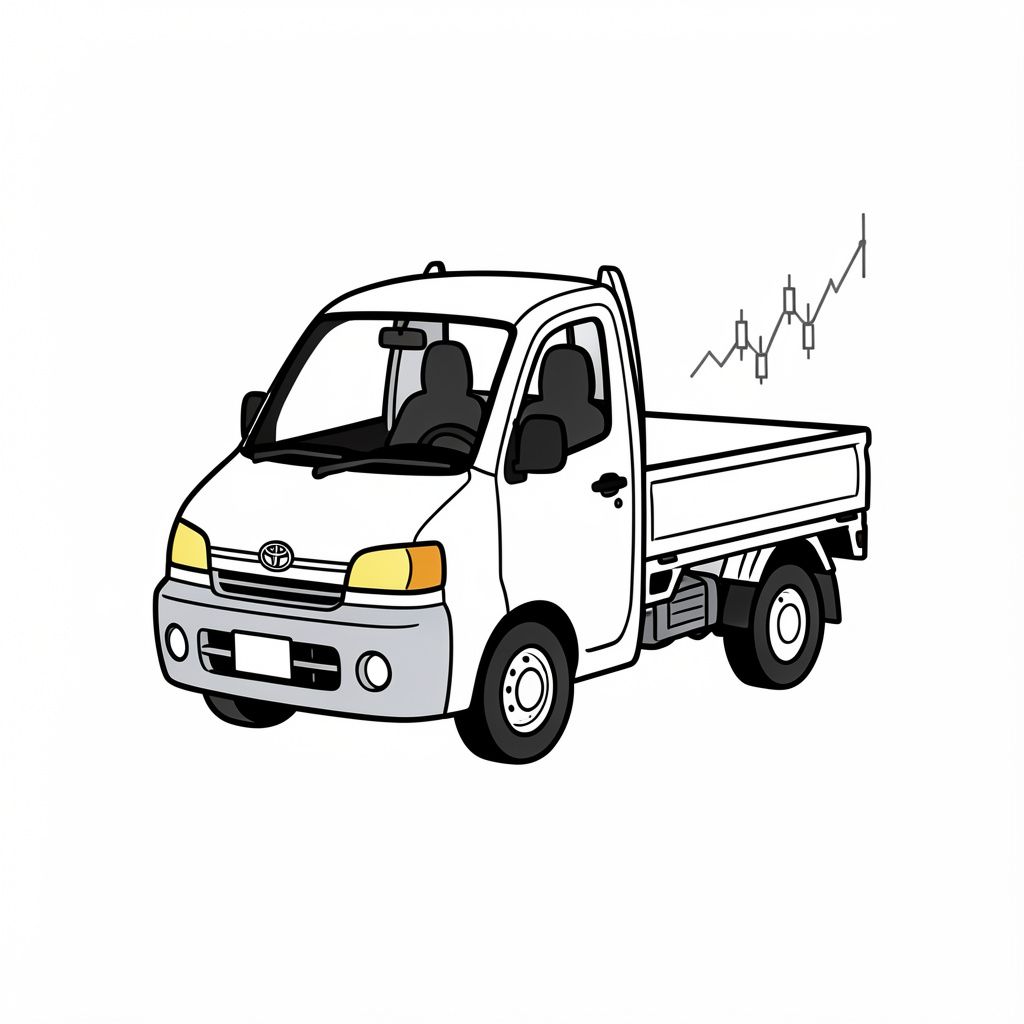
The centerpiece of Scion by Toyota’s revival is the KEI-01, an ultra-compact utility truck designed to bridge Japan’s kei truck philosophy with American commercial needs [1][3][7]. Scheduled for U.S. assembly at Toyota Motor Manufacturing Indiana (TMMI) in Princeton, Indiana, beginning in the second half of 2027, the KEI-01 is engineered as a low-speed vehicle (LSV) compliant with FMVSS No. 500 requirements [1][2][6]. Its specifications include a 660cc turbocharged three-cylinder engine paired with a continuously variable transmission (CVT) and selectable four-wheel drive, delivering a top speed of 40 km/h (25 mph) to meet LSV regulations [1][2][3][5][7]. The vehicle’s compact footprint—just over 3.35 meters long and under 1.52 meters wide—makes it ideal for navigating tight urban spaces and congested delivery routes [1][2][7].
Commercial Focus and Fleet Deployment Strategy
Toyota is targeting commercial fleets—including farmers, municipalities, universities, and small businesses—as the primary early adopters of the KEI-01 [3][5][8]. Initial distribution will occur through a selective pilot program involving a small network of authorized Scion by Toyota dealers drawn from Toyota’s existing dealer network [1][2][6]. This fleet-centric approach underscores Toyota’s intent to gauge real-world utility before considering broader retail sales [2][8]. Toyota’s $34 million investment in TMMI, which will create approximately 50 new jobs, reflects the company’s confidence in the KEI-01’s commercial viability [1][3][6][8]. The project also aligns with Toyota’s broader U.S. manufacturing footprint, where the company employs roughly 48,000 people across 11 plants and has assembled over 36 million vehicles in nearly seven decades [6][GPT].
Beyond the KEI-01: Scion’s Vision for Future Mobility
While the KEI-01 serves as Scion by Toyota’s inaugural product, the brand’s introduction also showcased two conceptual vehicles: the SxS Concept and the BKE Concept [1][2][3]. The SxS Concept, previously debuted at the 2025 SEMA Show, features a turbocharged four-cylinder hybrid powertrain producing over 300 horsepower, hinting at Scion’s future foray into off-road and adventure mobility [1][2][3]. The BKE Concept, a scooter-like personal mobility device, further illustrates the brand’s experimental ethos [1][2][6]. As Simon Humphries, Chief Branding Officer and Head of Design at Toyota Motor Corporation, noted, ‘Scion by Toyota gives us a place to challenge conventional thinking, explore new possibilities, and create mobility in new ways’ [1][3][6].
Market Context and Competitive Landscape
The KEI-01 enters a nascent but growing segment of the U.S. market, where demand for compact, fuel-efficient commercial vehicles has intensified amid persistent inflation and urban congestion [alert! ‘limited historical U.S. market data for kei-class trucks’]. While kei trucks have long been popular in Japan—where they benefit from tax and regulatory advantages—the KEI-01’s U.S. introduction marks a novel experiment in adapting the kei philosophy to American commercial needs [7][GPT]. Competitors in the micro-utility segment include electric cargo bikes and small electric vans, though the KEI-01’s LSV classification and four-wheel-drive capability differentiate it from these alternatives [7][GPT].
Sources
- pressroom.toyota.com
- www.caranddriver.com
- www.autonews.com
- www.prnewswire.com
- www.caranddriver.com
- utvguide.net
- www.youtube.com
- www.facebook.com