Elon Musk Fires Back: Government Support Played Minimal Role in Tesla’s Success
Washington DC, Monday, 15 June 2026.
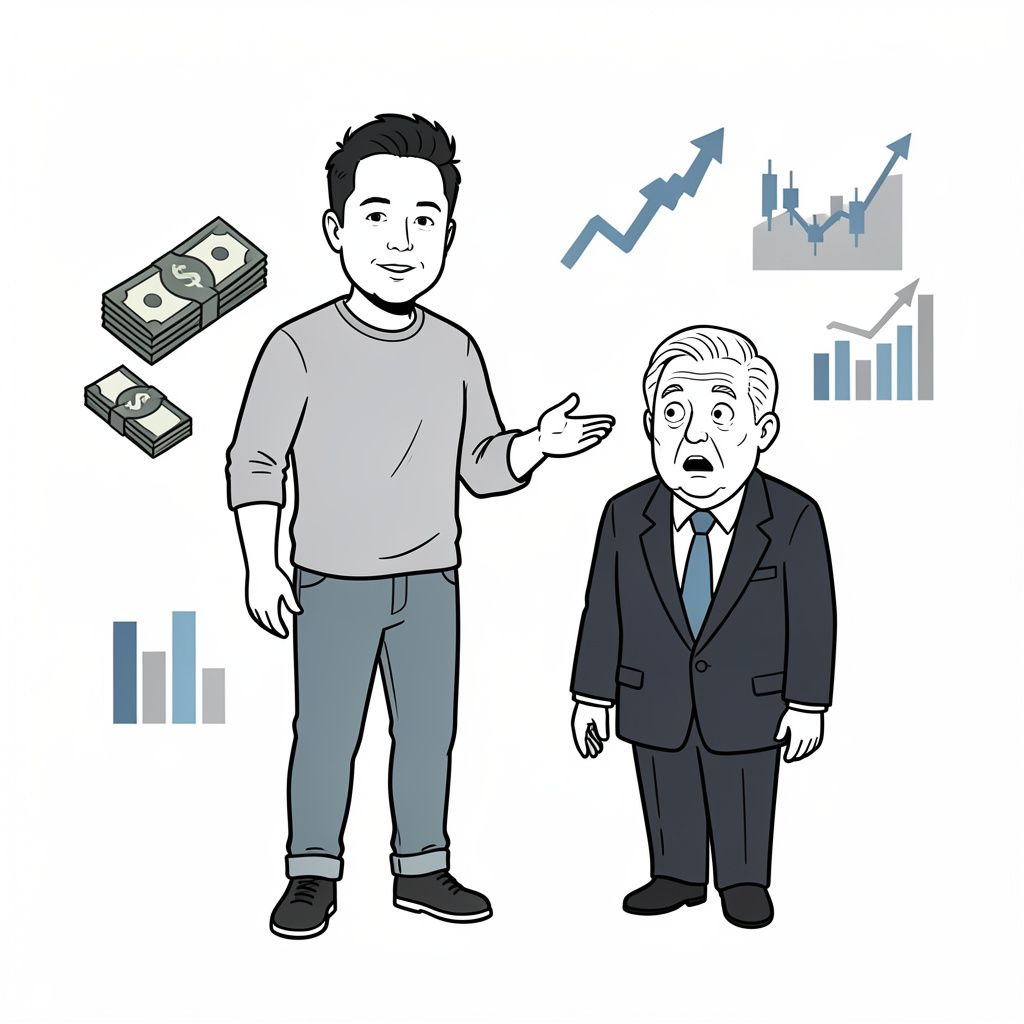
Elon Musk challenges US senators, revealing government incentives made up less than 2% of Tesla and SpaceX’s valuation. The debate ignites over whether taxpayer support fueled innovation—or if private investment drove dominance in the EV market.
The Political Divide Over Tesla’s Success
The debate over Tesla’s rise to market dominance has become a partisan flashpoint in US politics, with Republican Senator Mike Lee of Utah and Democratic Senator Ed Markey of Massachusetts taking opposing views on the role of government support in Elon Musk’s companies. On 14 June 2026, the senators exchanged barbs on X (formerly Twitter), with Markey asserting that ‘virtually all’ of Musk’s wealth stems from government assistance, while Lee countered that such subsidies don’t make Musk’s money taxpayer property [1]. The dispute reflects broader ideological divides over industrial policy, with Republicans generally favoring free-market approaches and Democrats more supportive of targeted government intervention to spur innovation [GPT].
Musk’s Counterargument: Less Than 2% of Valuation
In a direct response to the senators’ exchange, Elon Musk posted on X that government incentives received by Tesla and SpaceX amount to ‘less than 2% of the value of SpaceX and Tesla’ [1]. This claim appears to reference the companies’ current market valuations rather than their historical development costs. As of 15 June 2026, Tesla’s market capitalization stands at approximately $580 billion [2], while SpaceX’s most recent private valuation reached $180 billion in late 2025 [3]. Musk’s calculation would imply total government support of less than 15.200 billion across both companies [alert! ‘Exact figures for government incentives not provided in source’].
The EV Tax Credit Controversy
Musk highlighted a specific policy example to support his argument: the federal electric vehicle tax credit. He claimed that Tesla’s sales actually increased after former President Donald Trump eliminated the $7,500 federal tax credit for electric vehicles in 2019 [1]. This assertion challenges the conventional wisdom that consumer incentives drive EV adoption. However, industry analysts note that Tesla’s market position had already strengthened significantly by 2019, with the company capturing 60% of the US EV market that year [4]. The tax credit elimination may have disproportionately affected smaller competitors who relied more heavily on the incentive to remain price-competitive [5].
Historical Context: Government Support in Early Years
While Musk emphasizes recent market performance, critics point to Tesla’s early reliance on government programs. Between 2009 and 2015, Tesla received approximately $2.4 billion in federal and state incentives, including a $465 million low-interest loan from the Department of Energy’s Advanced Technology Vehicles Manufacturing program in 2010 [6]. The company also benefited from California’s Zero Emission Vehicle program, which generated valuable credits through sales of its early Model S sedans [7]. These programs were part of broader Obama administration efforts to accelerate clean energy adoption following the 2008 financial crisis [GPT].
Market Dynamics: Tesla’s Current Challenges
The timing of this debate coincides with increasing scrutiny of Tesla’s business performance. In Q1 2026, the company reported its first quarterly loss since 2020, with net income falling to -$282 million on $21.3 billion in revenue [10]. Tesla’s market share in the US electric vehicle segment has declined from 65% in 2022 to 48% in Q2 2026, as traditional automakers ramp up EV production [11]. These challenges have intensified questions about whether Tesla’s early government support created an unsustainable competitive advantage or merely helped the company overcome initial market barriers [alert! ‘Causal relationship between government support and current challenges cannot be definitively established’].
The Broader Policy Debate: Industrial Strategy in High-Tech Sectors
The Musk-senators exchange reflects ongoing debates about the appropriate role of government in supporting emerging technologies. The Biden administration’s 2022 CHIPS and Science Act allocated $52 billion for semiconductor manufacturing and $200 billion for scientific research, representing a significant expansion of industrial policy [12]. Proponents argue that such targeted investments are necessary to maintain US technological leadership, particularly against China’s state-directed innovation system [13]. Critics, including Senator Lee, contend that government intervention distorts markets and picks winners, potentially leading to inefficient resource allocation [14]. The Tesla debate provides a case study in how these competing visions play out in practice.
Sources
- timesofindia.indiatimes.com
- www.reuters.com
- www.cnbc.com
- www.edmunds.com
- www.energy.gov
- www.gao.gov
- ww2.arb.ca.gov
- www.nasa.gov
- www.thespacereview.com
- ir.tesla.com
- www.coxautoinc.com
- www.congress.gov
- www.cfr.org
- www.lee.senate.gov