White House Addresses Report Estimating President’s $1.4 Billion Earnings
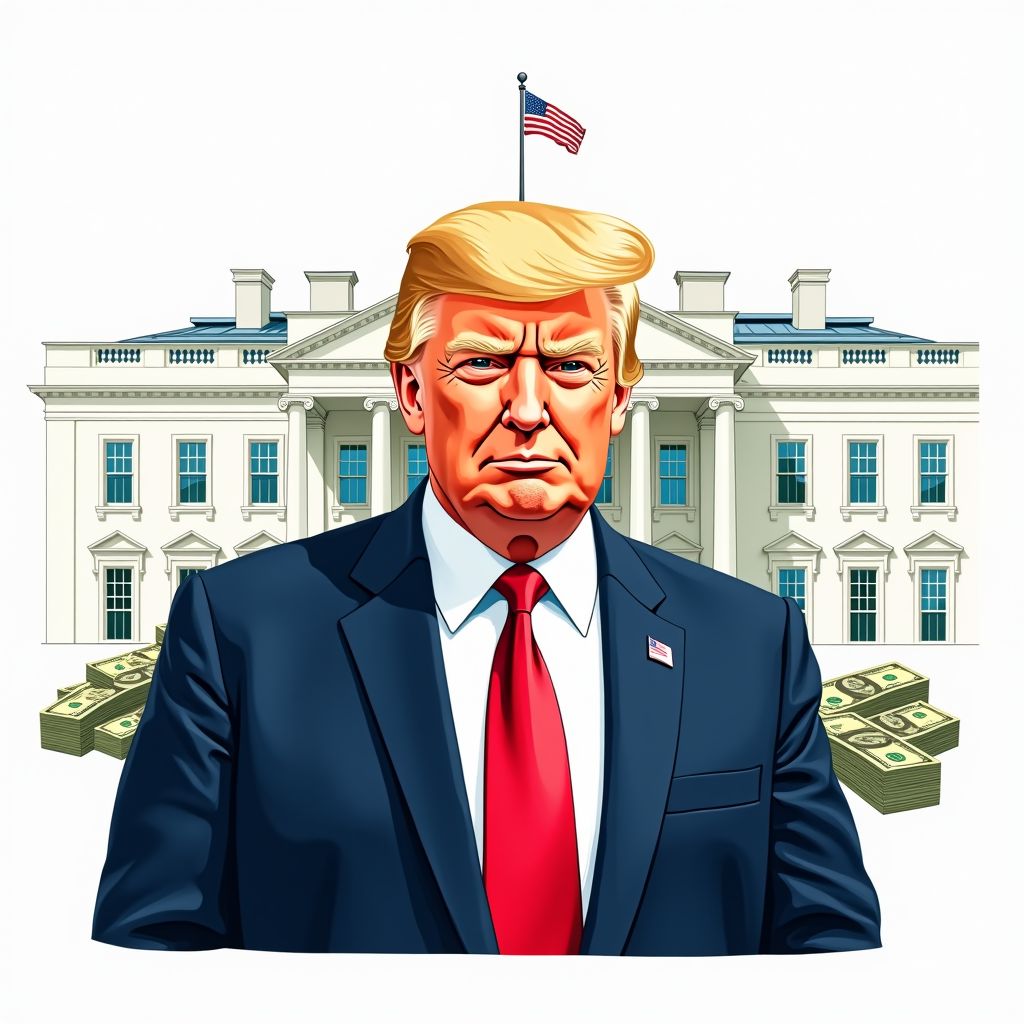
Washington, Saturday, 24 January 2026.
A New York Times investigation estimates President Trump generated $1.4 billion in personal revenue over the last year, largely driven by cryptocurrency ventures, prompting a formal White House denial of conflict of interest.
White House Addresses Report Estimating President’s $1.4 Billion Earnings
The White House has issued a formal response to a New York Times investigation alleging that President Donald Trump generated approximately $1.4 billion in personal revenue during the first year of his second term [1][2]. The report, which characterizes these earnings as a “conservative figure,” highlights a complex web of income streams ranging from cryptocurrency ventures to overseas licensing deals [1][2]. While the administration defends the President’s position, asserting he has “nothing to do” with the Trump Organization’s business dealings, the scale of the reported profits—totaling $1,408,500,000—has reignited intense debate regarding executive ethics and the separation of public office from private gain [2].
Digital Assets and Foreign Entanglements
A significant portion of this windfall is attributed to the administration’s embrace of the cryptocurrency sector. Following the President’s declaration of intent to make the United States the “crypto capital of the world,” his personal ventures in the space have reportedly surged [1]. Investigations indicate that Trump-linked digital asset projects, including World Liberty tokens and a branded meme coin, have generated an estimated $802 million [1]. This financial success coincides with a broader surge in the value of his crypto holdings, which Forbes estimates have contributed to a $3 billion increase in his net worth, with roughly $2 billion of that tied directly to crypto ventures [2].
Global Real Estate and Gifts
Traditional business avenues have also remained lucrative for the President. The Trump Organization has continued to expand its global footprint, with a new $1.5 billion golf complex linked to the brand near Hanoi, Vietnam, and ongoing hotel and office projects in Oman and Saudi Arabia [1]. These overseas licensing deals generated approximately $23 million, while existing family golf clubs and resorts brought in another $33 million [1]. Scrutiny has also fallen on high-value gifts, specifically a luxury jet reportedly worth $400 million provided by Qatar for use as Air Force One [1]. This donation followed a Trump Organization agreement to build a luxury golf resort in Doha [2].
A Record-Breaking Year for Influence
The financial boom surrounding the presidency extends beyond the Trump family to the lobbying industry in Washington. 2025 marked a record-breaking year for federal lobbying revenues, driven by the administration’s “tax-and-spend” legislation and executive actions on trade [3]. Ballard Partners, a firm with close ties to the administration, reported a staggering 300% increase in revenue, reaching $88.3 million for the year [3]. This figure shatters the previous single-year record for an individual firm, which stood at $67.8 million [3]. The gap between this new high and the previous record is a substantial 20.5 million, illustrating the intense corporate demand for access to the current administration.
Ethics and Defense
In addition to the President’s earnings, the report highlights a media deal involving First Lady Melania Trump. Estimates for an Amazon documentary package regarding her life range between $28 million and $40 million [1][2]. Reports indicate Amazon acquired the project after making a $1 million donation to Trump’s reelection campaign [2]. Despite the mounting figures, the President has dismissed conflict of interest concerns. However, critics, including the New York Times editorial board, argue that the administration is “testing the limits” of the presidency for personal gain [2]. As the administration moves into its second year, the intersection of policy decisions—such as the ouster of Venezuelan leadership—and corporate lobbying suggests that the financial stakes in Washington will remain historically high [3].