Black Sea Drone Strike on Oil Tanker Threatens Global Energy Markets
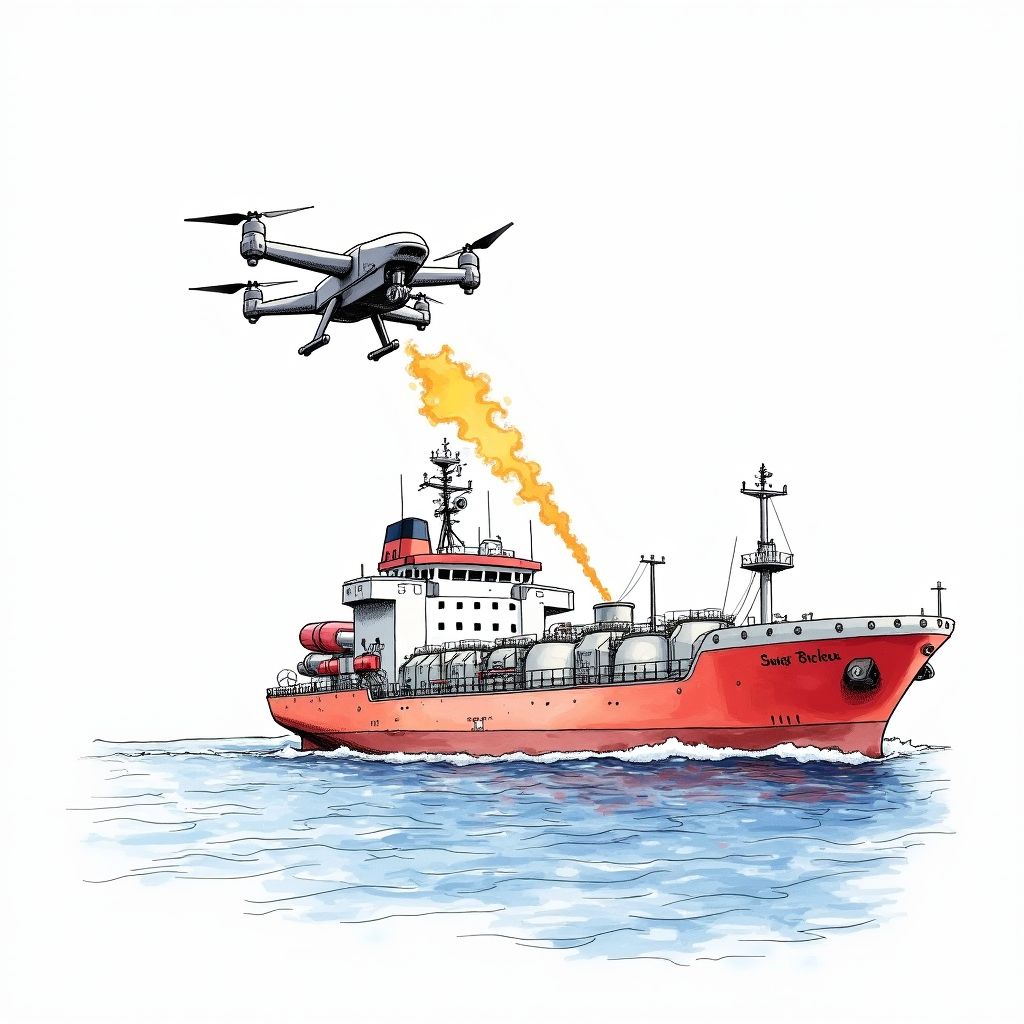
Istanbul, Thursday, 26 March 2026.
A targeted drone attack on a tanker hauling 159,000 cubic meters of Russian crude near Istanbul threatens to disrupt global energy markets and surge shipping insurance premiums.
The Midnight Strike Near the Bosphorus
In the early hours of Thursday, March 26, 2026, the Altura, a Sierra Leone-flagged Suezmax crude oil tanker, was rocked by an explosion just outside Turkish territorial waters [1][2][4][5]. The vessel was struck by an unmanned surface vehicle—and potentially an aerial drone—approximately 33 kilometers, or 15 nautical miles, from the Bosphorus Strait [1][2][3][7]. The tanker was fully loaded with roughly 1 million barrels of Ural crude oil, equivalent to 140,000 tons, averaging roughly 7.143 barrels per metric ton, which it had taken on at the Russian port of Novorossiysk [1][2][5][7].
Navigating a Complex Web of Sanctions
The Altura operates within a highly opaque and heavily sanctioned segment of the global shipping industry [GPT]. While managed by the Istanbul-based Pergamon Denizcilik and officially registered to the China-based Sea Grace Shipping Ltd, the vessel has undergone multiple identity changes [1][2][7]. Previously operating under the names Beşiktaş Dardanelles and Kayseri, the 163,750 deadweight tonnage ship was acquired by Pergamon in November 2025, exactly 1 year and six months after its previous purchase by a Panama-based firm [7]. By early 2026, the vessel had accumulated a restrictive list of designations, facing sanctions from the European Union, Switzerland, Ukraine, and the United Kingdom [7].
Regional Escalation and Market Volatility
The Turkish government has issued severe rebukes regarding the incident, which occurred within Turkey’s Exclusive Economic Zone [2][4]. Foreign Ministry spokesperson Öncü Keçeli condemned the strike as a violation of international law, emphasizing that Ankara reserves the right to take necessary measures to protect its economic interests [4][6]. This diplomatic friction arrives after Ankara had previously cautioned both Moscow and Kyiv against military escalations near Turkish waters following a series of drone attacks that damaged Ukrainian ports and Russian vessels [2]. As of March 26, neither the Russian nor the Ukrainian government has issued a formal comment on the incident [2].
Sources
- www.france24.com
- www.reuters.com
- www.bloomberg.com
- www.bbc.com
- www.instagram.com
- amp.dw.com
- www.haberdenizde.com